
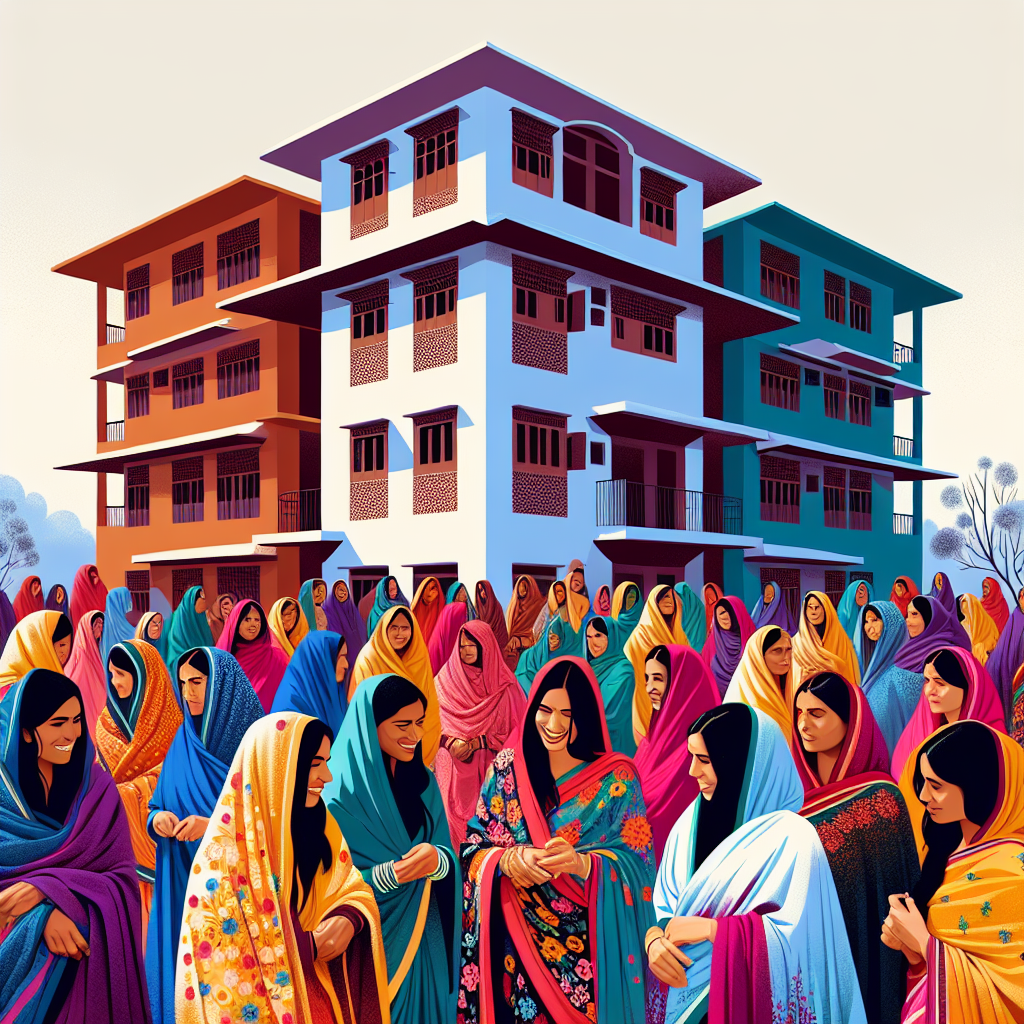
On a chilly December morning in Delhi, a vibrant group of women, adorned in colorful saris and warm shawls, gathered outside a three-storey building that houses one of India's oldest social enterprises. This cooperative, known as Shri Mahila Griha Udyog Lijjat Papad, was established in 1959 in Mumbai by seven housewives who sought to create a source of income by producing papad, a beloved crispy snack integral to Indian cuisine. Over the past sixty-five years, the cooperative has expanded significantly, now boasting over 45,000 women members and generating an impressive annual turnover of 16 billion rupees, with exports reaching countries like the UK and the US.
The women of Lijjat primarily work from home, producing a variety of products, including spices and detergents, but their most popular item remains the Lijjat brand of poppadoms. Lakshmi, a 70-year-old manager at the Delhi center, reflects on how joining the cooperative transformed her life after her husband's death left her in need of work. With limited education, she was introduced to Lijjat by a neighbor and found a supportive community that allowed her to earn a decent income while managing her household responsibilities. Today, she oversees 150 women at the center, illustrating the cooperative's role in empowering women to balance work and family life.
Every morning, the cooperative provides transportation for its members to the nearest Lijjat center, where they collect pre-mixed dough made from lentils and spices. The women then return home to roll out the dough into thin, round papads. Initially, it took Lakshmi several hours to produce just one kilogram of dried lentil papad, but her efficiency has improved dramatically, allowing her to complete the same amount in just thirty minutes. The cooperative's head office in Mumbai manages the procurement of raw materials, which are then distributed to women across the country for production and packaging.
The origins of Lijjat can be traced back to the socio-economic landscape of 1950s India, a time when the country was striving to rebuild itself after gaining independence. Women faced significant challenges in a conservative society that often limited their opportunities for education and employment. The founders of Lijjat, a group of determined women living in a crowded Mumbai tenement, aimed to leverage their culinary skills to support their families. With the help of a social worker, they secured a small loan to purchase ingredients, and despite initial struggles to find buyers, their persistence paid off as their poppadoms gained popularity.
As the cooperative flourished, it evolved into a model of collective ownership, where every woman is considered a co-owner rather than an employee. This structure fosters a sense of equality and shared responsibility among members, as profits and losses are distributed equally. In 1966, the cooperative adopted the Lijjat brand name, which means "taste" in Gujarati, further solidifying its identity in the market. For many women, like Lakshmi, L
Original news source: How a home-made snack empowered Indian women (BBC)
🎧 Listen:
📖 Vocabulary:
Group or Classroom Activities
Warm-up Activities:
– CHARADES
Instructions: Divide the class into small groups. Each group will take turns acting out key terms or concepts from the article (e.g., "poppadoms," "cooperative," "empowerment," "women's rights") without speaking, while the other groups guess the word. This will help students engage with vocabulary in a fun and interactive way.
– NEWS REPORTER ROLE-PLAY
Instructions: Have students pair up and assign one student as the reporter and the other as the interviewee. The reporter will ask questions about the cooperative and its impact, while the interviewee will role-play as a member of the cooperative. After a few minutes, have them switch roles. This activity encourages speaking and listening skills.
– MIND MAP
Instructions: On a whiteboard or large sheet of paper, have students create a mind map based on the article. They should include key themes, important figures, and the cooperative's impact on women's empowerment. This visual representation will help them organize their thoughts and enhance comprehension.
– OPINION POLL
Instructions: Pose a question related to the article, such as "How important do you think cooperatives are for women in developing countries?" Have students walk around the room and gather opinions from their classmates, then share the results in a group discussion. This will spark conversation and allow students to practice expressing their views.
– FUTURE PREDICTIONS
Instructions: Ask students to consider the future of the Lijjat cooperative and women's cooperatives in general. In small groups, they should discuss and make predictions about how such organizations might evolve over the next decade. Each group can then present their ideas to the class, fostering critical thinking and discussion skills.
🤔 Comprehension Questions:
The primary reason for the establishment of Shri Mahila Griha Udyog Lijjat Papad in 1959 was to create a source of income for women, specifically housewives, by producing papad, a popular crispy snack in Indian cuisine.
Since its inception, the cooperative has expanded to over 45,000 women members and generates an impressive annual turnover of 16 billion rupees.
The cooperative supports its members by allowing them to work from home, providing transportation to the nearest Lijjat center, and fostering a supportive community that enables them to manage their household responsibilities while earning a decent income.
The women collect pre-mixed dough made from lentils and spices from the nearest Lijjat center, then return home to roll out the dough into thin, round papads. They dry the papads before packaging them for sale.
The founders faced significant challenges including limited opportunities for education and employment in a conservative society. They overcame these challenges by leveraging their culinary skills, securing a small loan to purchase ingredients, and persisting in finding buyers for their products.
The cooperative's model of collective ownership fosters a sense of equality and shared responsibility among its members, as profits and losses are distributed equally, making every woman a co-owner rather than just an employee.
The name "Lijjat" means "taste" in Gujarati, and it was significant for the cooperative's identity as it solidified their brand in the market and reflected the quality and flavor of their products.
Lakshmi's life changed significantly after she joined the cooperative as it provided her with a source of income after her husband's death. Today, she serves as a manager at the Delhi center, overseeing 150 women and demonstrating the cooperative's role in empowering women.
🎧✍️ Listen and Fill in the Gaps:
On a chilly December morning in , a vibrant group of , adorned in saris and warm shawls, gathered outside a three-storey building that houses one of India's oldest social enterprises. This cooperative, known as Shri Mahila Griha Udyog Lijjat Papad, was established in 1959 in Mumbai by seven housewives who sought to create a source of income by producing papad, a beloved crispy snack integral to Indian cuisine. Over the past sixty-five years, the cooperative has expanded significantly, now boasting over 45,000 women members and generating an impressive annual of 16 billion rupees, with exports reaching countries like the UK and the US. The women of Lijjat primarily work from home, producing a variety of products, including spices and detergents, but their most popular item remains the Lijjat brand of poppadoms. , a 70-year-old manager at the Delhi center, reflects on how joining the transformed her life after her husband's death left her in need of work. With limited education, she was introduced to Lijjat by a neighbor and found a supportive community that allowed her to earn a decent income while managing her household responsibilities. Today, she oversees 150 women at the center, illustrating the cooperative's role in women to balance work and family life. Every morning, the cooperative provides transportation for its members to the nearest Lijjat center, where they collect pre-mixed made from lentils and spices. The women then return home to roll out the dough into thin, round s. Initially, it took Lakshmi several hours to produce just one kilogram of dried lentil papad, but her has dramatically, allowing her to complete the same amount in just thirty minutes. The cooperative's head office in Mumbai manages the procurement of raw materials, which are then distributed to women across the country for production and packaging. The origins of Lijjat can be traced back to the socio-economic landscape of 1950s India, a time when the country was striving to rebuild itself after gaining independence. Women faced challenges in a conservative society that often limited their opportunities for education and employment. The founders of Lijjat, a group of determined women living in a crowded Mumbai tenement, aimed to leverage their culinary skills to support their . With the help of a social worker, they secured a small loan to purchase ingredients, and despite initial struggles to find buyers, their persistence paid off as their poppadoms gained popularity. As the cooperative flourished, it evolved into a model of collective ownership, where every woman is considered a co-owner rather than an . This structure fosters a sense of equality and responsibility among members, as and losses are distributed equally. In 1966, the cooperative adopted the Lijjat brand name, which means "taste" in Gujarati, further solidifying its identity in the market. For many women, like Lakshmi, L
💬 Discussion Questions:
1. What is a cooperative, and how do you think it differs from a traditional business model?
2. How would you feel if you were part of a community that empowered you to start your own business?
3. Do you think it is important for women to have access to economic opportunities? Why or why not?
4. Have you ever participated in a group or cooperative project? What was your experience like?
5. What is a significant challenge that women face in your country regarding employment, and how do you think it can be addressed?
6. How do you think the support of a community can impact an individual's motivation and success?
7. Do you like the idea of working from home? What are the advantages and disadvantages for you?
8. How would you feel if you had to learn a new skill to support yourself after a major life change?
9. Do you think that traditional gender roles still affect women's opportunities in the workforce today? Why or why not?
10. What is a successful social enterprise you know of, and what impact do you think it has on the community?
11. How do you think the concept of collective ownership influences the dynamics within a cooperative?
12. Do you think that food-related businesses can play a role in empowering women? Why or why not?
13. How would you feel if you had to overcome initial failures to achieve success in a business venture?
14. What is a cultural aspect of your country that you think could be leveraged to create economic opportunities for women?
15. Do you think that the story of Lijjat could inspire other women around the world? Why or why not?
Individual Activities
📖💭 Vocabulary Meanings:
Click a dot next to a word, then click the dot next to its meaning to draw a line connecting them.
Words
Meanings
🔡 Multiple Choice Questions:
🕵️ True or False Questions:
📝 Write a Summary:
Write a summary of this news article in two sentences.
Check your writing now with the best free AI for English writing!