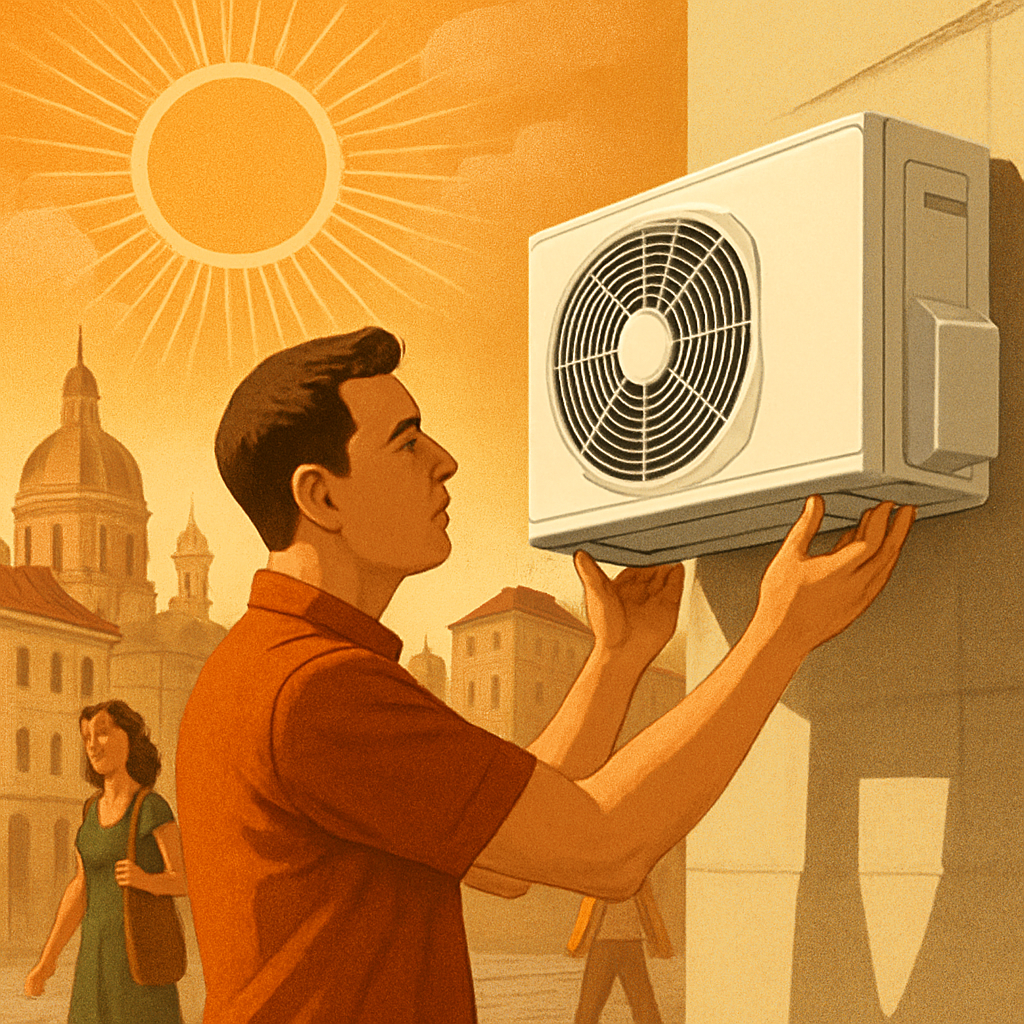
Extreme heat is affecting Europe, and many people are turning to air-conditioners to cope. One of the most sought-after models is the Midea PortaSplit, manufactured by a Chinese company. It is popular because it doesn't require extensive installation and fits within European window styles.
Steven Scholtysek from Germany, who lives in an unbearably hot attic apartment, describes it as a game changer for coping with Europe's hottest June on record. The Midea PortaSplit offers a much-needed reprieve by providing effective cooling without needing major renovations. Online forums and reviews rave about it, with some even reselling units for twice the original price.
While the demand for these air-conditioners is soaring, raising concerns about increased electricity usage and environmental effects, this need for cooling solutions highlights a shift in consumer behavior. European sales of brands like Midea, TCL, and Gree have increased significantly this summer, showcasing an urgent response to rising temperatures.
Despite environmental concerns, many see purchasing an air-conditioner as essential to surviving the heat. The World Health Organization suggests a balanced approach to using air-conditioners, acknowledging their necessity for health while promoting energy efficiency. The choice for many lies between comfort and environmental responsibility as temperatures keep rising.
Original news source: Amid heatwaves, Europeans turn to prized Chinese air-conditioner – BBC News (BBC)
🎧 Listen:
📖 Vocabulary:
Group or Classroom Activities
Warm-up Activities:
1. How do people in your country typically deal with extreme heat?
2. Have you ever used an air-conditioner? What was your experience like?
3. What are some cooling alternatives you know of besides air-conditioners?
4. Why might climate change lead to increased appliance usage?
5. Discuss any eco-friendly solutions to manage heat you have heard about.
🤔 Comprehension Questions:
Extreme heat is affecting Europe.
It is popular because it doesn’t require extensive installation and fits European window styles.
He described it as a game changer for coping with extreme heat.
Concerns about increased electricity usage and environmental effects are raised.
Midea, TCL, and Gree have seen a sales increase.
The WHO suggests a balanced approach, promoting energy efficiency while acknowledging their necessity.
They face a choice between comfort and environmental responsibility.
🎧✍️ Listen and Fill in the Gaps:
Extreme heat is affecting Europe, and many people are turning to air-conditioners to cope. One of the most sought-after models is the Midea PortaSplit, by a Chinese . It is popular because it doesn't require extensive installation and fits window styles. Steven Scholtysek from Germany, who lives in an unbearably hot attic apartment, describes it as a game changer for coping with Europe's hottest June on record. The Midea PortaSplit a much-needed by providing cooling without needing major renovations. Online forums and rave about it, with some even reselling units for twice the original price. While the demand for these air-conditioners is soaring, raising about increased usage and environmental , this need for cooling solutions highlights a shift in consumer behavior. European sales of brands like Midea, TCL, and Gree have increased significantly this summer, an urgent response to rising temperatures. environmental concerns, many see purchasing an air-conditioner as essential to surviving the heat. The World Organization suggests a approach to using air-conditioners, acknowledging their necessity for while promoting energy efficiency. The choice for many lies between comfort and environmental responsibility as temperatures keep rising.
💬 Discussion Questions:
1. Do you think it's important to own an air-conditioner? Why or why not?
2. How do you balance staying cool and being environmentally responsible?
3. What impact do you think increased air-conditioner use has on the environment?
4. Are there any government policies in your country regarding air-conditioner usage?
5. How can people be encouraged to use eco-friendly cooling methods?
6. What are the socio-economic effects of rising temperatures on everyday life?
7. Do you think new cooling technologies are needed? Why?
8. Can cultural habits influence how people adapt to hotter climates?
9. What are some unexpected consequences of extreme heat that you know of?
10. How does the availability of cooling resources differ globally?
11. In what ways do hot climates affect productivity in schools and workplaces?
12. Do you believe extreme heat events will become more common in the future?
Individual Activities
📖💭 Vocabulary Meanings:
Click a dot next to a word, then click the dot next to its meaning to draw a line connecting them.