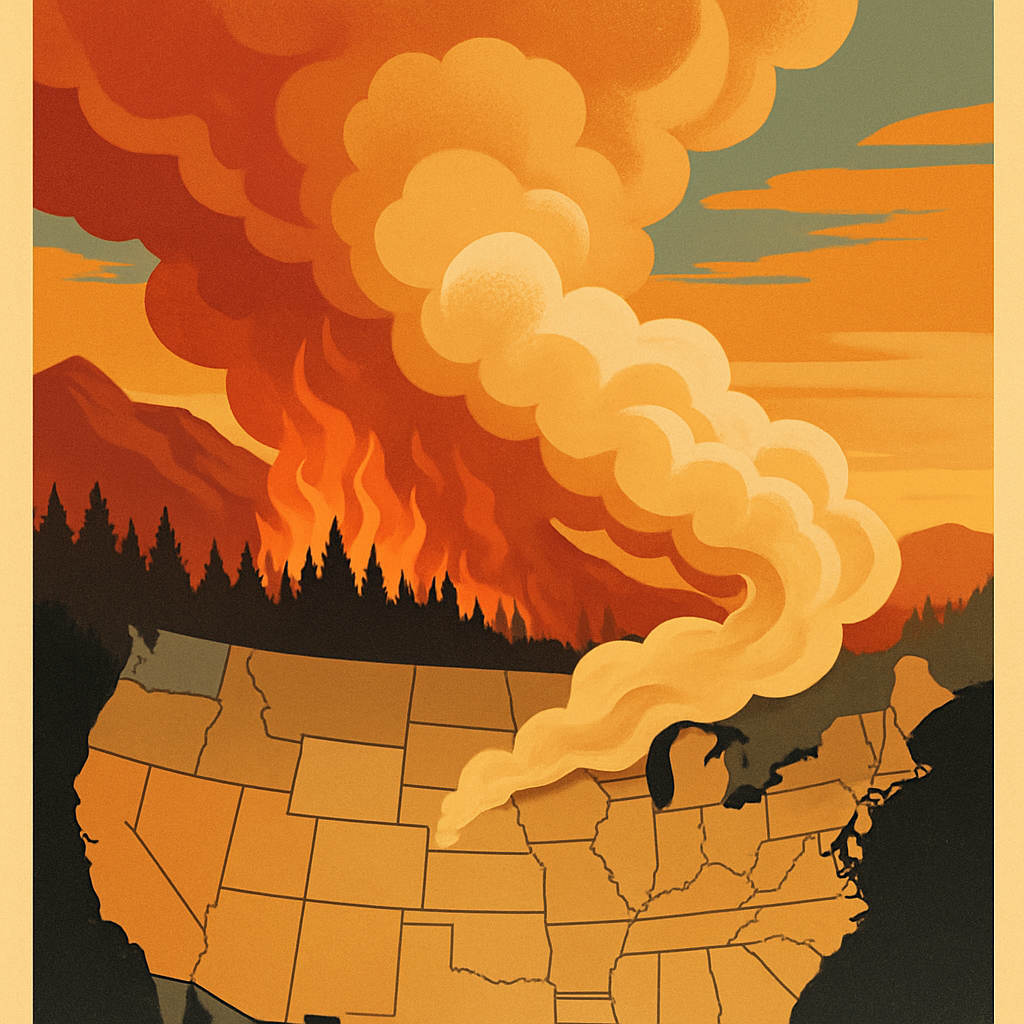
Canada has recently faced a significant wildfire crisis, battling more than 800 active fires across its provinces. These fires have resulted in massive smoke emissions, drifting into the United States and severely affecting air quality from cities like Detroit and Toronto to New York City, among others. Authorities have issued broad health alerts, recommending that residents in affected regions stay indoors due to the alarming air contamination levels.
Several cities shrouded in smoke, notably Chicago and New York, have endured air quality conditions ranging from "unhealthy" to "hazardous." In consequence, numerous events, including concerts and summer camps, have been rescheduled or canceled to safeguard public health. Renowned landmarks, such as the Empire State Building, have been obscured by the dense haze.
The wildfires' epicenter lies in northwestern Ontario, but their ramifications extend far due to prevailing winds propelling smoke vast distances. This scenario highlights the broader impacts of climate change, marked by an uptick in such intense fires. It reflects growing anxiety over the capacity and resources available to handle such significant environmental challenges.
US lawmakers have criticized Canadian strategies, urging better cross-border collaboration on fire management. The Canadian government maintains that while these fires are part of a natural cycle, they are intensified by climate factors, asserting that addressing these issues is a collective responsibility.
In the future, shifting wind patterns are anticipated to redirect smoke away from certain US areas, offering temporary respite. Nonetheless, the extensive nature of the fires indicates a drawn-out firefighting operation, and efforts focus on containing the conflagrations while minimizing damage to inhabited regions.
Original news source: Canada fires prompt US air quality alerts as smoke blankets major cities – BBC News (BBC)
🎧 Listen:
📖 Vocabulary:
Group or Classroom Activities
Warm-up Activities:
1. Share experiences related to environmental challenges you've faced.
2. Discuss any recent major news events you are aware of concerning natural disasters.
3. What are some effective personal strategies to stay safe during environmental crises?
4. Describe any changes you've made recently to be more environmentally conscious.
5. Brainstorm ways local communities can prepare for unexpected natural events.
🤔 Comprehension Questions:
Over 800 active wildfires.
It has significantly diminished air quality in various US cities.
The Empire State Building in New York City has been obscured.
Events such as concerts and children's summer camps have been postponed or canceled.
Climate change has contributed to the increase and severity of the wildfires.
Officials are advising residents to remain indoors due to poor air quality.
They have criticized Canadian officials and urged for improved cross-border cooperative measures.
🎧✍️ Listen and Fill in the Gaps:
has faced a significant wildfire crisis, battling more than 800 active fires across its provinces. These fires have resulted in massive smoke emissions, drifting into the United States and severely affecting air quality from cities like Detroit and Toronto to New York City, among others. Authorities have issued health alerts, recommending that in affected regions stay indoors due to the air contamination levels. Several cities shrouded in smoke, notably Chicago and New York, have air quality conditions ranging from "unhealthy" to "hazardous." In consequence, events, including concerts and summer camps, have been rescheduled or canceled to safeguard health. Renowned landmarks, such as the Empire State Building, have been obscured by the dense haze. The wildfires' epicenter lies in northwestern Ontario, but their ramifications extend far due to prevailing winds propelling smoke vast distances. This scenario highlights the broader of climate change, by an uptick in such intense . It reflects growing anxiety over the capacity and resources available to handle such significant environmental challenges. US lawmakers have criticized Canadian strategies, urging better cross-border on fire management. The Canadian government maintains that while these fires are part of a natural cycle, they are intensified by climate factors, asserting that these issues is a collective responsibility. In the future, shifting wind patterns are anticipated to redirect smoke away from certain US areas, offering temporary respite. Nonetheless, the extensive of the fires indicates a drawn-out firefighting , and focus on containing the conflagrations while minimizing damage to inhabited regions.
💬 Discussion Questions:
1. How do wildfires impact the environment on a global scale?
2. What measures can governments take to prevent severe wildfires?
3. In your opinion, how effective are current international collaborations on environmental issues?
4. How do you think climate change influences natural disasters like wildfires?
5. What role does the media play in informing the public about environmental issues?
6. How can individuals contribute to mitigating the effects of climate change?
7. Do you believe enough is being done to educate the public about environmental risks?
8. What are the economic impacts of natural disasters on affected regions?
9. Have you ever been in a situation where you had to evacuate due to a natural disaster?
10. How should communities support each other during environmental crises?
11. Discuss the effectiveness of health advisories in crisis situations.
12. How can climate-awareness initiatives be improved on a community level?
Individual Activities
📖💭 Vocabulary Meanings:
Click a dot next to a word, then click the dot next to its meaning to draw a line connecting them.