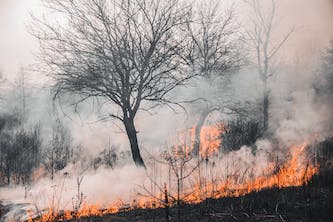


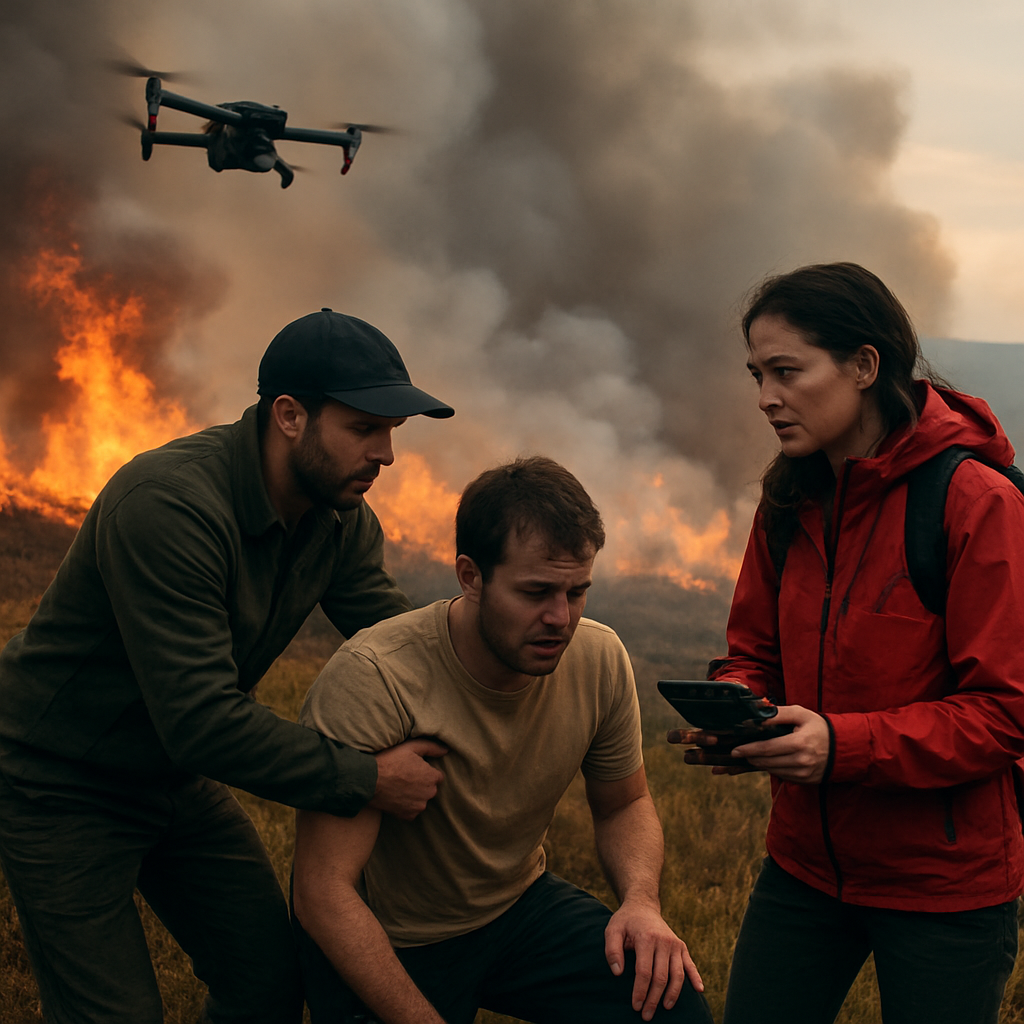
A recent incident involving two individuals trying to film Welsh wildfires with a drone has highlighted the ongoing challenge authorities face as they manage fire-stricken areas. The South Snowdonia Search and Rescue Team had to undertake a costly rescue operation after the individuals ignored road closures and official warnings. The rescue required substantial public resources, including a search-and-rescue helicopter, illustrating the logistical and financial burden caused by such actions.
With wildfires intensifying in north Wales, particularly around the Rhinogydd mountains, contemporaneous footage has shown the extent of the devastation from as far away as space. Emergency services, including North Wales Fire and Rescue Service, have instructed the public to avoid these critically affected zones to minimize risk and ensure emergency operations can continue unimpeded.
Despite clear advisories, the allure of capturing dramatic footage has driven an uptick in visits to prohibited regions, endangering the individuals involved and stressing emergency response systems. Authorities warn that individuals who ignore such safety advisories not only risk their own safety but also compromise emergency services' ability to focus on life-threatening situations.
Adding to existing challenges, incidents of wild camping have been reported, compounding the difficulty of control efforts. These activities are not only perilous but also divert essential resources from fire suppression tasks. The authorities urge adherence to safety guidelines and remaining vigilant to official communications as teams continue monitoring and responding to fire threats.
Recent rainfall has provided temporary reprieve in several areas, allowing fire crews to withdraw from certain regions like Conwy Mountain. Nonetheless, officials stress that continuous vigilance and compliance with safety directives are crucial in preventing further emergencies and protecting the broader community.
Original news source: Public urged to keep away from wildfires as Eryri drone operators rescued (BBC)
🎧 Listen:
📖 Vocabulary:
Group or Classroom Activities
Warm-up Activities:
1. Share an experience where you had to prioritize safety over capturing an exciting moment.
2. Discuss the role of media in influencing people's decisions to enter dangerous areas.
3. Talk about a natural disaster you have experienced or heard about.
4. Describe a situation where you or someone you know ignored a safety warning.
5. Explain how you would react to a wildfire situation based on what you've learned.
🤔 Comprehension Questions:
They undertook a costly rescue operation.
Critically affected zones.
It has driven an uptick in visits to prohibited regions.
Incidents of wild camping.
It provided a temporary reprieve, allowing some fire crews to withdraw.
To prevent further emergencies and protect the broader community.
The logistical and financial burden of such rescue operations.
🎧✍️ Listen and Fill in the Gaps:
A recent incident involving two individuals trying to film Welsh wildfires with a drone has highlighted the ongoing challenge authorities face as they manage fire-stricken . The South Snowdonia Search and Rescue Team had to undertake a costly rescue operation after the individuals ignored road and official . The rescue substantial public resources, including a search-and-rescue helicopter, illustrating the logistical and financial burden caused by such actions. With wildfires in , around the Rhinogydd mountains, contemporaneous footage has shown the extent of the devastation from as far away as space. Emergency services, including North Wales Fire and Rescue Service, have instructed the public to avoid these critically affected zones to minimize risk and ensure emergency operations can continue unimpeded. Despite clear advisories, the allure of capturing dramatic footage has driven an uptick in visits to prohibited regions, endangering the individuals and stressing emergency systems. Authorities warn that individuals who ignore such advisories not only risk their own safety but also compromise emergency services' ability to focus on life-threatening situations. Adding to existing challenges, incidents of wild camping have been reported, compounding the difficulty of control efforts. These are not only perilous but also divert essential resources from fire suppression tasks. The authorities urge adherence to safety guidelines and remaining to official communications as continue monitoring and responding to fire threats. Recent rainfall has provided temporary reprieve in several areas, allowing fire to withdraw from regions like Conwy Mountain. Nonetheless, officials stress that continuous vigilance and compliance with safety directives are crucial in preventing further emergencies and protecting the broader community.
💬 Discussion Questions:
1. What motivates people to ignore safety warnings even when they're aware of the risks?
2. How can public awareness campaigns be more effective in preventing such incidents?
3. Should there be stricter penalties for individuals who disregard safety advisories during emergencies?
4. How do you think social media impacts people's choices to capture dramatic footage of dangerous events?
5. In your opinion, what responsibilities do media outlets have when reporting on natural disasters?
6. What are the environmental implications of frequent wildfires in certain regions?
7. How can technology play a role in improving wildfire prevention and response?
8. Describe how changing climate patterns affect the frequency and intensity of wildfires.
9. Do you think there are ethical concerns in using drones to capture footage of disasters? Why?
10. How can community involvement improve the efficiency of emergency responses?
11. What lessons can be learned from this incident to better manage future emergencies?
12. How should resources be prioritized during large-scale emergencies like wildfires?
Individual Activities
📖💭 Vocabulary Meanings:
Click a dot next to a word, then click the dot next to its meaning to draw a line connecting them.