

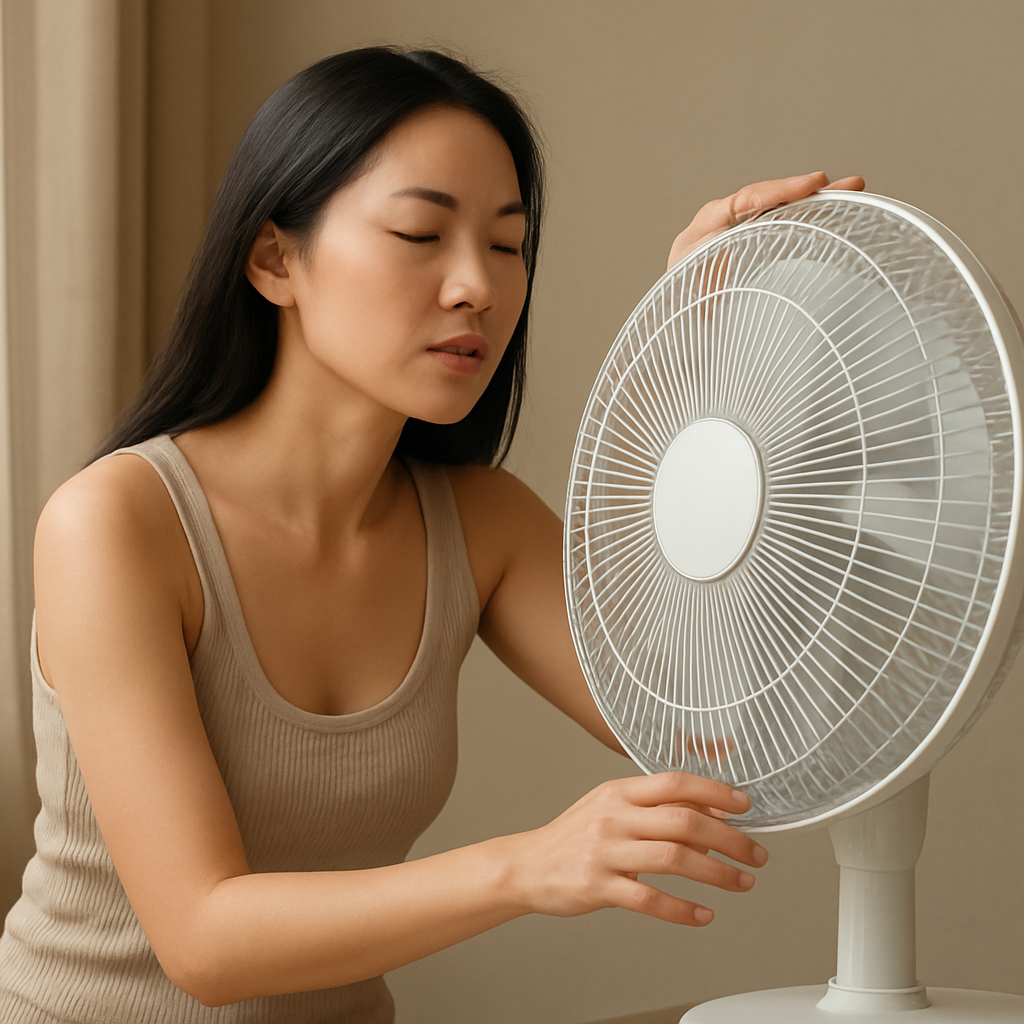
Proper fan usage can significantly enhance comfort during heatwaves. Firstly, it is crucial to manage airflow strategically within your home. Experts recommend sealing windows and doors during the day to prevent hot air infiltration, while at night, opening them when the temperature drops facilitates cooler airflow.
Directing fans toward your body rather than your face is advised. This approach optimizes sweat evaporation, facilitating more effective cooling. Enhanced fan cooling can be achieved by placing ice or water before the fan, utilizing evaporative cooling to lower the room's perceived temperature. However, note that directing fans directly at young children may cause dehydration and is generally best avoided.
Avoid draping fans with wet or frozen towels due to potential electric hazards. Fans become less effective as indoor temperatures surpass 35°C; excessive humidity further hampers cooling efficiency. By comprehending the physiological principles of heat management, individuals can strategically minimize discomfort during extreme heat events.
The government advises caution with fan usage in temperatures above 35°C due to reduced cooling benefits. Recognition of the increasing frequency of heatwaves underscores the necessity for effective cooling strategies. Comprehending these practical methods empowers individuals to cope with escalating heat effectively.
Moreover, implementing these cooling strategies can provide both immediate relief and long-term comfort during prolonged heat exposure. Understanding the relationship between temperature management, air circulation, and personal safety is essential as global temperatures rise. Adopting informed fan usage practices ensures a safer, more comfortable living environment during heatwaves.
Original news source: Fan tips: Experts advise how best to use yours during a heatwave – BBC News (BBC)
🎧 Listen:
📖 Vocabulary:
Group or Classroom Activities
Warm-up Activities:
1. Discuss how you feel during a heatwave and what measures you usually take to cool down.
2. Share any traditional methods from your culture for staying cool in hot weather.
3. Describe your ideal indoor environment during summer.
4. Explain how you typically regulate airflow in your home.
5. Talk about any experiences you've had with extreme weather situations.
🤔 Comprehension Questions:
Strategic airflow management is important to enhance cooling and comfort by optimizing natural airflow patterns.
Opening windows when temperatures drop at night is suggested to facilitate cooler airflow.
Evaporative cooling can be achieved by placing ice or water in front of a fan.
It is advised against because it may cause dehydration in young children.
Fan efficiency is highlighted to decrease above 35°C.
Draping fans with wet towels may pose electric hazards.
The article emphasizes that the frequency of heatwaves is increasing.
🎧✍️ Listen and Fill in the Gaps:
Proper fan usage can enhance comfort during . Firstly, it is to airflow strategically within your home. Experts recommend sealing windows and doors during the day to prevent hot air infiltration, while at night, opening them when the temperature drops facilitates cooler airflow. Directing fans toward your body rather than your face is advised. This approach optimizes sweat evaporation, more effective cooling. Enhanced fan cooling can be achieved by placing ice or water before the fan, utilizing evaporative cooling to lower the perceived temperature. However, note that directing fans directly at young children may dehydration and is generally best avoided. Avoid fans with wet or frozen towels due to potential electric hazards. Fans become less effective as indoor surpass 35°C; excessive further hampers cooling efficiency. By comprehending the physiological principles of heat management, individuals can strategically discomfort during extreme heat events. The government advises caution with fan in temperatures above 35°C due to reduced cooling benefits. Recognition of the increasing frequency of heatwaves underscores the necessity for effective cooling strategies. Comprehending these methods empowers to cope with escalating heat effectively. Moreover, implementing these cooling strategies can provide both immediate relief and long-term comfort during prolonged heat exposure. Understanding the relationship between temperature management, air circulation, and personal safety is essential as temperatures rise. Adopting informed fan usage ensures a safer, more comfortable living environment during heatwaves.
💬 Discussion Questions:
1. How do you think climate change is affecting the frequency of heatwaves?
2. What are the potential health impacts of prolonged heat exposure?
3. How do cultural differences influence the way people cope with heatwaves?
4. What are some environmentally friendly cooling solutions you know of?
5. How can communities better prepare for extreme heat events?
6. Discuss the pros and cons of relying on technology for cooling.
7. What role should governments play in helping citizens manage heatwaves?
8. How do urban environments impact personal comfort during heatwaves?
9. Can traditional architectural designs help mitigate heatwave effects?
10. In what ways does your country's infrastructure support or undermine efficient cooling?
11. How do energy consumption concerns play into cooling strategies?
12. What innovative cooling technologies are emerging in today's market?
Individual Activities
📖💭 Vocabulary Meanings:
Click a dot next to a word, then click the dot next to its meaning to draw a line connecting them.