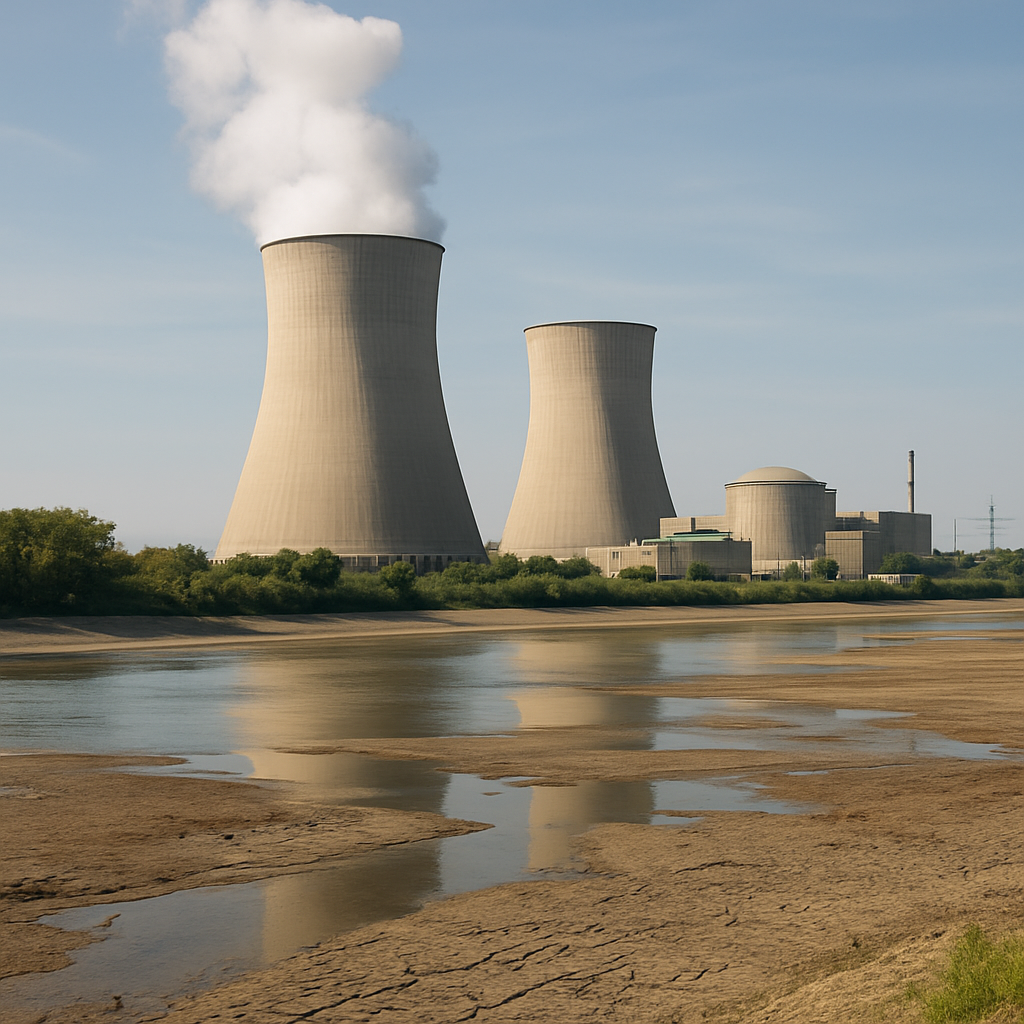
The current heatwave in Europe has forced Romania to shut down its sole nuclear power plant, Cernavodă. The underlying problem stems from the Danube River's water levels dropping dramatically due to extended hot weather, making it impossible for the plant to draw sufficient cooling water.
Cernavodă's two reactors contribute around 20% of Romania's electricity, creating a significant gap in the country’s energy supply. Efforts to boost the river flow by sinking rock-filled barges failed, and officials are not optimistic about restarting the plant for at least another ten days. In the meantime, Romania must lean on renewable energy sources and imports to compensate for the energy shortfall.
This incident underscores the broader impact of climate change on Europe's infrastructure. The continent is experiencing rapid temperature increases, twice the global average. Thus, water sources such as the Danube are under pressure, affecting energy plants, agriculture, and transportation.
The economic ripple effect from these climate-related issues is tangible across Europe. Countries like Italy and France report billions in damages due to heat-induced conditions. The exigency to address climate resilience in infrastructure and economy is palpable as Europe contends with this new reality.
Globally, these challenges highlight the growing need to transition to sustainable energy solutions. Europe’s energy systems must adapt swiftly to mitigate vulnerabilities exposed by the escalating climate crisis, ensuring energy security despite environmental instability.
Original news source: Romania shuts only nuclear plant as heat causes drop in Danube River level – BBC News (BBC)
🎧 Listen:
📖 Vocabulary:
Group or Classroom Activities
Warm-up Activities:
1. Discuss a recent event in the news that emphasizes the impact of climate change.
2. Describe any experience you've had with extreme weather conditions.
3. What role do you think governments should play in combating climate change?
4. Share an example of a sustainable energy source and its importance.
5. Discuss the relationship between climate change and the energy sector.
🤔 Comprehension Questions:
The current heatwave in Europe and the drop in Danube River's water levels.
Around 20%.
Sinking rock-filled barges in the river.
At least another ten days.
Renewable energy sources and imports.
Italy and France.
To mitigate vulnerabilities exposed by the escalating climate crisis.
🎧✍️ Listen and Fill in the Gaps:
The current heatwave in has forced to shut down its sole nuclear power plant, Cernavodă. The underlying problem stems from the River's water levels dropping dramatically due to extended hot , making it impossible for the plant to draw sufficient cooling water. Cernavodă's two reactors contribute around 20% of Romania's electricity, creating a significant gap in the country’s energy supply. Efforts to the river flow by sinking rock-filled barges failed, and officials are not optimistic about restarting the plant for at least another ten days. In the meantime, Romania must lean on renewable energy and to compensate for the energy . This incident underscores the broader impact of climate on Europe's infrastructure. The continent is rapid temperature increases, the global average. Thus, water sources such as the Danube are under pressure, affecting energy , agriculture, and transportation. The economic ripple effect from these climate-related issues is tangible across Europe. Countries like Italy and France report billions in damages due to heat-induced conditions. The exigency to address climate resilience in infrastructure and economy is palpable as Europe contends with this new reality. Globally, these challenges highlight the growing need to transition to energy solutions. Europe’s energy systems must adapt swiftly to vulnerabilities by the climate crisis, ensuring energy security despite environmental instability.
💬 Discussion Questions:
1. How does climate change impact your country specifically?
2. Do you believe nuclear power is a viable solution for energy needs? Why or why not?
3. What are the risks of relying on renewable energy sources?
4. How important is international cooperation in addressing climate change?
5. What personal actions do you take to reduce your carbon footprint?
6. How can countries balance economic growth with environmental conservation?
7. Should governments invest more in sustainable energy? Why?
8. How do economic interests clash with environmental issues?
9. What is the role of technology in combating climate change?
10. How would you convince a skeptic about the dangers of climate change?
11. Discuss the potential consequences of not addressing climate change.
12. How can businesses contribute to a more sustainable future?
Individual Activities
📖💭 Vocabulary Meanings:
Click a dot next to a word, then click the dot next to its meaning to draw a line connecting them.