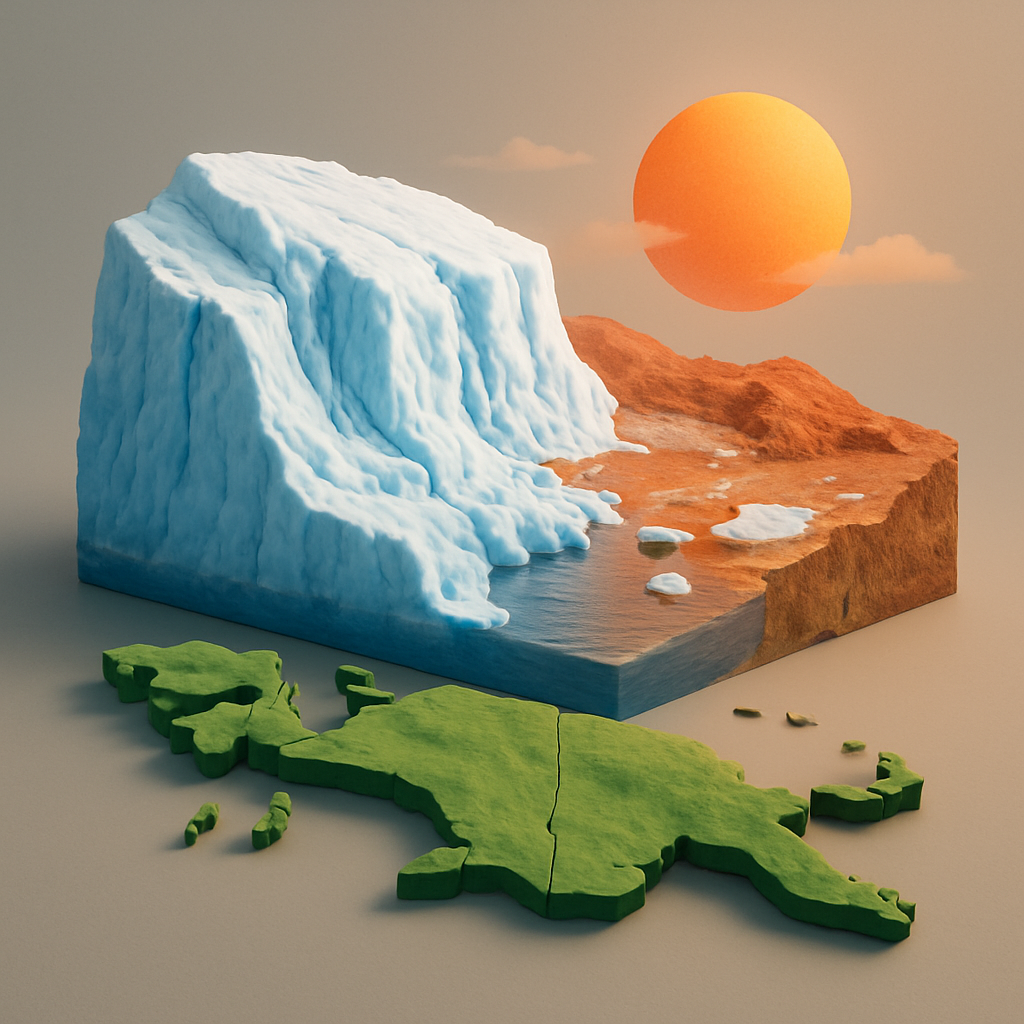
Puncak Jaya, also known as Carstensz Pyramid, is witnessing a profound change as it loses its 'eternal snow', a transformation notably affecting Papua, Indonesia. Although situated near the equator, this glacier, which was once extensive, is projected to disappear completely within a few years. These isolated glaciers provide a rare opportunity to glean insights into global climatic shifts. The retreat of Papua's glaciers is induced by climate change, significantly propelled by human activities such as the burning of fossil fuels. Increasing global temperatures are converting snowfall to rain, thereby accelerating the glaciers' retreat. Moreover, these glaciers hold substantial spiritual significance for indigenous communities, acting as a cultural bedrock. For indigenous groups like the Amungme and Moni, the vanishing glaciers represent the loss of a sacred ground. Their spiritual ties and age-old customs linked to the mountains are under threat, causing cultural fragmentation. Adolfina Kum asserts that the demise of these landmarks transcends environmental issues, manifesting a cultural calamity. Alongside environmental challenges, the socio-economic landscape of Papua has been reshaped by mining. Expansive mining ventures extract resources such as gold and copper, fostering economic growth while stirring social discord. Despite supplying employment and infrastructure, these industries frequently incite environmental ruin and encroach upon ancestral territories. Residents like Elfrida Natkime find themselves at a crossroads regarding the developments. Although economic advancements are visible, the environmental destruction and cultural erosion are burdensome. As scientists strive to chronicle the remaining glaciers, these circumstances starkly underscore the impacts of global warming and propel deliberation on the equilibrium between development and conservation.
Original news source: Indonesia Carstensz Pyramid: Papua's 'eternal snow' on Puncak Jaya is about to disappear forever – BBC News (BBC)
🎧 Listen:
📖 Vocabulary:
Group or Classroom Activities
Warm-up Activities:
1. Describe a time when you noticed a significant environmental change in your community.
2. Discuss how cultural traditions can be affected by environmental changes.
3. What are the major industries in your country, and how do they impact the environment?
4. How does global warming impact different regions of the world uniquely?
5. Share an example of a local or global initiative aimed at preserving natural landscapes.
🤔 Comprehension Questions:
Puncak Jaya, also known as Carstensz Pyramid, is losing its glacier.
Climate change, driven by human activities like fossil fuel use, is causing the glaciers to retreat.
Rising temperatures cause snow to turn into rain, hastening glacier retreat.
The disappearance of glaciers signifies the loss of sacred sites and disrupts spiritual connections and traditional practices.
Large-scale mining operations that extract minerals like gold and copper impact Papua.
Residents like Elfrida Natkime feel conflicted due to the economic improvements versus environmental damage and cultural loss.
Scientists are hurrying to document the remaining glaciers before they vanish.
🎧✍️ Listen and Fill in the Gaps:
Puncak Jaya, also known as Carstensz Pyramid, is witnessing a profound change as it loses its 'eternal snow', a notably affecting Papua, Indonesia. situated near the equator, this glacier, which was once extensive, is projected to disappear a few years. These isolated glaciers provide a rare opportunity to glean insights into global climatic shifts. The retreat of Papua's glaciers is induced by climate change, significantly propelled by human activities such as the burning of fossil . temperatures are converting snowfall to rain, thereby accelerating the glaciers' retreat. Moreover, these glaciers hold substantial spiritual significance for indigenous communities, acting as a cultural bedrock. For indigenous groups like the Amungme and Moni, the vanishing glaciers represent the loss of a sacred ground. Their spiritual ties and age-old customs linked to the mountains are threat, causing cultural fragmentation. Kum asserts that the demise of these landmarks transcends environmental issues, manifesting a cultural calamity. Alongside environmental challenges, the socio-economic landscape of Papua has been reshaped by mining. Expansive mining ventures extract such as gold and , fostering economic growth while stirring social discord. Despite supplying employment and infrastructure, these frequently incite environmental ruin and encroach upon ancestral territories. Residents like Elfrida Natkime find themselves at a crossroads regarding the developments. Although economic are visible, the environmental destruction and cultural erosion are burdensome. As scientists to chronicle the remaining glaciers, these circumstances starkly underscore the of global warming and propel deliberation on the equilibrium between development and conservation.
💬 Discussion Questions:
1. How do you perceive the balance between economic development and environmental conservation?
2. In what ways can indigenous knowledge contribute to climate change solutions?
3. How important is it to preserve natural landmarks for future generations?
4. To what extent should local communities be involved in environmental decision-making?
5. How has climate change affected the place you live?
6. Should developed countries be more responsible for reducing global emissions, and why?
7. How do mining activities affect cultural and social structures?
8. What role do spiritual beliefs play in environmental preservation?
9. How can technology aid in monitoring and preventing environmental degradation?
10. What are the potential long-term impacts of losing natural glaciers?
11. How can awareness and education campaigns help in combating climate change?
12. To what extent should countries prioritize preservation efforts over economic gains?
Individual Activities
📖💭 Vocabulary Meanings:
Click a dot next to a word, then click the dot next to its meaning to draw a line connecting them.