

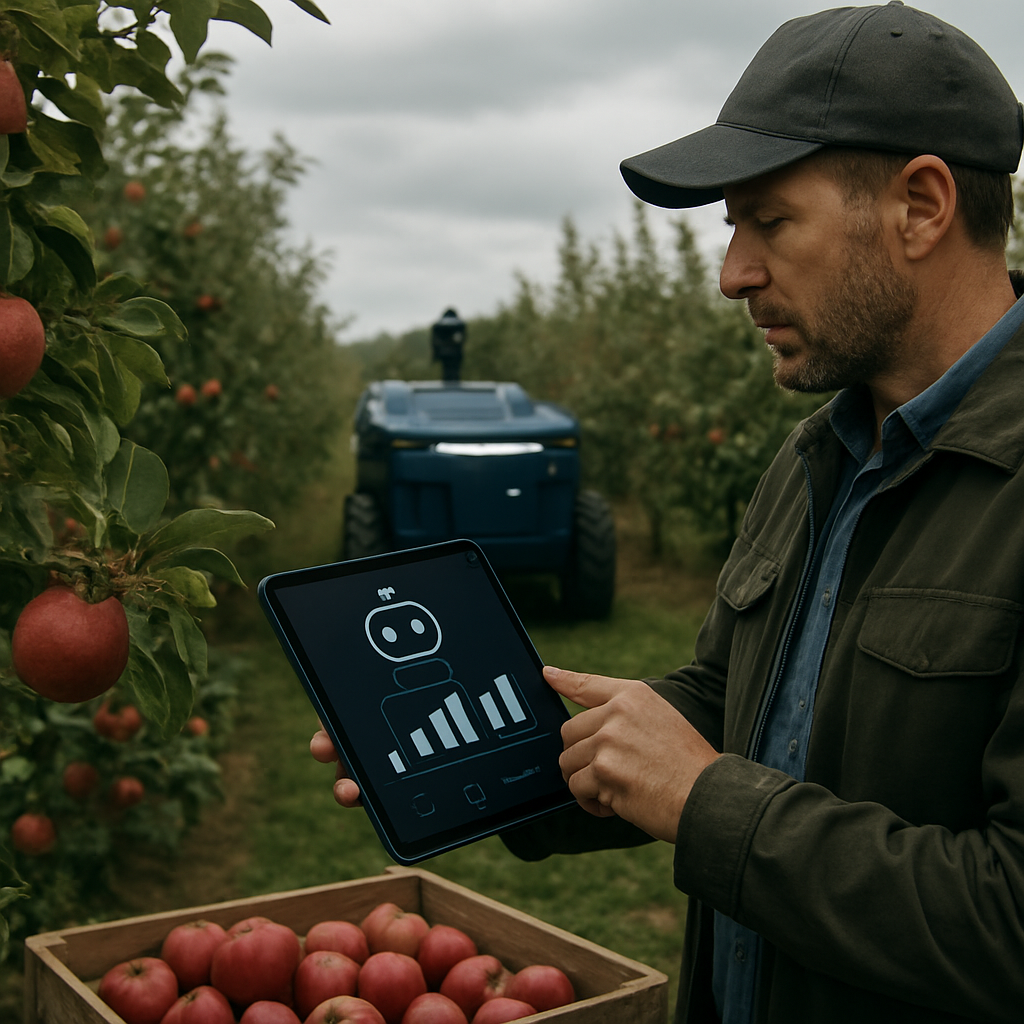
In recent years, farmers have increasingly turned to AI technology to enhance the efficiency and effectiveness of their harvests. In Washington State, apple growers were caught off guard by an unexpected heatwave during the harvest season. As temperatures soared, it was unsafe for laborers to work, bringing attention to the need for precise harvesting forecasts. Joel Carter from Okanagan Specialty Fruits explains that AI technology, which uses weather forecasts and fruit growth data, has become invaluable in planning harvests.
AI tools like those developed by Vivid Machines are incorporated to automate crop monitoring. Mounted on tractors, these tools capture images of the orchards, enabling the identification of even minute flower buds. This data allows for accurate crop yield predictions. With a vast acreage to cover, Carter illustrates the efficiency gains by optimizing when to hire seasonal workers and which areas to focus harvesting efforts on.
Similarly, in the UK, companies such as FruitCast provide AI-driven predictions for berries. This tool utilizes a range of techniques to gather imagery, including drones and smartphones, for detailed analysis of fruit ripening. The company claims impressive prediction accuracy, but success depends heavily on the quality of historical data available for analysis. Farmers benefit from increased precision in planning, especially for fruits with a narrow harvest window.
Simultaneously, ongoing research seeks to refine tools that assess the sugar content and condition of crops without physical sampling. Princeton University's exploration of millimeter-wave technology exemplifies these advancements. Trials in local markets have demonstrated potential improvements in determining fruit readiness based on internal conditions.
While the promise of AI in agriculture is great, challenges remain in both technological acceptance and data privacy. Farmers must trust in the efficacy and security of such systems, but as tech continues to mature, so does the potential for revolutionizing harvesting practices. Despite the challenges, AI heralds a promising future for maximizing agricultural productivity while minimizing waste and inefficiency.
Original news source: The AI telling farmers when to harvest – BBC News (BBC)
🎧 Listen:
📖 Vocabulary:
Group or Classroom Activities
Warm-up Activities:
1. Discuss your personal experiences with technology in daily life and any benefits you've noticed.
2. Share what you know about AI – where have you seen it in action?
3. Think about a recent challenge you've faced and how technology helped you solve it.
4. Discuss any recent climate changes you've observed in your area and how they've impacted local agriculture.
5. Imagine a day without technology. How would your routine change?
🤔 Comprehension Questions:
Due to an unexpected heatwave that made it unsafe for laborers to work.
They automate crop monitoring by capturing images of orchards from tractors.
By using drones and smartphones to gather imagery for fruit ripening analysis.
Tools assessing sugar content and condition of crops without physical sampling.
Technological acceptance and data privacy concerns remain challenges.
AI holds potential for revolutionizing harvesting practices by maximizing productivity and minimizing waste.
Very essential; the accuracy depends heavily on the quality of historical data available for analysis.
🎧✍️ Listen and Fill in the Gaps:
In recent years, farmers have increasingly turned to AI technology to enhance the efficiency and effectiveness of their harvests. In State, apple growers were caught off guard by an unexpected heatwave during the harvest season. As temperatures soared, it was unsafe for laborers to work, bringing attention to the need for precise forecasts. Joel Carter from Specialty Fruits explains that AI technology, which uses weather forecasts and fruit growth data, has invaluable in planning harvests. AI tools like those developed by Vivid Machines are incorporated to automate crop . Mounted on tractors, these tools capture images of the orchards, enabling the identification of even minute flower buds. This data allows for accurate crop yield predictions. With a vast acreage to cover, Carter illustrates the efficiency gains by optimizing when to hire workers and which to focus harvesting efforts on. , in the UK, companies such as FruitCast provide AI-driven predictions for berries. This tool utilizes a range of techniques to imagery, including drones and smartphones, for detailed analysis of ripening. The company claims impressive prediction accuracy, but success depends heavily on the quality of historical data available for analysis. Farmers from increased precision in planning, especially for fruits with a narrow harvest window. Simultaneously, ongoing research seeks to refine tools that assess the sugar content and condition of crops without physical sampling. University's exploration of millimeter-wave technology exemplifies these advancements. Trials in local markets have demonstrated potential improvements in determining fruit readiness based on internal conditions. While the promise of AI in agriculture is great, challenges remain in both technological acceptance and data privacy. Farmers must in the efficacy and security of such systems, but as tech to mature, so does the potential for revolutionizing harvesting practices. Despite the challenges, AI heralds a promising future for maximizing productivity while waste and inefficiency.
💬 Discussion Questions:
1. How do you feel about AI's increasing presence in agriculture?
2. What are the potential benefits of using AI for harvesting crops?
3. Can AI entirely replace human labor in farming?
4. What challenges might farmers face when adopting new technologies?
5. How important is data privacy in the context of smart farming?
6. What are some other industries where AI is making a significant impact?
7. How does climate change influence the adoption of technology in agriculture?
8. In what ways could AI help address food security issues?
9. What might be the environmental impacts of using AI in farming?
10. Are there any ethical concerns surrounding the use of AI in agriculture?
11. How can we ensure that AI technologies are accessible to small-scale farmers?
12. What role do you think government and policy play in the adoption of AI in agriculture?
Individual Activities
📖💭 Vocabulary Meanings:
Click a dot next to a word, then click the dot next to its meaning to draw a line connecting them.