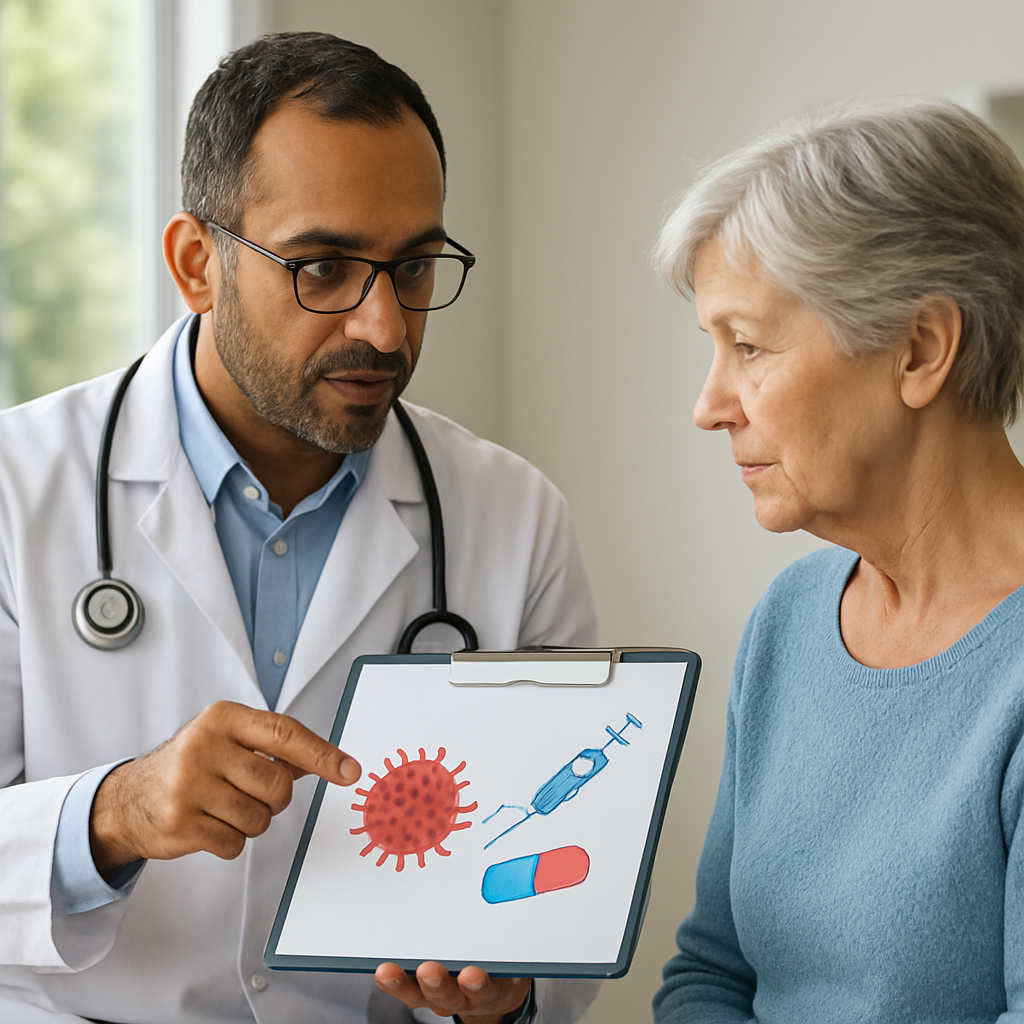
A new personalized cancer vaccine, used alongside immunotherapy, has shown remarkable results in recent trials. It reduced the risk of melanoma returning by 42%. The trials included over 1,100 participants, suggesting a potential change in cancer treatment approaches.
This vaccine employs mRNA technology, like the Covid vaccines. It is uniquely designed for each patient by using genetic information from their tumor. This customized method helps the immune system focus specifically on attacking recurring cancer cells.
Experts widely praised the findings but stressed the need for further extensive research. The application of this vaccine to other cancers such as kidney, bladder, and lung is under investigation, suggesting significant future possibilities.
Tony Chapman, who participated in the trial, shared his experience of being diagnosed with melanoma in 2019 and is now cancer-free. Although he is unsure if he received the actual vaccine, his story underlines the trial's hopeful outcomes.
1. immunotherapytreatment using the body's immune system
2. melanomaa type of skin cancer
3. mRNAa type of genetic material
4. tailoredcustomized for personal use
5. geneticrelating to genes
6. tumoran abnormal growth of cells
7. individualizeddesigned for a specific individual
8. renownedfamous and respected
9. extensivecovering a large area
10. participantsomeone who takes part in something
11. potentialpossible but not yet actual
12. technologyapplication of scientific knowledge
13. recurringhappening repeatedly
14. promisingshowing signs of future success
15. diagnosedidentified a disease
Group or Classroom Activities
Warm-up Activities:
1. What do you know about vaccines and why are they important? 2. Have you heard of personalized medicine before? What do you think it means? 3. In your opinion, how can technology improve medical treatments? 4. Do you know anyone who has participated in a medical trial? 5. Why do you think cancer research is such a significant area of study?
🤔 Comprehension Questions:
1. What is the main focus of the article?
A new personalized cancer vaccine and its trial results.
2. How does the vaccine work?
It uses mRNA technology tailored to a patient's tumor.
3. What percentage did the risk of melanoma returning decrease by?
42%.
4. How many participants were involved in the trials?
Over 1,100 participants.
5. Which other types of cancers are being looked into for this vaccine?
Kidney, bladder, and lung cancers.
6. What is the role of genetic information in this vaccine?
It helps tailor the vaccine specifically to each patient.
7. Who is Tony Chapman in the context of the article?
A trial participant who is now cancer-free.
🎧✍️ Listen and Fill in the Gaps:
A new personalized , used alongside immunotherapy, has shown remarkable results in recent trials. It reduced the risk of melanoma returning by 42%. The trials included over 1,100 , a potential change in cancer treatment approaches. This vaccine employs mRNA technology, like the Covid vaccines. It is uniquely designed for each patient by genetic information from their tumor. This customized method helps the focus on attacking recurring cancer cells. Experts widely praised the findings but stressed the need for further research. The application of this vaccine to cancers such as kidney, bladder, and lung is under investigation, suggesting significant future . Tony , who participated in the trial, his experience of being with in 2019 and is now cancer-free. Although he is unsure if he received the vaccine, his story underlines the trial's hopeful outcomes.
💬 Discussion Questions:
1. What are your thoughts on using mRNA technology for vaccines? 2. How do you feel about personalized medicine as the future of treatment? 3. Why do you think cancer treatments need constant advancement? 4. What other diseases do you think might benefit from personalized vaccines? 5. What are the ethical considerations of using genetic information in treatment? 6. How would you feel if asked to participate in a medical trial? 7. What role do you think technology plays in the future of medicine? 8. How do you think patients' lives might change with successful cancer vaccines? 9. In your opinion, what makes a medical finding 'impressive'? 10. What are some potential risks involved in developing new vaccines? 11. How can the results of medical trials impact public health policies? 12. Do you believe that extensive studies are necessary before approving new treatments?
Individual Activities
📖💭 Vocabulary Meanings:
Click a dot next to a word, then click the dot next to its meaning to draw a line connecting them.
Words
1. immunotherapy
2. melanoma
3. mRNA
4. tailored
5. genetic
6. tumor
7. individualized
8. renowned
9. extensive
10. participant
11. potential
12. technology
13. recurring
14. promising
15. diagnosed
Meanings
(A) happening repeatedly
(B) covering a large area
(C) application of scientific knowledge
(D) designed for a specific individual
(E) identified a disease
(F) possible but not yet actual
(G) a type of genetic material
(H) showing signs of future success
(I) customized for personal use
(J) relating to genes
(K) famous and respected
(L) an abnormal growth of cells
(M) a type of skin cancer
(N) treatment using the body's immune system
(O) someone who takes part in something
🔡 Multiple Choice Questions:
1. What is the new cancer treatment discussed?
(a) Chemotherapy
(b) Radiation therapy
(c) A personalized cancer vaccine
(d) Surgery
2. How much did the vaccine reduce the risk of melanoma?
(a) 42%
(b) 25%
(c) 50%
(d) 60%
3. What technology does the vaccine use?
(a) DNA
(b) Protein
(c) Enzyme
(d) mRNA
4. How many participants were in the trials?
(a) 500
(b) 2,000
(c) Over 1,100
(d) 800
5. For what cancers is the vaccine's application being explored?
(a) Bone and liver
(b) Kidney, bladder, and lung
(c) Brain and heart
(d) Stomach and pancreas
6. How did Tony Chapman benefit from the trial?
(a) He developed a new tumor
(b) He is now cancer-free
(c) His cancer returned
(d) He had side effects
7. What do experts say about the findings?
(a) They are not interested
(b) They reject the results
(c) They are ready to stop research
(d) They need more studies
8. How is the vaccine made unique to each patient?
(a) Using genetic information from the tumor
(b) Using a standard formula
(c) Based on age
(d) Based on diet
🕵️ True or False Questions:
1. The vaccine uses mRNA technology similar to Covid vaccines.
2. A new generic cancer vaccine was avoided with immunotherapy.
3. Tony Chapman is still battling cancer.
4. Researchers are dismissing its use against other cancers.
5. The vaccine increased melanoma risk by 42%.
6. More than 1,100 participants were in the trial.
7. Experts stress the need for further studies.
8. Each vaccine is tailored to the patient's tumor.
Writing Questions:
1. Describe how personalized medicine could change the future of healthcare.
2. Explain the importance of extensive studies in medical research.
3. Discuss the potential impact of using genetic information for treatments.
4. Reflect on the ethical considerations of medical trials.
5. Write about your thoughts on the future of cancer treatment.
Ethiopia’s Commercial Bank of Ethiopia (CBE) has recovered $10 million of the $14 million lost in a technical glitch, with customers voluntarily returning the funds, but those who don’t return the money will face criminal charges.