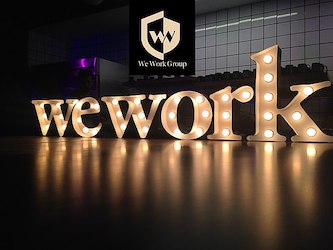
Neumann's strong leadership and different way of doing things, like giving out free beer and creating a work environment that mixed work and personal life, attracted a young and energetic workforce. With a lot of money from important supporters, WeWork quickly grew around the world, but it was losing a lot of money, and people started to question if it was really worth as much as a tech company. When WeWork tried to become a public company in 2019, it showed that there were bigger money problems, and its value dropped a lot, leading to Neumann stepping down as CEO.
Even though WeWork failed, Neumann was able to separate his personal money from the company and leave with a lot of money. He has since moved on to invest in other things and got support from a big venture capital firm. The story of WeWork and Neumann is a warning about the dangers of wanting too much and valuing a company too highly based on what it could do instead of its real financial worth.
WeWork's quick success and failure show the risks of trying to grow too fast and depending too much on investors being excited. The story of the company reminds us how important it is to manage money carefully and really understand how much a business is worth, instead of getting caught up in the excitement of growing quickly and being worth a lot. Neumann's journey is a lesson for both business owners and investors, showing that it's important to have a balanced approach to growing a business and making sure it can stay financially healthy.
Original news source: How WeWork’s founder flew too close to the Sun (BBC)
📖 Vocabulary:
Group or Classroom Activities
Warm-up Activities:
– News Summary
Instructions: Students are given five minutes to read the article and then work in pairs to summarize the key points. They must present their summary to the class in under two minutes, focusing on the rise and fall of WeWork and Adam Neumann's role in the company.
– Opinion Poll
Instructions: Create a list of statements about the WeWork story, such as "Rapid growth is more important than profitability for a startup" or "A charismatic leader is essential for a company's success." Students walk around the room and poll their classmates to see if they agree or disagree with each statement, tallying up the results. Afterward, discuss as a class the prevailing opinions and how they relate to the article.
– Word Association
Instructions: Write key terms from the article on the board, such as "flexible workspaces," "public company," "financial crisis," and "venture capital." Students must then say or write the first word that comes to their mind associated with each term. Discuss why they made those associations and how they relate to the article.
– Sketch It
Instructions: In groups, students draw a simple comic strip or series of sketches that illustrate the narrative of WeWork's rise and fall. They should include key moments such as WeWork's initial popularity, the failed public offering, and Neumann's departure. Share the sketches with the class and discuss how they capture the events and lessons from the article.
– Future Predictions
Instructions: After discussing the article, ask students to write down their predictions for the future of flexible workspaces and the legacy of Adam Neumann's approach to business. They can consider the impact of the pandemic on office spaces and how Neumann's story might influence future entrepreneurs and investors. Share and discuss these predictions as a class.
🤔 Comprehension Questions:
The main concept behind WeWork's business model was offering flexible workspaces.
The financial crisis contributed to WeWork's initial popularity because there were many empty commercial spaces and technology advancements made it easier to work from anywhere.
Under Adam Neumann's leadership, WeWork had unique aspects like free beer and a work environment that combined both work and personal life, which attracted a young and energetic workforce.
People started to doubt WeWork's value as a company because it was losing a lot of money, and there were questions about whether it should be valued as much as a tech company.
In 2019, WeWork's attempt to become a public company revealed bigger financial issues, leading to a significant drop in its value and Adam Neumann stepping down as CEO.
Adam Neumann was able to separate his personal finances from the company's and left with a substantial amount of money despite WeWork's downfall.
The story of WeWork and Neumann teaches us the dangers of overvaluing a company based on its potential instead of its actual financial performance.
The key lesson for business owners and investors from Neumann's experience with WeWork is the importance of a balanced approach to growing a business and ensuring it remains financially stable.
🎧✍️ Listen and Fill in the Gaps:
The rise and fall of WeWork and its founder, Adam Neumann, is a story that's like a modern-day lesson. Neumann's big personality and huge dreams made the successful, but it all came crashing down in a big way. WeWork's idea of offering flexible wasn't totally new, but it became popular after the financial crisis when there were lots of empty commercial spaces and technology made it to work from anywhere. Neumann's strong and different way of doing things, like giving out free beer and creating a work environment that mixed work and personal life, attracted a young and energetic workforce. With a lot of money from important , quickly grew around the world, but it was a lot of money, and people to question if it was really worth as much as a tech company. When WeWork tried to become a public company in 2019, it showed that there were bigger money problems, and its value dropped a lot, leading to Neumann stepping down as CEO. Even though WeWork failed, Neumann was able to separate his personal from the company and leave with a lot of money. He has since moved on to in things and got support from a big venture capital firm. The story of WeWork and Neumann is a warning about the dangers of wanting too much and valuing a company too highly based on what it could do instead of its real financial worth. WeWork's success and failure show the risks of trying to grow too fast and too much on investors being excited. The story of the company reminds us how important it is to money carefully and really understand how much a business is worth, instead of getting caught up in the of growing quickly and being worth a lot. Neumann's journey is a lesson for both business owners and investors, showing that it's important to have a balanced approach to growing a business and sure it can stay financially healthy.
💬 Discussion Questions:
1. What do you think about the idea of mixing work and personal life in the workplace? Why?
2. Have you ever experienced a really fast-paced work environment? Did you like it or not, and why?
3. How would you feel if your boss was a person with a big personality and huge dreams?
4. Do you think it's important for a leader to have strong leadership skills? Why or why not?
5. What is your opinion on companies that offer things like free beer to their employees?
6. Have you ever worked in a flexible workspace? If so, did you enjoy it?
7. Do you think it's risky for a company to grow very quickly? Why or why not?
8. What is your definition of a successful company?
9. How would you feel if you invested in a company that failed?
10. Do you think it's fair for CEOs to leave a failing company with a lot of money?
11. What do you think is more important for a business: to grow fast or to be financially healthy?
12. Do you like the idea of working for a startup that's trying to grow quickly? Why or why not?
13. How important do you think it is for a company to have a clear financial plan?
14. Do you think Adam Neumann was a good leader despite the failure of WeWork? Why or why not?
15. What lessons do you think other business owners can learn from the story of WeWork and Adam Neumann?
Individual Activities
📖💭 Vocabulary Meanings:
Click a dot next to a word, then click the dot next to its meaning to draw a line connecting them.
Words
Meanings
🔡 Multiple Choice Questions:
🕵️ True or False Questions:
📝 Write a Summary:
Write a summary of this news article in two sentences.
Check your writing now with the best free AI for English writing!