

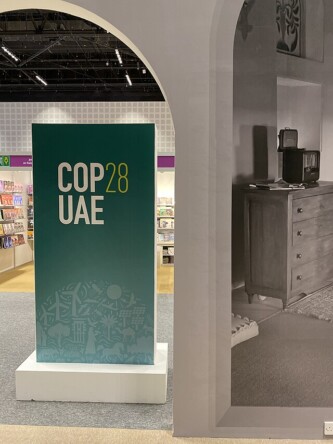
The first time that the world collectively agreed to cut greenhouse gas emissions was only eight years ago at COP21 in Paris. Nearly 200 countries pledged to keep global temperature rises "well below" 2 degrees Celsius and make efforts to limit them to 1.5 degrees Celsius. This agreement was a significant step forward and has triggered widespread climate action. However, the world is still not acting at the necessary pace to achieve the goals set in Paris. This will be a major issue at the COP28 conference.
One of the main goals of COP28 is to make the promises of action by governments, known as "Nationally Determined Contributions" or NDCs, more comprehensive. The hope is to broaden these commitments to cover emissions from all economic activities, including food and farming. Additionally, there will be efforts to make countries more accountable for the promises they make. Currently, the Paris agreement cannot force countries to take action, as all measures are voluntary.
Another crucial issue at the conference will be financing. Renewable technologies like wind and solar have become cheaper and more cost-effective than fossil fuels in many cases. The UAE aims to get the world to triple its renewable energy capacity by 2030 and double energy efficiency improvements. However, these measures require significant upfront investment. Furthermore, addressing the impacts of climate change and helping developing nations transition to green technologies will require trillions of dollars.
At the heart of these discussions is the inequality that divides the world. Most developed countries became wealthy by burning fossil fuels, while poorer nations now demand financial assistance to go green and cope with the climate impacts caused by the rich world. The promise by developed countries to provide $100 billion per year to support developing nations with climate action looks like it has finally been met. However, there are still debates about which countries will contribute to funds like the "Loss and Damage" fund, which helps the poorest countries deal with climate disasters.
Finally, there will be discussions about the long-term ambitions for fossil fuels. Should the world gradually reduce their production and use ("phase down") or set a complete end date for them ("phase out")? This question is particularly relevant this year, as the conference is being held in a petrostate that plans to increase its oil production capacity. The COP28 president supports a "phase down," but many countries, including those
Original news source: COP28: Can a climate summit in an oil state change anything? (BBC)
📖 Vocabulary:
Group or Classroom Activities
Warm-up Activities:
– Discussion Circle
Instructions: Divide the class into small groups. Give each group a specific topic related to the article (e.g. the role of oil-rich states in climate change, the effectiveness of the COP process, the financing of renewable energy projects). In their groups, students should discuss their assigned topic and share their opinions, ideas, and arguments. After a designated time, bring the class back together and have each group present a summary of their discussion.
– News Headline Creation
Instructions: Give each student a blank piece of paper. Tell them they will have 5 minutes to create a catchy news headline related to the article. The headline should capture the main point or controversy discussed in the article. After the time is up, have each student share their headline with the class. Then, as a class, discuss the different headlines and their effectiveness in capturing the essence of the article.
– Vocabulary Pictionary
Instructions: Create a list of vocabulary words from the article that students may find challenging or unfamiliar. Divide the class into pairs or small groups. Give each group a vocabulary word and ask them to draw a picture that represents the meaning of that word. The other groups must guess the word based on the drawing. Encourage students to use their English language skills to describe the word and its meaning. Rotate the groups and continue until all the vocabulary words have been covered.
– Pros and Cons Debate
Instructions: Divide the class into two groups: one group representing the pro side and one group representing the con side. Assign each group a specific aspect or issue discussed in the article (e.g. hosting COP28 in an oil-rich state, financing of renewable energy projects). Give each group time to prepare their arguments and gather evidence to support their position. Then, have a debate where each group presents their arguments and counterarguments. Encourage students to use persuasive language and critical thinking skills.
– Future Predictions
Instructions: In pairs or small groups, have students discuss and make predictions about the future of climate action and the COP process. They should consider the challenges, controversies, and goals discussed in the article. Each group should write down their predictions and the reasons behind them. After the discussion, have each group share their predictions with the class and engage in a discussion about the likelihood and potential impact of these predictions.
🤔 Comprehension Questions:
The significance of hosting the COP28 climate summit in Dubai is that it brings together world leaders to address the global climate crisis.
The decision to host the summit in Dubai has sparked controversy because the UAE, as one of the top ten oil producers, has been accused of planning to use the climate talks to secure oil and gas deals.
Greta Thunberg views the UN climate summits as being all talk and no action. She criticizes them for not bringing about meaningful action on climate change.
The first agreement to cut greenhouse gas emissions was made eight years ago at COP21 in Paris.
The main goals of COP28 are to make the promises of action by governments, known as "Nationally Determined Contributions" or NDCs, more comprehensive and to broaden these commitments to cover emissions from all economic activities. Additionally, there will be efforts to make countries more accountable for the promises they make.
Financing is a crucial issue at the conference because renewable technologies and climate action require significant upfront investment. Additionally, addressing the impacts of climate change and helping developing nations transition to green technologies will require trillions of dollars.
The inequality that divides the world in terms of climate action is that most developed countries became wealthy by burning fossil fuels, while poorer nations now demand financial assistance to go green and cope with the climate impacts caused by the rich world.
At the conference, there will be discussions about the long-term ambitions for fossil fuels, specifically whether the world should gradually reduce their production and use ("phase down") or set a complete end date for them ("phase out").
🎧✍️ Listen and Fill in the Gaps:
The upcoming COP28 , which is the most important climate meeting in the , will be hosted in Dubai by the United Arab Emirates (UAE), one of the top ten oil producers. This decision has sparked controversy, especially after evidence emerged that the UAE team planned to use the climate talks to secure oil and gas deals. Many wonder if a summit in an oil-rich state can truly bring about meaningful action on climate change. Greta Thunberg, a prominent climate activist, has criticized these UN climate as being all talk and no action. However, the COP process is essential because it brings together world leaders to address the global climate crisis. The first time that the world collectively agreed to cut greenhouse gas emissions was only eight years ago at COP21 in Paris. Nearly 200 countries pledged to keep global temperature "well below" 2 degrees Celsius and make to limit them to 1.5 degrees Celsius. This agreement was a significant step forward and has triggered widespread climate action. However, the world is still not acting at the necessary pace to the set in Paris. This will be a major issue at the COP28 conference. One of the main goals of COP28 is to make the promises of action by governments, known as "Nationally Determined Contributions" or NDCs, more comprehensive. The hope is to broaden these commitments to cover emissions from all economic activities, including food and farming. Additionally, there will be efforts to make countries more accountable for the promises they make. Currently, the Paris agreement cannot force countries to take action, as all measures are voluntary. Another crucial issue at the conference will be financing. Renewable technologies like wind and solar have become cheaper and more cost-effective than fossil fuels in many cases. The UAE aims to get the world to triple its renewable energy capacity by 2030 and double energy efficiency . However, these measures significant upfront investment. Furthermore, addressing the impacts of climate change and developing nations transition to green technologies will require trillions of dollars. At the heart of these discussions is the that divides the world. Most developed countries became wealthy by burning fossil fuels, while poorer nations now demand financial assistance to go green and cope with the climate impacts caused by the rich world. The promise by developed countries to provide $100 billion per year to support developing with climate action looks like it has finally been met. However, there are still debates about which countries will contribute to funds like the "Loss and Damage" fund, which helps the poorest countries deal with climate disasters. Finally, there will be discussions about the long-term ambitions for fossil fuels. Should the world gradually reduce their and use ("phase down") or set a complete end date for them ("phase out")? This is particularly relevant this year, as the conference is being held in a petrostate that plans to increase its oil production capacity. The president supports a "phase down," but many countries, including those
💬 Discussion Questions:
1. What is the significance of hosting the COP28 climate summit in Dubai, a major oil producer?
2. How would you feel if you were a climate activist and the UAE team planned to use the climate talks to secure oil and gas deals?
3. Do you think a summit in an oil-rich state can truly bring about meaningful action on climate change? Why or why not?
4. Why do you think Greta Thunberg has criticized UN climate summits as being all talk and no action?
5. How do you think the COP process is essential in addressing the global climate crisis?
6. What do you think has prevented the world from acting at the necessary pace to achieve the goals set in Paris?
7. How would you make the promises of action by governments, known as "Nationally Determined Contributions" or NDCs, more comprehensive?
8. Do you agree that the Paris agreement should have the power to force countries to take action, rather than relying on voluntary measures? Why or why not?
9. How do you think financing renewable technologies and addressing the impacts of climate change can be achieved?
10. Why do you think there is inequality between developed and developing countries when it comes to climate action and financial assistance?
11. Do you think developed countries should contribute to funds like the "Loss and Damage" fund to help the poorest countries deal with climate disasters? Why or why not?
12. How do you think the world should approach the long-term ambitions for fossil fuels – gradually reduce their production and use or set a complete end date for them?
13. How do you think a "phase down" of fossil fuels would impact countries like the UAE that rely heavily on oil production?
14. Do you think it is realistic to expect the world to triple its renewable energy capacity by 2030 and double energy efficiency improvements? Why or why not?
15. How do you think the COP28 conference can address the debates and challenges surrounding climate action and financial assistance?
Individual Activities
📖💭 Vocabulary Meanings:
Click a dot next to a word, then click the dot next to its meaning to draw a line connecting them.
Words
Meanings
🔡 Multiple Choice Questions:
🕵️ True or False Questions:
📝 Write a Summary:
Write a summary of this news article in two sentences.
Check your writing now with the best free AI for English writing!