


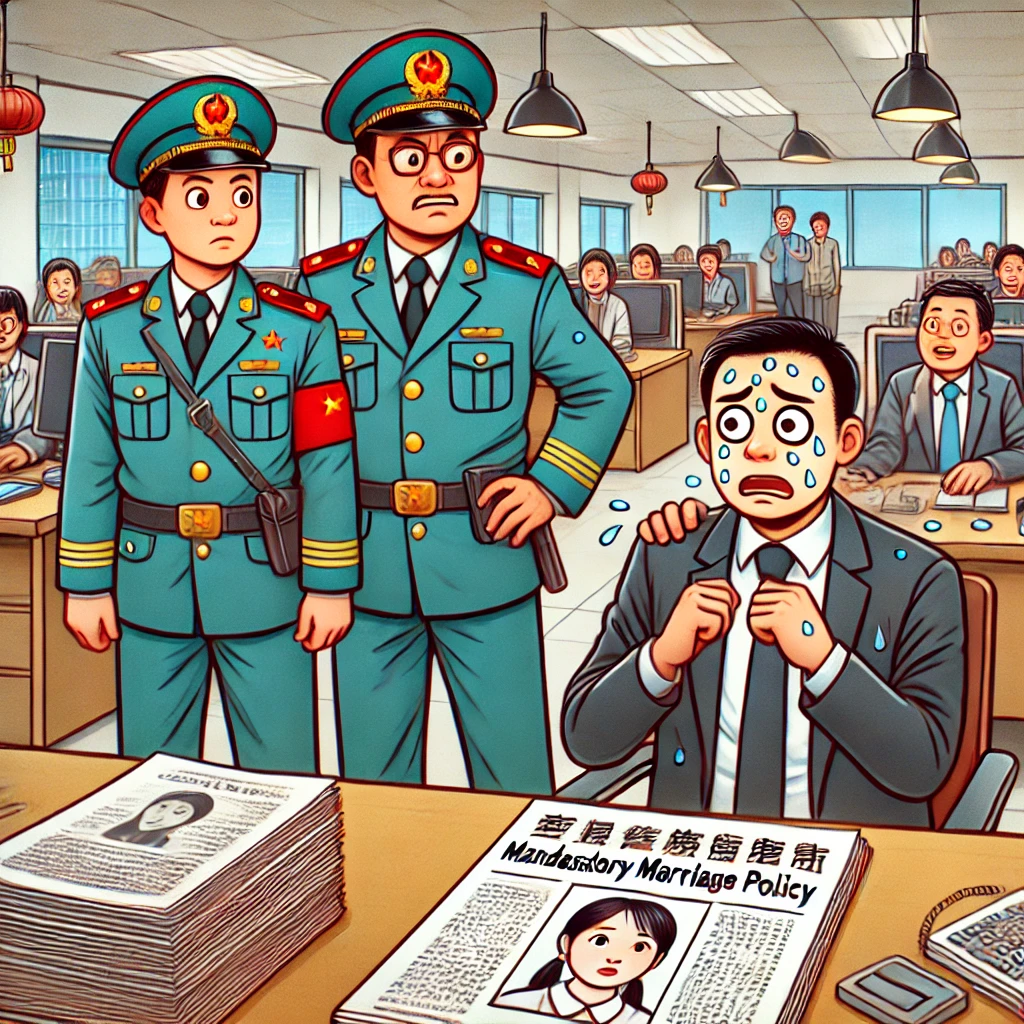
A company in China has recently retracted a controversial policy that threatened to terminate the employment of single workers if they did not marry by the end of September. The Shuntian Chemical Group, located in Shandong province, had issued a notice to its 1,200 employees, specifically targeting those aged between 28 and 58. The notice demanded that these unmarried individuals, including those who had previously been divorced, "resolve your personal marriage issues" by the specified deadline, or face consequences.
The company's announcement outlined a series of escalating measures for non-compliance. Initially, employees were required to submit a self-reflection if they remained unmarried by the first quarter. If they failed to marry by the second quarter, the company would conduct an evaluation of their situation. Ultimately, those who did not establish a family by the third quarter risked having their labor contracts terminated. The notice further criticized single employees for not adhering to the national encouragement to marry and have children, labeling them as "disloyal" and "disobedient" to parental guidance.
This policy emerged amidst a broader initiative by the Chinese government to address the declining birth rate in the country. Authorities have been promoting marriage and family formation among younger generations to counteract this demographic trend. However, the Shuntian Chemical Group's approach was met with significant backlash on social media, where many users expressed their disapproval of the company's demands.
In response to the public outcry, local officials from the human resources and social security bureau intervened, visiting the company to highlight the policy's violation of Chinese labor laws. Following this intervention, the Shuntian Chemical Group promptly withdrew the notice the next day. A representative from the company acknowledged that the language used in the announcement was inappropriate, leading to its retraction.
Recent government statistics indicate a troubling trend in China, with the number of new marriages dropping by 20% last year, marking the largest decline on record. Additionally, the population has decreased for the third consecutive year, now standing at approximately 1.408 billion. These figures underscore the challenges the country faces in reversing its declining birth rate and the complexities surrounding marriage and family formation in contemporary Chinese society.
Original news source: Chinese company that set deadline for single workers to get married responds to criticism (Sky News)
🎧 Listen:
📖 Vocabulary:
Group or Classroom Activities
Warm-up Activities:
– CHARADES
Instructions: Students will choose a word or phrase related to the article (e.g., "marriage policy," "backlash," "employment contract") and act it out without speaking while the rest of the class guesses the term.
– OPINION POLL
Instructions: Students will create a short survey with questions related to marriage and employment policies, such as "Should companies have a say in their employees' personal lives?" After creating the survey, they will conduct it among their peers and share the results with the class.
– HEADLINE CREATION
Instructions: Students will be divided into small groups and tasked with creating a catchy headline for the article. They will then present their headlines to the class and discuss the reasoning behind their choices.
– THINK-PAIR-SHARE
Instructions: Pose a thought-provoking question related to the article, such as "What are the potential consequences of companies interfering in employees' personal lives?" Students will first think individually, then discuss their thoughts with a partner, and finally share insights with the whole class.
– SYNONYM CHALLENGE
Instructions: Provide students with a list of vocabulary words from the article (e.g., "retract," "controversial," "evaluate"). Students will work in pairs to come up with synonyms for each word and share their findings with the class, discussing any nuances in meaning.
🤔 Comprehension Questions:
The Shuntian Chemical Group implemented a policy that threatened to terminate the employment of single workers if they did not marry by the end of September.
The company planned to enforce compliance by requiring unmarried employees to submit self-reflections, undergo evaluations, and face potential termination of their labor contracts if they did not marry by specific deadlines.
The company criticized single employees for not adhering to the national encouragement to marry and have children, labeling them as "disloyal" and "disobedient" to parental guidance.
The policy relates to the broader initiative by the Chinese government to address the declining birth rate by promoting marriage and family formation among younger generations.
The public reaction on social media was one of significant backlash, with many users expressing their disapproval of the company's demands.
Local officials from the human resources and social security bureau intervened by visiting the company to highlight the policy's violation of Chinese labor laws.
A representative from the company acknowledged that the language used in the announcement was inappropriate, leading to its retraction.
Recent statistics indicate that the number of new marriages dropped by 20% last year, marking the largest decline on record, and the population has decreased for the third consecutive year, now standing at approximately 1.408 billion.
🎧✍️ Listen and Fill in the Gaps:
A company in China has recently retracted a controversial policy that threatened to terminate the employment of single workers if they did not marry by the end of . The Shuntian Chemical Group, located in Shandong province, had issued a notice to its 1,200 employees, specifically targeting those aged between 28 and 58. The notice demanded that these unmarried , those who had previously been divorced, "resolve your personal marriage issues" by the specified , or face consequences. The company's announcement outlined a series of escalating measures for non-compliance. Initially, employees were required to submit a self-reflection if they remained by the first . If they failed to marry by the second quarter, the company would conduct an evaluation of their situation. Ultimately, those who did not establish a family by the third quarter risked having their labor contracts terminated. The notice further criticized single employees for not adhering to the national encouragement to marry and have children, labeling them as "disloyal" and "disobedient" to parental guidance. This policy amidst a broader initiative by the Chinese government to the declining birth rate in the country. Authorities have been promoting marriage and family formation among younger generations to counteract this demographic trend. However, the Shuntian Chemical Group's approach was met with significant on social media, where many users expressed their disapproval of the company's demands. In response to the outcry, local officials from the human resources and social security intervened, visiting the company to highlight the policy's violation of Chinese labor laws. Following this intervention, the Shuntian Chemical Group promptly the notice the next day. A representative from the company acknowledged that the language used in the announcement was inappropriate, leading to its . Recent government statistics indicate a troubling trend in China, with the number of new dropping by 20% last year, marking the largest decline on record. Additionally, the population has decreased for the third year, now standing at approximately 1.408 billion. These figures underscore the challenges the country faces in reversing its declining rate and the complexities surrounding marriage and family formation in contemporary Chinese society.
💬 Discussion Questions:
1. What is your opinion on companies influencing employees' personal lives, such as marriage and family decisions?
2. How would you feel if your employer set deadlines for you to get married or face consequences?
3. Do you think there should be limits to how much a company can involve itself in an employee's private life? Why or why not?
4. What is a healthy work-life balance, and how can companies support their employees in achieving it?
5. How do societal expectations about marriage and family impact individuals in your culture?
6. Do you think government initiatives to promote marriage and family formation are effective? Why or why not?
7. What is your perspective on the relationship between personal happiness and societal expectations regarding marriage?
8. How would you react if you were pressured by friends or family to get married by a certain age?
9. Do you believe that being single can be as fulfilling as being married? Why or why not?
10. What are some potential consequences of a declining birth rate in a country?
11. How do you feel about the idea of labeling single individuals as "disloyal" or "disobedient"?
12. Do you think that the government should intervene in personal matters like marriage? Why or why not?
13. What is a significant challenge you think single individuals face in today's society?
14. How would you feel if your job was at risk because of your marital status?
15. Do you think that cultural attitudes towards marriage are changing? Why or why not?
Individual Activities
📖💭 Vocabulary Meanings:
Click a dot next to a word, then click the dot next to its meaning to draw a line connecting them.
Words
Meanings
🔡 Multiple Choice Questions:
🕵️ True or False Questions:
📝 Write a Summary:
Write a summary of this news article in two sentences.
Check your writing now with the best free AI for English writing!