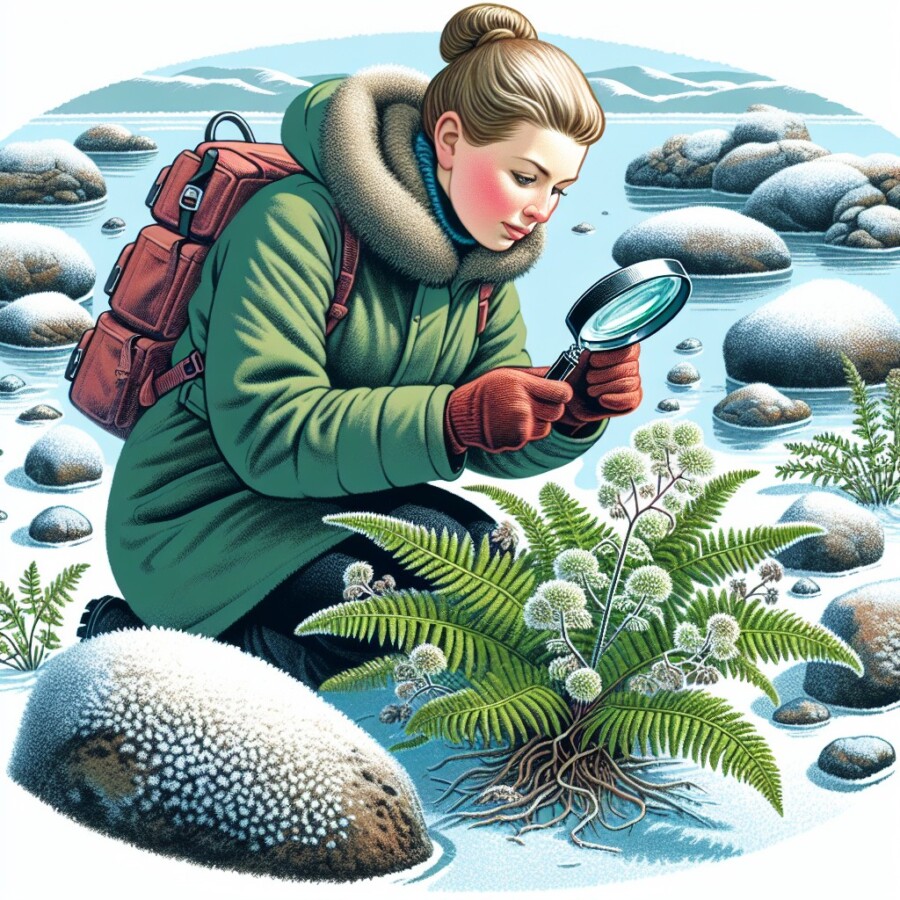
Rosemary Parslow, a nature enthusiast, spent Christmas on the Isles of Scilly in search of a rare fern that blooms in the winter. While most people were celebrating with family and friends, Rosemary was crawling on the frozen ground, dedicated to discovering this endangered plant. Her trips to find the fern have puzzled her three children, who thought she was "totally barking." However, Rosemary is determined to share her knowledge with the next generation of conservationists and has spent decades mapping rare and precious flora on the islands.
The Isles of Scilly, located off the coast of Cornwall, are home to over 100 islands, most of which are uninhabited. These islands have a unique natural history, hosting rare wildflowers, globally important seabirds, and unusual sea creatures. Rosemary first visited the islands in 1958 and fell in love with them. She eventually discovered the rare fern, called the least adder's-tongue fern, growing on a small patch of heath land. This plant grows to only 2cm tall and has leaves the size of a human fingernail. It gets its name from the snake-tongue-like central spike that appears in winter and produces spores.
While searching for another rare plant, Rosemary had a near-death experience when she almost drowned. Jumping from a rubber dinghy onto the rocks of a remote island, she fell overboard. Thankfully, she managed to swim to a boat and continue her studies for the rest of the day. Rosemary has faced setbacks throughout her career, including having to resign from her job at the Natural History Museum when she got married and started a family. However, she continued her work in natural history, illustrating books and writing about the natural history of the archipelago.
Now 87 years old and officially retired, Rosemary continues to map the coasts and heaths of the islands. She has witnessed the decline of many plants, particularly those found on the shore, due to climate change. She fears that some plants may have gone extinct, such as the shore dock. This year, she also observed the arrival of transparent jellyfish and rare sea squirts, which are indicators of the changing climate. Despite these challenges, Rosemary's dedication to nature has been recognized with a "nature hero" medal from the Wildlife Trusts.
Rosemary's legacy will be carried on by her three children, who share her love for the Isles of Scilly. Her youngest daughter, Helen, has even become an archaeologist. Rosemary recently visited St Agnes, where the fern still grows, and was able to show others its location and relate it to the maps she had made in the past. She hopes that someone else will continue monitoring the fern in the future.
Original news source: The woman who spent Christmas in search of a rare plant (BBC)
🎧 Listen:
📖 Vocabulary:
Group or Classroom Activities
Warm-up Activities:
– News Summary
Instructions:
1. Divide the class into pairs or small groups.
2. Give each group a copy of the article or read it aloud.
3. Instruct the groups to summarize the article in their own words, focusing on the main points and key details.
4. After a designated amount of time, have each group share their summary with the class.
– Opinion Poll
Instructions:
1. Divide the class into pairs or small groups.
2. Provide each group with a list of discussion questions related to the article.
3. Instruct the groups to discuss the questions and record their opinions.
4. After the discussion, have each group present their opinions to the class and facilitate a class-wide discussion.
– Vocabulary Pictionary
Instructions:
1. Write a list of vocabulary words from the article on the board.
2. Divide the class into pairs or small groups.
3. Instruct each group to choose one word from the list and draw a picture to represent it.
4. The groups should then take turns presenting their pictures to the class, while the rest of the class tries to guess the corresponding word.
– Pros and Cons
Instructions:
1. Divide the class into pairs or small groups.
2. Instruct each group to create a list of pros and cons related to Rosemary's dedication to finding the rare fern.
3. After a designated amount of time, have each group share their lists with the class and facilitate a class-wide discussion about the pros and cons of Rosemary's actions.
– Future Predictions
Instructions:
1. Instruct the class to imagine they are future conservationists studying the flora and fauna on the Isles of Scilly.
2. Divide the class into pairs or small groups.
3. Instruct each group to discuss and make predictions about the future of the rare fern and other plant species on the islands.
4. After the discussion, have each group present their predictions to the class and facilitate a class-wide discussion about the future of conservation on the Isles of Scilly.
🤔 Comprehension Questions:
🎧✍️ Listen and Fill in the Gaps:
Rosemary Parslow, a nature enthusiast, spent Christmas on the Isles of in search of a rare fern that blooms in the winter. While most people were celebrating with family and friends, Rosemary was on the frozen ground, dedicated to discovering this endangered plant. Her to find the fern have puzzled her three children, who thought she was "totally barking." However, Rosemary is determined to share her with the next generation of conservationists and has spent decades mapping rare and precious flora on the islands. The Isles of Scilly, located off the coast of Cornwall, are home to over 100 islands, most of which are uninhabited. These islands have a natural history, hosting rare wildflowers, globally important seabirds, and unusual sea creatures. Rosemary first visited the islands in 1958 and fell in love with them. She eventually discovered the rare fern, called the least adder's-tongue fern, growing on a small patch of heath land. This plant grows to only 2cm tall and has leaves the size of a human fingernail. It gets its name from the snake-tongue-like central spike that appears in winter and produces . While searching for another rare plant, Rosemary had a near-death when she almost drowned. from a rubber dinghy onto the rocks of a remote island, she fell overboard. Thankfully, she managed to swim to a boat and continue her studies for the rest of the day. has setbacks throughout her career, including having to resign from her job at the Natural History Museum when she got married and started a family. However, she continued her work in natural history, illustrating books and writing about the natural history of the archipelago. Now 87 old and officially , Rosemary continues to map the coasts and heaths of the islands. She has witnessed the decline of many plants, particularly those found on the shore, due to climate change. She fears that some plants may have gone extinct, such as the shore dock. This year, she also observed the arrival of transparent jellyfish and rare sea squirts, which are of the changing climate. Despite these , Rosemary's to nature has been recognized with a "nature hero" medal from the Wildlife Trusts. Rosemary's legacy will be carried on by her three children, who share her love for the Isles of Scilly. Her youngest daughter, Helen, has even become an archaeologist. Rosemary recently visited St Agnes, where the fern still grows, and was able to show others its location and it to the maps she had made in the past. She hopes that someone else will continue monitoring the fern in the future.
💬 Discussion Questions:
1. What is a nature enthusiast? Why do you think Rosemary is described as one?
2. How would you feel if you spent Christmas crawling on frozen ground in search of a rare plant?
3. Do you think it's important to share knowledge about conservation with the next generation? Why or why not?
4. What do you think makes the Isles of Scilly unique in terms of natural history?
5. How do you think Rosemary felt when she first discovered the rare fern on the islands?
6. Do you think it's worth risking your life for your passion? Why or why not?
7. Why do you think Rosemary continued her work in natural history even after facing setbacks in her career?
8. How do you think Rosemary feels about the decline of many plants due to climate change?
9. Do you think it's important to recognize and honor individuals like Rosemary who dedicate their lives to nature? Why or why not?
10. How do you think Rosemary's children feel about their mother's dedication to the Isles of Scilly?
11. What do you think it means for Rosemary's legacy to be carried on by her children?
12. How do you think Rosemary felt when she was able to show others the location of the fern and relate it to her maps?
13. Do you think someone else will continue monitoring the fern in the future? Why or why not?
14. How would you feel if you were awarded a "nature hero" medal for your dedication to nature?
15. Do you have a passion or hobby that you would be willing to dedicate your life to? Why or why not?
Individual Activities
📖💭 Vocabulary Meanings:
Click a dot next to a word, then click the dot next to its meaning to draw a line connecting them.
Words
Meanings
🔡 Multiple Choice Questions:
🕵️ True or False Questions:
📝 Write a Summary:
Write a summary of this news article in two sentences.
Check your writing now with the best free AI for English writing!