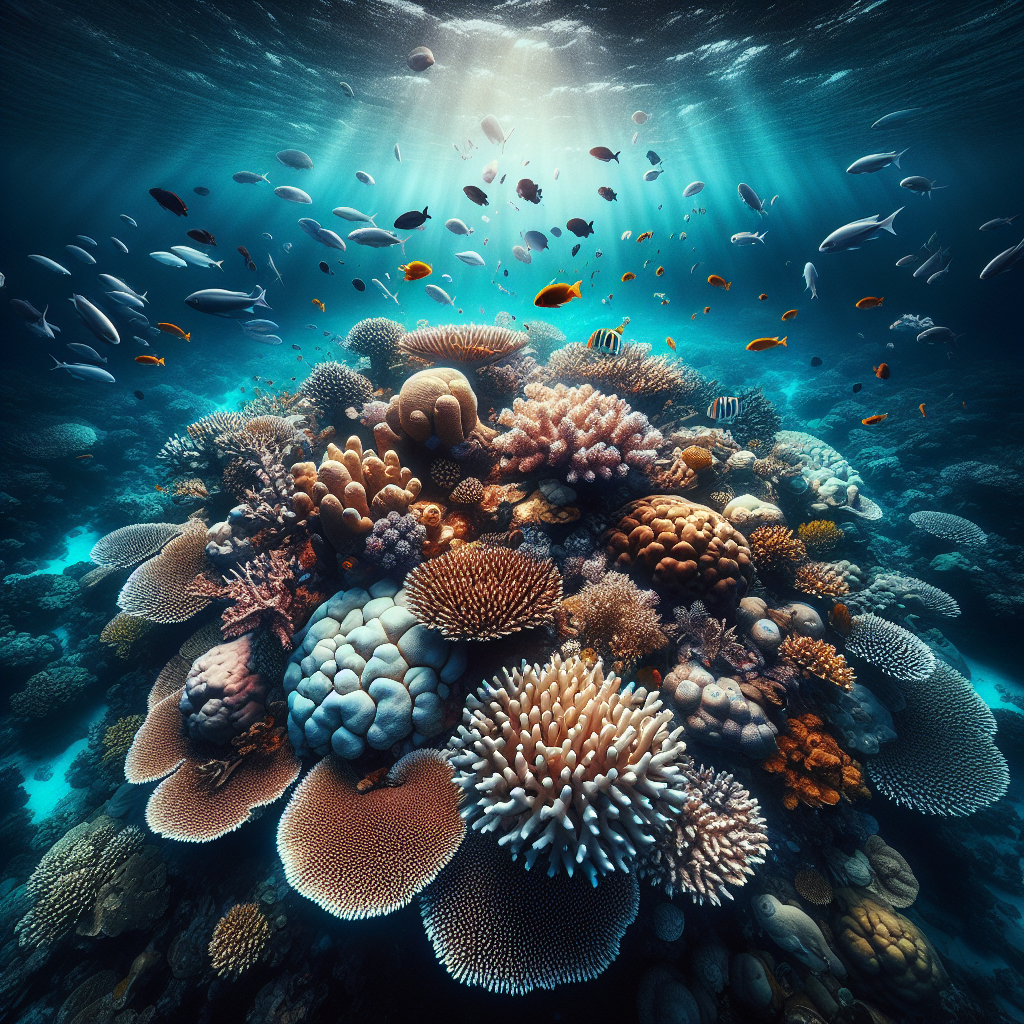


Diving instructor Reginald Beckford, who used to fear sharks, now plays a crucial role in protecting the third-largest barrier reef in the world from a deadly coral disease. The Turks and Caicos Islands, where Reginald is based, became one of the many Caribbean countries affected by stony coral tissue loss disease (SCTLD) in 2019. This disease has spread rapidly and is now present in 28 nations in the region. Reginald, along with other volunteers from the TC Reef Fund, is working to stop the spread of SCTLD by applying an antibiotic paste to infected corals. While this method does not prevent reinfection, it gives the corals enough time to reproduce before they die.
Former teacher Arenthia Baker also joined the fight against SCTLD after moving to the islands from Florida. She now volunteers with the Reef Fund as a certified fish data scientist and divemaster. Despite the challenges faced by the reef, including coral bleaching caused by warm seas, Arenthia remains optimistic about their ability to combat SCTLD. Researchers at the Smithsonian's National Museum of Natural History have made a significant breakthrough by discovering the first effective bacterial probiotic for treating the disease. This is promising news as the current use of antibiotics risks promoting antibiotic-resistant bacteria.
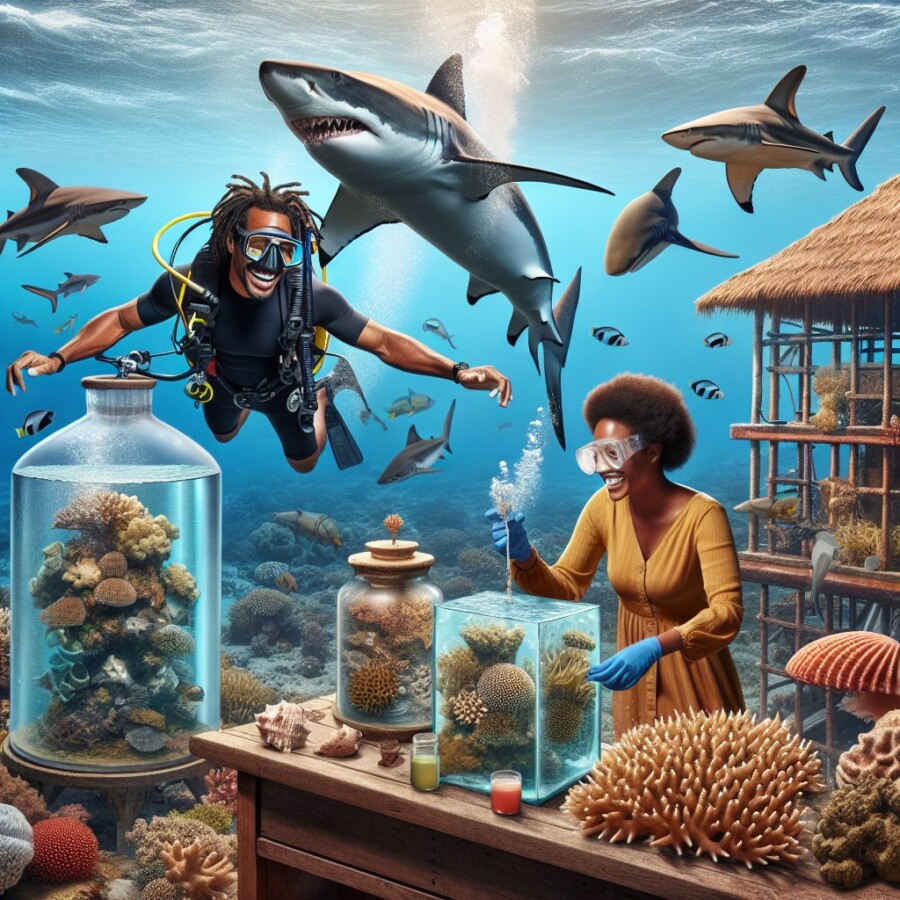
Turks and Caicos is at the forefront of reef restoration research. They have established two in-water coral nurseries and a land-based biobank, which is the first of its kind in the Caribbean's British territories. The biobank, funded by the John Ellerman Foundation, houses healthy coral fragments that will eventually be replanted onto the reef. Preserving genetic diversity is crucial, and the Reef Fund's executive director, Alizee Zimmermann, ensures the best conditions for the corals to thrive. Local carpenters have crafted tanks to hold samples of the most susceptible coral species, acting as a "coral ark." The team also creates synthetic seawater with the ideal balance of minerals to support the corals' growth.
Alizee Zimmermann has developed a personal connection with the corals and can tell if they are happy or hungry. The corals receive food from algae living in their tissues, and the team also feeds them conch slop and algae smoothies. Despite the challenges faced by the reef, the efforts of volunteers like Reginald and Arenthia, along with the breakthroughs in research, provide hope for the future of the coral reef ecosystem.
Original news source: Coral reef: How divers are using antibiotics to save sick corals (BBC)
🎧 Listen:
📖 Vocabulary:
Group or Classroom Activities
Warm-up Activities:
– News Summary
Instructions: Divide the class into small groups. Each group will read the article and then work together to write a concise summary of the main points. Afterward, each group will present their summary to the class.
– Opinion Poll
Instructions: Ask the students to form pairs or small groups. Provide them with a list of questions related to the article, such as "Do you think the efforts of volunteers can successfully combat coral diseases?" or "Should more funding be allocated to reef restoration research?" Each group will discuss the questions and then present their opinions to the class.
– Vocabulary Pictionary
Instructions: Write a list of vocabulary words from the article on the board. Divide the class into two teams. One student from each team will come to the board and draw a picture to represent one of the words. The rest of their team must guess the word based on the drawing. The team that guesses the most words correctly wins.
– Pros and Cons
Instructions: Divide the class into two groups. Assign one group to discuss the pros of the coral reef restoration efforts mentioned in the article, and the other group to discuss the cons. Each group will have time to brainstorm and then present their arguments to the class. Encourage a respectful debate and discussion.
– Future Predictions
Instructions: In pairs or small groups, ask the students to imagine what the future holds for coral reefs and reef restoration efforts. They should consider factors such as climate change, human impact, and advancements in research and technology. Each group will present their predictions to the class and explain their reasoning.
🤔 Comprehension Questions:
🎧✍️ Listen and Fill in the Gaps:
Diving instructor Beckford, who used to fear sharks, now plays a crucial role in protecting the third-largest reef in the from a deadly coral disease. The Turks and Caicos Islands, where Reginald is , became one of the many Caribbean countries affected by stony coral tissue loss disease (SCTLD) in 2019. This disease has spread rapidly and is now present in 28 nations in the region. Reginald, along with other volunteers from the TC Reef Fund, is working to stop the spread of SCTLD by applying an antibiotic paste to infected corals. While this method does not prevent reinfection, it gives the enough time to reproduce before they die. Former teacher Baker also joined the fight against SCTLD after moving to the islands from Florida. She now volunteers with the Reef Fund as a certified fish data and divemaster. Despite the challenges faced by the reef, including coral bleaching caused by warm seas, Arenthia remains optimistic about their ability to combat SCTLD. at the Smithsonian's National Museum of Natural History have made a significant breakthrough by discovering the first effective bacterial probiotic for treating the disease. This is promising news as the current use of antibiotics risks promoting antibiotic-resistant bacteria. Turks and Caicos is at the forefront of reef restoration . They have established two in-water coral nurseries and a land-based biobank, which is the first of its kind in the Caribbean's British territories. The biobank, funded by the John Ellerman Foundation, houses healthy coral fragments that will eventually be replanted onto the reef. Preserving diversity is crucial, and the Reef Fund's director, Alizee Zimmermann, ensures the best conditions for the corals to . Local carpenters have crafted tanks to hold samples of the most susceptible species, acting as a "coral ark." The team also creates synthetic seawater with the ideal balance of minerals to the corals' growth. Alizee Zimmermann has a personal connection with the corals and can tell if they are happy or hungry. The corals receive food from algae living in their tissues, and the team also feeds them conch slop and algae . Despite the challenges faced by the reef, the efforts of volunteers like Reginald and Arenthia, along with the breakthroughs in research, provide hope for the future of the coral reef ecosystem.
💬 Discussion Questions:
1. What is the role of diving instructor Reginald Beckford in protecting the coral reef from SCTLD?
2. How would you feel if you had to apply an antibiotic paste to infected corals to stop the spread of a deadly disease?
3. Do you think it is important to volunteer and contribute to environmental conservation efforts? Why or why not?
4. What do you think about the use of antibiotics to treat coral diseases? Do you think there are any potential risks or drawbacks?
5. How do you think coral bleaching caused by warm seas affects the overall health of the reef?
6. Have you ever volunteered for a conservation project? If so, what was your experience like?
7. What do you think about the establishment of coral nurseries and a land-based biobank for reef restoration? Do you think these initiatives are effective?
8. How important do you think genetic diversity is in preserving coral reefs? Why or why not?
9. Do you think it is possible to determine if corals are "happy" or "hungry"? Why or why not?
10. How do you think the efforts of volunteers like Reginald and Arenthia contribute to the future of coral reef ecosystems?
11. Have you ever witnessed the effects of coral bleaching or other coral diseases? How did it make you feel?
12. What do you think about the idea of creating synthetic seawater to support the growth of corals? Do you think it is a viable solution?
13. How do you think the breakthrough in discovering an effective bacterial probiotic for treating SCTLD will impact future coral reef conservation efforts?
14. Do you think it is important for individuals to develop a personal connection with the environment they are trying to protect? Why or why not?
15. How do you think the coral reef ecosystem affects the overall health of our planet?
Individual Activities
📖💭 Vocabulary Meanings:
Click a dot next to a word, then click the dot next to its meaning to draw a line connecting them.
Words
Meanings
🔡 Multiple Choice Questions:
🕵️ True or False Questions:
📝 Write a Summary:
Write a summary of this news article in two sentences.
Check your writing now with the best free AI for English writing!