The lack of water has resulted in a decrease in meadows, making it unviable for farmers to keep large flocks of pashmina goats. As a result, many herders are giving up their traditional livelihoods and migrating to other parts of India in search of non-pastoral work. Apricot farmers are also struggling to find water for their crops and are leaving the region in large numbers. The changing landscape and water scarcity have had a profound impact on the lives and livelihoods of the Ladakhi people.
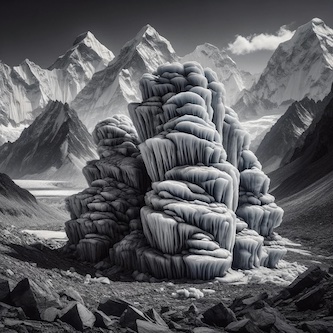
Despite the challenges posed by climate change, there is hope for the region. Engineer Sonam Wangchuk came up with an innovative solution to address the water scarcity issue. He and his team developed a method to freeze water in the shape of cones, known as ice stupas. These ice stupas, which can reach heights of over 100ft, provide a water supply for the community during the dry spring season. They have not only become a practical solution but also a source of entertainment, with competitions for the tallest stupa taking place annually.
However, Wangchuk emphasizes that technical innovations alone are not enough to address the issue of climate change. He wants to use ice stupas as a way to raise awareness about the need for a change in behavior and to highlight the injustice faced by the Ladakhi people, who are paying the price for carbon emissions made elsewhere. Climate change is a global problem, and it is crucial for countries to come together to combat this threat and ensure the survival of vulnerable regions like Ladakh.
As a photographer who has traveled extensively in South Asia, I have witnessed the impact of climate change in various regions. Ladakh is not alone in its fight against climate change. It is time for countries like India, China, and Pakistan to unite and strengthen their resilience against this common enemy. Climate change has the potential to destroy river basins and threaten densely populated regions. By working together, we can create a sustainable future and protect vulnerable communities from the devastating effects of climate change.
Original news source: Climate change: The villagers building 100ft ice towers (BBC)
📖 Vocabulary:
Group or Classroom Activities
Warm-up Activities:
– News Summary
Instructions: In pairs, students will read the article and then write a summary of the main points in their own words. They will then share their summaries with another pair and compare their answers.
– Word Association
Instructions: In small groups, students will take turns saying a word or phrase that they associate with the topic of climate change. They can use words from the article or their own ideas. The goal is to keep the conversation going and see how many different associations they can come up with.
– Sketch It
Instructions: Each student will choose a specific aspect or idea from the article and create a quick sketch to represent it. Afterward, they will share their sketches with a partner and explain what they drew and why.
– Opinion Poll
Instructions: In pairs or small groups, students will discuss their opinions on climate change and its impact on vulnerable regions like Ladakh. They can use the information from the article to support their arguments. Afterward, each group will present their opinions to the class and engage in a class-wide discussion.
– Future Predictions
Instructions: In small groups, students will discuss and make predictions about the future of Ladakh and other vulnerable regions in the face of climate change. They can consider possible solutions, challenges, and potential outcomes. Afterward, each group will share their predictions with the class and discuss the different perspectives.
🤔 Comprehension Questions:
🎧✍️ Listen and Fill in the Gaps:
The Ladakh region in northern India is facing the increasing threat of climate change. In the past, Ladakh enjoyed 300 days of sunshine and rainfall, making floods virtually unheard of. However, in recent years, the region has experienced devastating floods due to climate change. These floods, which used to occur once every seven , have now happened four times in less than 10 years. The changing climate has also led to unpredictable snowfall and the retreat of glaciers, causing scarcity and impacting the livelihoods of the local . The lack of water has resulted in a decrease in meadows, making it unviable for farmers to keep large flocks of pashmina goats. As a , many herders are giving up their traditional livelihoods and migrating to other parts of India in of non-pastoral work. Apricot farmers are also struggling to find water for their crops and are the region in numbers. The changing landscape and water scarcity have had a profound impact on the lives and livelihoods of the Ladakhi people. Despite the challenges posed by climate change, there is hope for the region. Engineer Sonam Wangchuk came up with an innovative solution to address the water scarcity issue. He and his team developed a method to freeze water in the shape of cones, known as ice . These ice stupas, which can reach heights of over 100ft, provide a water for the community during the dry spring season. They have not only become a practical solution but also a source of entertainment, with for the tallest stupa taking place annually. However, Wangchuk emphasizes that technical innovations alone are not enough to address the issue of climate change. He to use ice stupas as a way to raise awareness about the need for a change in behavior and to highlight the injustice faced by the Ladakhi people, who are paying the price for carbon emissions made elsewhere. Climate change is a global problem, and it is crucial for to come together to combat this threat and ensure the survival of vulnerable like Ladakh. As a photographer who has traveled extensively in South Asia, I have witnessed the impact of climate change in various regions. Ladakh is not alone in its fight against climate change. It is time for countries like India, China, and to unite and strengthen their against this common enemy. Climate change has the potential to destroy river basins and threaten densely populated regions. By working together, we can create a sustainable future and protect vulnerable communities from the devastating effects of climate change.
💬 Discussion Questions:
1. How do you think the people of Ladakh feel about the increasing threat of climate change in their region?
2. Do you think it is fair that the Ladakhi people are paying the price for carbon emissions made elsewhere? Why or why not?
3. How would you feel if you had to give up your traditional livelihood and migrate to another part of the country due to climate change?
4. What do you think can be done to raise awareness about the need for a change in behavior to combat climate change?
5. How important do you think it is for countries to come together and unite against the common enemy of climate change? Why or why not?
6. What do you think are some potential consequences of climate change on river basins and densely populated regions?
7. How do you think the Ladakhi people feel about the innovative solution of ice stupas? Do you think they see them as just a practical solution or also as a source of entertainment?
8. How do you think the changing climate and water scarcity have impacted the lives and livelihoods of the Ladakhi people?
9. Do you think technical innovations alone are enough to address the issue of climate change? Why or why not?
10. How do you think the Ladakhi people feel about the increasing frequency of devastating floods in their region?
11. Do you think it is the responsibility of countries like India, China, and Pakistan to take a leading role in combating climate change? Why or why not?
12. What do you think are some potential long-term effects of climate change on vulnerable communities like Ladakh?
13. How do you think the Ladakhi people feel about the decrease in meadows and the impact on farmers and herders?
14. How would you feel if your region experienced unpredictable snowfall and the retreat of glaciers due to climate change?
15. Do you think the ice stupas in Ladakh can serve as a model for other regions facing water scarcity due to climate change? Why or why not?
Individual Activities
📖💭 Vocabulary Meanings:
Click a dot next to a word, then click the dot next to its meaning to draw a line connecting them.
Words
Meanings
🔡 Multiple Choice Questions:
🕵️ True or False Questions:
📝 Write a Summary:
Write a summary of this news article in two sentences.
Check your writing now with the best free AI for English writing!