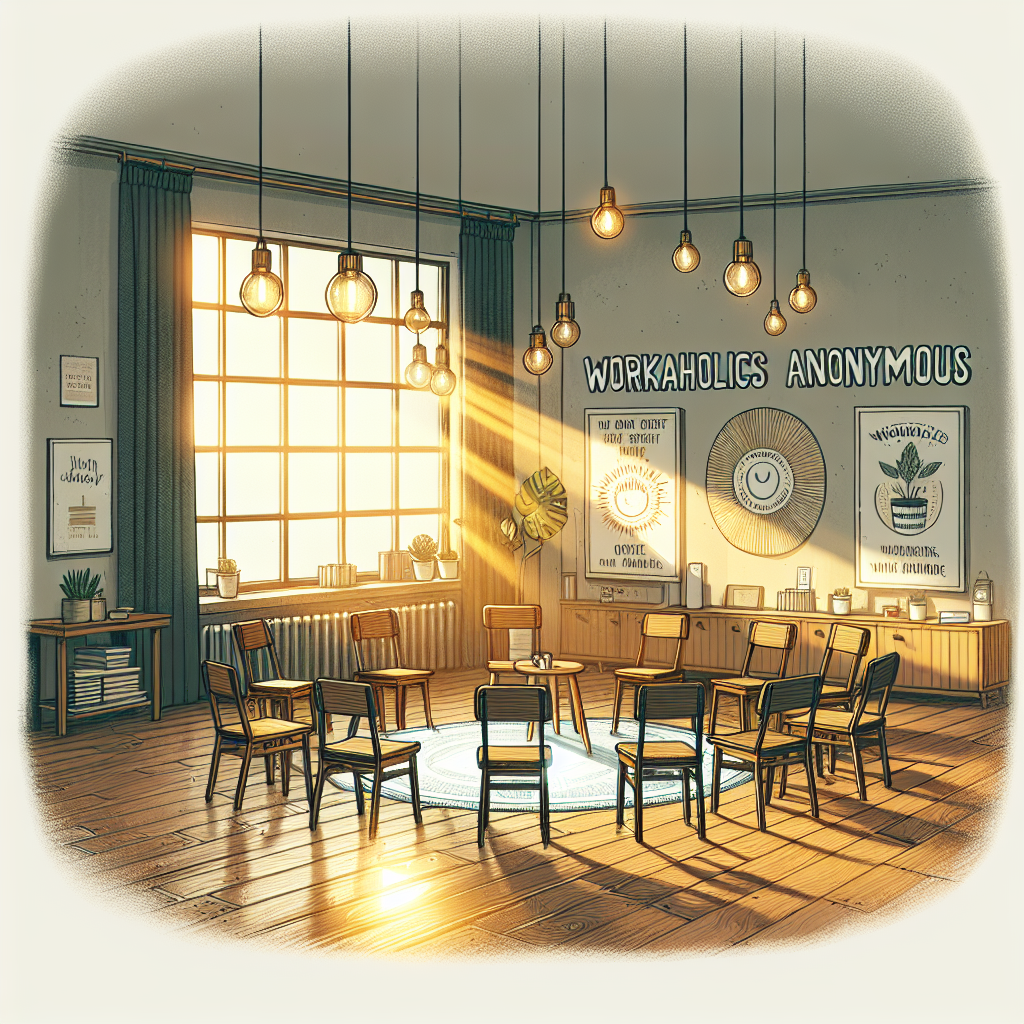
Workaholics Anonymous is a support group for individuals who struggle with work addiction. Similar to Alcoholics Anonymous, it provides a judgement-free space for people to openly discuss their struggles and work towards recovery. The group consists of 20 members who meet weekly on Zoom, including individuals from different time zones across the UK. The BBC was granted permission to join one of their meetings.
During the meeting, members share their experiences and emotions related to workaholism. One woman expresses her shame and emotional turmoil as she fights against the urge to work even after putting her young son to bed. Another woman admits to using excessive work talk as a way to hide her insecurities during a dinner with her partner's family. Both women feel trapped by their work addiction and long for a life beyond work.
Caroline Walker, who is writing a book about her recovery, distinguishes between overworking and work addiction. She believes workaholics are aware that their behavior is harmful and out of control, leading to feelings of shame and a desire to hide their addiction. Workaholics often use work as a means to avoid difficult emotions such as low self-esteem.
Playwright James Graham, who struggled with workaholism, attributes his addiction to deriving all his self-esteem and happiness from work. He admits that this pattern of behavior hindered his ability to form intimate relationships. Work addiction is not recognized as a medical condition in the UK, which means it often goes unnoticed until individuals experience burnout or physical health issues.
According to life coach Nick Hatter, work addiction is often driven by fear of not having enough or not being enough. Financial insecurity can also contribute to the urge to work excessively. Lee Fernandes, a lead therapist, warns employers about the dangers of allowing employees to overwork, as it can lead to burnout. Work addiction can manifest differently in men and women, with women potentially not spending as much time in the office but still constantly working.
Workaholics Anonymous has close to 20 weekly meetings in the UK, attracting members of all ages. While recovery is a lifelong process, the group provides a supportive community for individuals to disentangle their identity from their job and learn that they are more than just their work.
Original news source: Workaholics Anonymous: 'I couldn't step away from the computer' (BBC)
🎧 Listen:
📖 Vocabulary:
Group or Classroom Activities
Warm-up Activities:
– News Summary
Instructions: Divide the students into pairs or small groups. Provide each group with a copy of the article. Instruct them to read the article and work together to create a concise summary of the main points. After they have finished, have each group share their summary with the class.
– Opinion Poll
Instructions: Divide the students into pairs or small groups. Provide each group with a list of discussion questions related to the article. Instruct them to take turns asking and answering the questions, and encourage them to give detailed explanations for their answers. After they have finished, have each group share some of their responses with the class.
– Vocabulary Pictionary
Instructions: Write a list of key vocabulary words from the article on the board. Divide the students into pairs or small groups. Instruct them to take turns selecting a word from the list and drawing a picture that represents the word. The other members of the group must then try to guess the word based on the drawing. Encourage the students to use the words in sentences or provide definitions after the word has been guessed.
– Pros and Cons
Instructions: Divide the students into pairs or small groups. Instruct them to discuss the pros and cons of workaholism based on the information in the article. Encourage them to consider both the positive and negative aspects of being a workaholic. After they have finished, have each group share their thoughts with the class and facilitate a class discussion on the topic.
– Future Predictions
Instructions: Instruct the students to imagine that they are members of Workaholics Anonymous and that they are attending a meeting in the future. Ask them to write a short speech or reflection on their journey to recovery and what their life looks like now. Encourage them to use vocabulary and concepts from the article to support their predictions. After they have finished, give the students an opportunity to share their reflections with the class.
🤔 Comprehension Questions:
🎧✍️ Listen and Fill in the Gaps:
Workaholics Anonymous is a support group for individuals who struggle with work addiction. Similar to Alcoholics Anonymous, it provides a judgement-free space for people to openly discuss their struggles and work towards recovery. The group consists of 20 members who meet weekly on Zoom, individuals from different time zones across the UK. The BBC was granted to join one of their meetings. During the meeting, members their experiences and emotions related to workaholism. One expresses her shame and emotional turmoil as she fights against the urge to work even after putting her young son to bed. Another woman to using excessive work talk as a way to hide her insecurities during a dinner with her partner's family. Both women feel trapped by their work addiction and long for a life beyond work. Caroline Walker, who is writing a book about her recovery, distinguishes between overworking and work addiction. She believes are aware that their behavior is harmful and out of control, leading to feelings of shame and a desire to hide their addiction. Workaholics often use work as a to difficult emotions such as low self-esteem. Playwright James Graham, who struggled with workaholism, attributes his to deriving all his self-esteem and happiness from work. He admits that this pattern of behavior hindered his to form intimate relationships. Work addiction is not recognized as a medical condition in the UK, which means it often goes unnoticed until individuals experience burnout or physical health issues. According to life coach Nick Hatter, work addiction is often driven by fear of not having or not being enough. insecurity can also contribute to the urge to work excessively. Lee Fernandes, a lead therapist, employers about the of allowing employees to overwork, as it can lead to burnout. Work addiction can manifest differently in men and women, with women potentially not as much time in the office but still constantly working. Workaholics Anonymous has close to 20 weekly meetings in the UK, attracting members of all ages. While recovery is a lifelong process, the group a supportive community for individuals to disentangle their identity from their job and learn that they are more than just their work.
💬 Discussion Questions:
1. What is work addiction and how does it differ from simply overworking?
2. How would you feel if you were a workaholic and constantly felt the need to work, even outside of normal working hours?
3. Do you think work addiction is a recognized medical condition in your country? Why or why not?
4. How do you think work addiction can impact personal relationships?
5. What strategies do you think could be effective in overcoming work addiction?
6. Why do you think some people turn to work as a way to avoid difficult emotions?
7. Do you think financial insecurity can contribute to work addiction? Why or why not?
8. How do you think work addiction can lead to burnout?
9. Do you think men and women experience work addiction differently? Why or why not?
10. How would you feel if you were constantly working, even if you weren't physically in the office?
11. Do you think work addiction is more common in certain professions? Why or why not?
12. How do you think being a workaholic could impact your mental health?
13. What strategies do you think employers can implement to prevent work addiction among their employees?
14. Why do you think recovery from work addiction is described as a lifelong process?
15. How would you feel if you were able to disentangle your identity from your job and realize you are more than just your work? Why or why not?
Individual Activities
📖💭 Vocabulary Meanings:
Click a dot next to a word, then click the dot next to its meaning to draw a line connecting them.
Words
Meanings
🔡 Multiple Choice Questions:
🕵️ True or False Questions:
📝 Write a Summary:
Write a summary of this news article in two sentences.
Check your writing now with the best free AI for English writing!