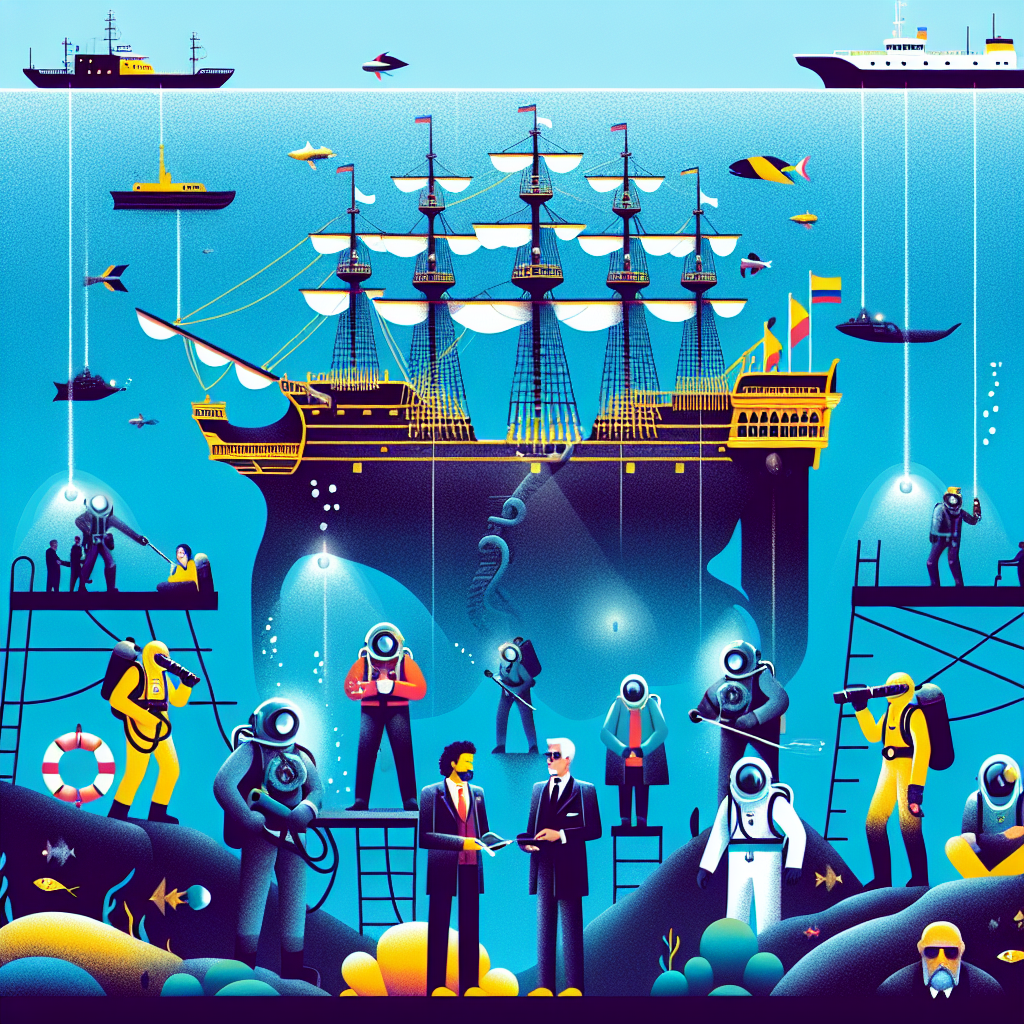
The San José shipwreck, a Spanish galleon that sank off the coast of Colombia in 1708, is at the center of a contentious ownership dispute. The ship carried a cargo of gold, silver, and emeralds worth billions of dollars, making it a highly sought-after treasure. The Colombian government, Spanish state, a US salvage company, and indigenous groups all claim rights to the wreck, leading to legal battles in various courts, including the Permanent Court of Arbitration at the Hague.
The Colombian government aims to raise the remains of the San José and display it in a museum, while treasure hunters emphasize the commercial value of the cargo, estimated at up to $18 billion. However, archaeologists argue that the wreck, like many others scattered across the world, should be left undisturbed. They view the San José as a historical site and a burial ground for the approximately 600 people who perished when the ship sank.
The San José was attacked by the British and sunk during a conflict between Spain and Britain in 1708. The wreck remained on the seabed until the 1980s when a US salvage company claimed to have found it. Since then, multiple parties have laid claim to the treasure, including the Spanish state, indigenous groups from Bolivia and Peru, and the US salvage company. The debate over ownership and the fate of the treasure continues to be a complex and unresolved issue.
While the treasure hunters estimate the value of the San José's cargo to be in the billions, some experts question the validity of these estimates. The lack of a clear legal framework regarding ownership of shipwrecks complicates the situation further. The United Nations' Convention on the Law of the Sea and the Unesco Underwater Cultural Heritage 2001 Convention provide some guidelines, but many countries, including Colombia and the US, have not ratified the latter.
For maritime archaeologists like Juan Guillermo Martín and deep-sea diver Rodrigo Pacheco Ruiz, the San José represents a valuable historical and archaeological site that should be preserved in its underwater context. They argue that the wreck, along with its treasure and human remains, holds scientific rather than commercial value. The ongoing battle over the 'Holy Grail' of shipwrecks underscores the complexities of ownership, preservation, and exploration of underwater cultural heritage.
Original news source: The fierce battle over the 'Holy Grail' of shipwrecks (BBC)
🎧 Listen:
📖 Vocabulary:
Group or Classroom Activities
Warm-up Activities:
– Charades
Instructions: Divide the class into two teams. Write down key words related to the article on separate cards. One student from each team will come to the front and pick a card without showing it to their team. They will then have to act out or mime the word on the card, while their team tries to guess what it is. Set a time limit for each round and keep score.
– News Summary
Instructions: Ask students to work in pairs and summarize the main points of the article in their own words. Each pair will then present their summary to the class. Encourage them to focus on key information and to practice paraphrasing and using appropriate language for summarizing news articles.
– Opinion Poll
Instructions: Prepare a list of statements related to the ownership dispute over the San José shipwreck. Divide the class into groups and have them discuss each statement, expressing their opinions and reasons for their stance. After the discussion, conduct a class poll to see which opinions are the most common among the students.
– Vocabulary Pictionary
Instructions: Write down key vocabulary words from the article on separate pieces of paper. One student will pick a word and have to draw it on the board while the rest of the class tries to guess what it is. The student cannot speak or write any letters or numbers. This activity will help reinforce vocabulary from the article in a fun and engaging way.
– Think-Pair-Share
Instructions: Pose a question related to the article to the class. Ask students to think about their answer individually for a minute. Then, have them pair up with a partner to discuss their answers. Finally, open up the discussion to the whole class, allowing students to share their thoughts and engage in a group conversation about the topic.
🤔 Comprehension Questions:
The Colombian government, Spanish state, a US salvage company, and indigenous groups are all involved in the ownership dispute over the San José shipwreck.
The Colombian government aims to raise the remains of the San José and display it in a museum.
Archaeologists believe the wreck of the San José should be left undisturbed because they view it as a historical site and a burial ground for the approximately 600 people who perished when the ship sank.
The San José was attacked by the British and sunk during a conflict between Spain and Britain in 1708.
Some of the parties that have claimed rights to the treasure of the San José shipwreck include the Spanish state, indigenous groups from Bolivia and Peru, and a US salvage company.
The lack of a clear legal framework regarding ownership of shipwrecks, as well as the involvement of multiple parties with differing claims, complicates the situation regarding ownership of shipwrecks like the San José.
The United Nations' Convention on the Law of the Sea and the Unesco Underwater Cultural Heritage 2001 Convention provide guidelines for the protection and preservation of underwater cultural heritage, but many countries, including Colombia and the US, have not ratified the latter.
According to maritime archaeologists, the San José holds scientific and historical value beyond its commercial worth, as it is seen as a valuable historical and archaeological site that should be preserved in its underwater context.
🎧✍️ Listen and Fill in the Gaps:
The San José shipwreck, a Spanish galleon that sank off the coast of Colombia in 1708, is at the center of a contentious ownership dispute. The ship carried a cargo of gold, silver, and emeralds worth billions of dollars, making it a highly sought-after treasure. The Colombian government, Spanish state, a US salvage company, and indigenous groups all rights to the wreck, to battles in various courts, including the Permanent Court of Arbitration at the Hague. The Colombian government aims to raise the remains of the San José and it in a museum, while treasure hunters the commercial value of the cargo, estimated at up to $18 billion. However, archaeologists argue that the wreck, like many others scattered across the world, should be left undisturbed. They view the San José as a historical site and a burial ground for the approximately 600 who perished when the ship sank. The San José was attacked by the British and sunk during a conflict between Spain and Britain in 1708. The wreck remained on the until the 1980s when a US salvage company claimed to have it. Since then, multiple parties have laid claim to the treasure, including the Spanish , indigenous groups from Bolivia and Peru, and the US salvage company. The debate over and the fate of the treasure continues to be a complex and unresolved issue. While the treasure estimate the value of the San José's cargo to be in the , some experts question the validity of these estimates. The lack of a clear legal framework regarding ownership of shipwrecks complicates the situation further. The United Nations' Convention on the Law of the Sea and the Unesco Underwater Cultural Heritage 2001 Convention provide some guidelines, but many countries, including Colombia and the US, have not ratified the latter. For maritime archaeologists like Juan Guillermo Martín and deep-sea diver Pacheco Ruiz, the San José represents a valuable and archaeological site that should be preserved in its underwater context. They that the wreck, along with its and human remains, holds scientific rather than commercial value. The ongoing battle over the 'Holy Grail' of shipwrecks underscores the complexities of ownership, preservation, and exploration of underwater cultural heritage.
💬 Discussion Questions:
1. What is your opinion on the ownership dispute surrounding the San José shipwreck?
2. How would you feel if you were a descendant of one of the individuals who perished on the San José and their remains were disturbed for treasure hunting?
3. Do you think historical sites like the San José shipwreck should be left undisturbed by treasure hunters? Why or why not?
4. How do you think the Colombian government should proceed with the San José shipwreck – raising it for display in a museum or leaving it on the seabed?
5. Do you believe that the estimated commercial value of the San José's cargo should outweigh its historical and archaeological significance? Why or why not?
6. What are your thoughts on the lack of a clear legal framework regarding ownership of shipwrecks like the San José?
7. How do you think international laws and conventions should be updated to address ownership disputes over underwater cultural heritage?
8. Do you think the treasure hunters' focus on the monetary value of the San José's cargo is justified, given its historical and cultural importance?
9. What measures do you think should be taken to balance the preservation and exploration of underwater cultural heritage sites like the San José?
10. How would you feel if you were an archaeologist or deep-sea diver involved in the preservation of the San José shipwreck?
11. Do you think the involvement of multiple parties claiming rights to the San José shipwreck complicates the resolution of the ownership dispute? Why or why not?
12. What do you believe should be the primary consideration when deciding the fate of historical shipwrecks – commercial value or historical significance?
13. How do you think the international community should address the issue of ownership disputes over shipwrecks in a fair and equitable manner?
14. Do you think the debate over the San José shipwreck reflects broader issues of cultural heritage preservation and ownership around the world? Why or why not?
15. In your opinion, what should be the ultimate goal in resolving the ownership dispute over the San José shipwreck – preservation, exploration, or financial gain?
Individual Activities
📖💭 Vocabulary Meanings:
Click a dot next to a word, then click the dot next to its meaning to draw a line connecting them.
Words
Meanings
🔡 Multiple Choice Questions:
🕵️ True or False Questions:
📝 Write a Summary:
Write a summary of this news article in two sentences.
Check your writing now with the best free AI for English writing!