

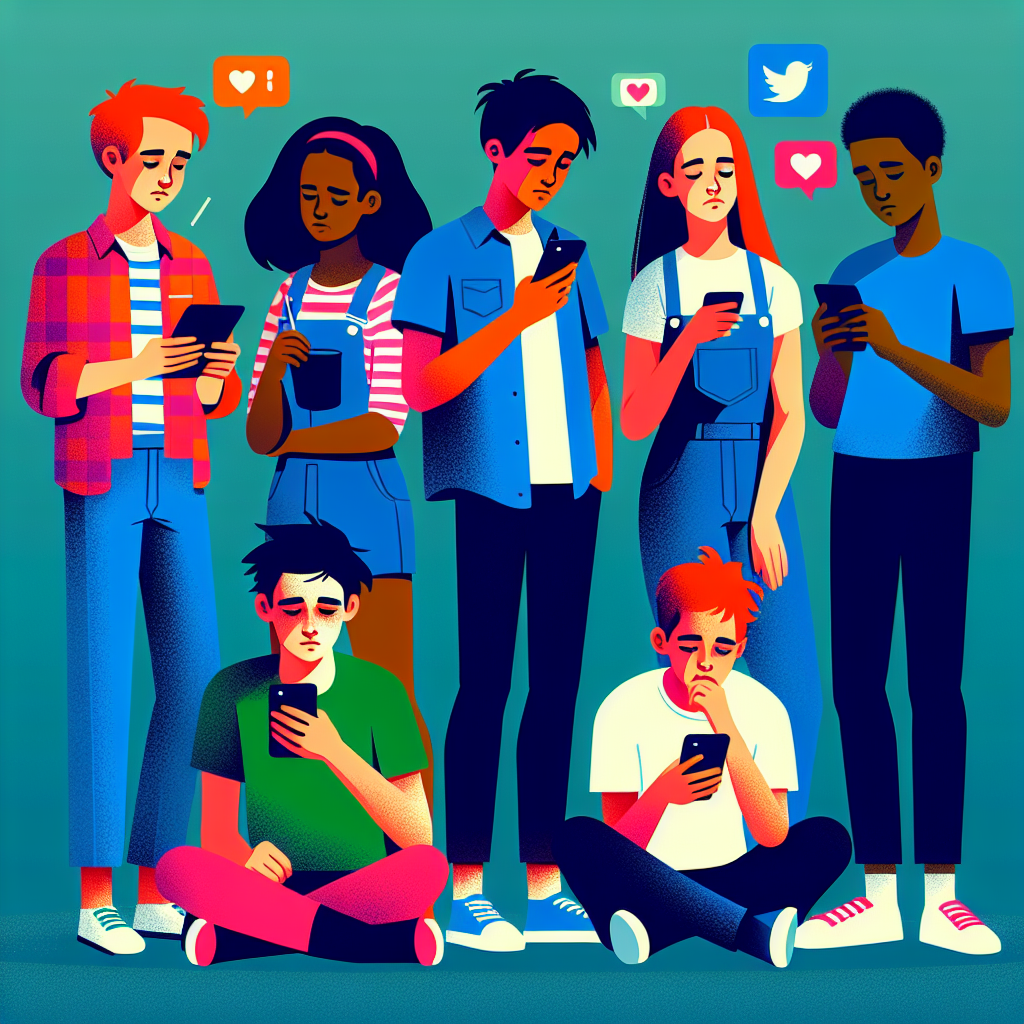
A recent international study indicates a significant increase in problematic social media use among teenagers since the onset of the pandemic. Researchers surveyed nearly 280,000 children aged 11, 13, and 15 across 44 countries, revealing that on average, 11% of respondents engaged with social media in a concerning manner in 2022, compared to 7% in 2018. Countries like England, Scotland, and Wales reported figures above this average, prompting urgent concerns about the impact of digital technology on the mental health and well-being of young people in Europe.
The study's findings suggest that problematic social media use is most prevalent among 13-year-olds, with girls more likely to report such behaviors than boys. The research also highlighted the extensive amount of time young individuals spend online, with over a third of adolescents maintaining continuous online contact with friends throughout the day. While heavy social media use among teenagers who are not classified as problematic users can foster stronger peer support and social connections, those falling into the problematic category exhibit addiction-like symptoms, such as neglecting other activities, frequent arguments, lying about usage, lack of control, and withdrawal.
Concerns were also raised about the proportion of teenagers at risk of problematic gaming, particularly boys. The study, published by the European arm of the World Health Organization, emphasizes the need for digital literacy education to help young people develop a healthy online approach. Dr. Hans Henri P Kluge, the WHO's regional director for Europe, stressed the importance of immediate action by governments, health authorities, teachers, and parents to address the potential negative consequences of excessive social media use, which can lead to depression, bullying, anxiety, and poor academic performance.
While the study provides valuable insights, defining "problematic social media use" remains a challenge, making data collection complex. Nonetheless, it contributes significantly to the evidence base on the subject. Tech companies have been urged to enhance privacy and parental control features on platforms like Instagram to shield children from harmful content. The report underscores the dual nature of social media, with both positive and negative impacts on young individuals, highlighting the necessity for a collective effort to promote healthy online behaviors and safeguard the well-being of adolescents in the digital age.
Original news source: Sharp rise in problematic teenage social media use, study says (BBC)
🎧 Listen:
📖 Vocabulary:
Group or Classroom Activities
Warm-up Activities:
– Vocabulary Pictionary
Instructions: Divide the students into teams. Provide each team with a list of vocabulary words related to the article (e.g., problematic, social media, addiction, well-being). One student from each team will select a word and draw it on the board without using any letters, numbers, or symbols. The rest of the team must guess the word based on the drawing within a time limit. This activity helps reinforce vocabulary while encouraging teamwork and creativity.
– Pros and Cons
Instructions: Have a class discussion where students debate the pros and cons of teenagers using social media. Divide the class into two groups, one representing the pros and the other the cons. Each group should come up with arguments supporting their assigned stance. Encourage students to use the information from the article to back up their points. This activity promotes critical thinking, communication skills, and the ability to express opinions effectively.
– Sketch It
Instructions: Ask students to work individually and sketch a visual representation of the impact of excessive social media use on teenagers' mental health. After a few minutes, have students share their sketches with a partner and explain their drawings. This activity encourages creativity, critical thinking, and the ability to convey complex ideas visually.
– Think-Pair-Share
Instructions: Write the following statement on the board: "What measures can be taken to promote healthy online behaviors among teenagers?" Ask students to individually brainstorm ideas for a few minutes. Then, have them pair up with a classmate to discuss their ideas. Finally, open the discussion to the whole class for students to share their thoughts. This activity promotes critical thinking, collaboration, and communication skills.
– News Reporter Role-play
Instructions: Divide the class into pairs. Assign each pair a role-play scenario where one student is a news reporter and the other is Dr. Hans Henri P Kluge, the WHO's regional director for Europe, presenting the study's findings on problematic social media use among teenagers. The news reporter should ask insightful questions about the research, and Dr. Kluge should respond based on the information in the article. This activity enhances speaking and listening skills, as well as the ability to summarize and present information effectively.
🤔 Comprehension Questions:
The key findings of the international study indicated a significant increase in problematic social media use among teenagers since the onset of the pandemic, with 11% of respondents engaging in concerning behaviors in 2022 compared to 7% in 2018.
The study identified 13-year-olds as the most prevalent age group in exhibiting problematic social media use.
Teenagers falling into the problematic social media use category exhibit addiction-like symptoms such as neglecting other activities, frequent arguments, lying about usage, lack of control, and withdrawal.
Another concern raised in the study was the proportion of teenagers at risk of problematic gaming, particularly boys.
The study emphasizes the need for digital literacy education to help young people develop a healthy online approach and address problematic social media use.
Dr. Hans Henri P Kluge, the WHO's regional director for Europe, emphasized the need for immediate action by governments, health authorities, teachers, and parents to address the negative consequences of excessive social media use on teenagers.
Defining "problematic social media use" is considered a challenge in data collection because it remains a subjective term, making it complex to collect consistent data on the issue.
Tech companies were urged to enhance privacy and parental control features on platforms like Instagram to shield children from harmful content.
🎧✍️ Listen and Fill in the Gaps:
A recent international study indicates a significant increase in problematic social media use among teenagers since the onset of the . Researchers surveyed nearly 280,000 children aged 11, 13, and 15 across 44 countries, revealing that on average, 11% of engaged with social media in a concerning manner in 2022, compared to 7% in 2018. Countries like England, Scotland, and Wales reported figures above this average, prompting concerns about the of digital technology on the mental health and well-being of young people in Europe. The study's findings suggest that problematic social media use is most prevalent among 13-year-olds, with girls more likely to report such behaviors than boys. The research also highlighted the extensive amount of time young individuals spend online, with over a third of adolescents maintaining continuous online contact with friends throughout the day. While heavy social media use among teenagers who are not as problematic users can foster stronger peer support and social connections, those falling into the problematic exhibit addiction-like symptoms, such as neglecting activities, frequent arguments, lying about usage, lack of , and withdrawal. Concerns were also raised about the proportion of teenagers at risk of problematic gaming, particularly boys. The study, published by the European arm of the Health , the need for digital literacy education to help young people develop a healthy online approach. Dr. Hans Henri P Kluge, the WHO's regional director for Europe, stressed the importance of immediate action by , health authorities, teachers, and parents to address the potential negative consequences of excessive social media use, which can lead to depression, bullying, anxiety, and poor academic performance. While the study provides valuable insights, defining "problematic social media use" remains a challenge, making data collection . Nonetheless, it contributes significantly to the evidence base on the subject. Tech companies have been urged to enhance privacy and control features on platforms like Instagram to shield children from harmful content. The report the dual nature of social media, with both positive and negative impacts on young individuals, the necessity for a collective effort to promote healthy online behaviors and safeguard the well-being of adolescents in the digital age.
💬 Discussion Questions:
1. How do you think the pandemic has influenced teenagers' social media use?
2. What is your opinion on the impact of digital technology on the mental health of young people?
3. How would you feel if you noticed a friend showing signs of problematic social media use?
4. Do you think social media companies have a responsibility to protect teenagers from harmful content? Why or why not?
5. What are some strategies you believe could help teenagers develop a healthy online approach?
6. How do you personally manage your time spent on social media?
7. Do you think schools should incorporate digital literacy education into their curriculum? Why or why not?
8. How has social media influenced peer support and social connections among teenagers in your opinion?
9. Do you like the idea of tech companies enhancing privacy and parental control features on social media platforms? Why or why not?
10. How do you think parents can support their children in maintaining a healthy balance with social media use?
11. Have you ever experienced negative consequences from excessive social media use? If so, how did you address them?
12. What do you believe are the positive impacts of social media on young individuals?
13. How do you think the definition of "problematic social media use" can be better understood and addressed?
14. Why do you think girls are more likely to report problematic social media use than boys, according to the study?
15. In your opinion, what role should governments play in regulating social media use among teenagers?
Individual Activities
📖💭 Vocabulary Meanings:
Click a dot next to a word, then click the dot next to its meaning to draw a line connecting them.
Words
Meanings
🔡 Multiple Choice Questions:
🕵️ True or False Questions:
📝 Write a Summary:
Write a summary of this news article in two sentences.
Check your writing now with the best free AI for English writing!