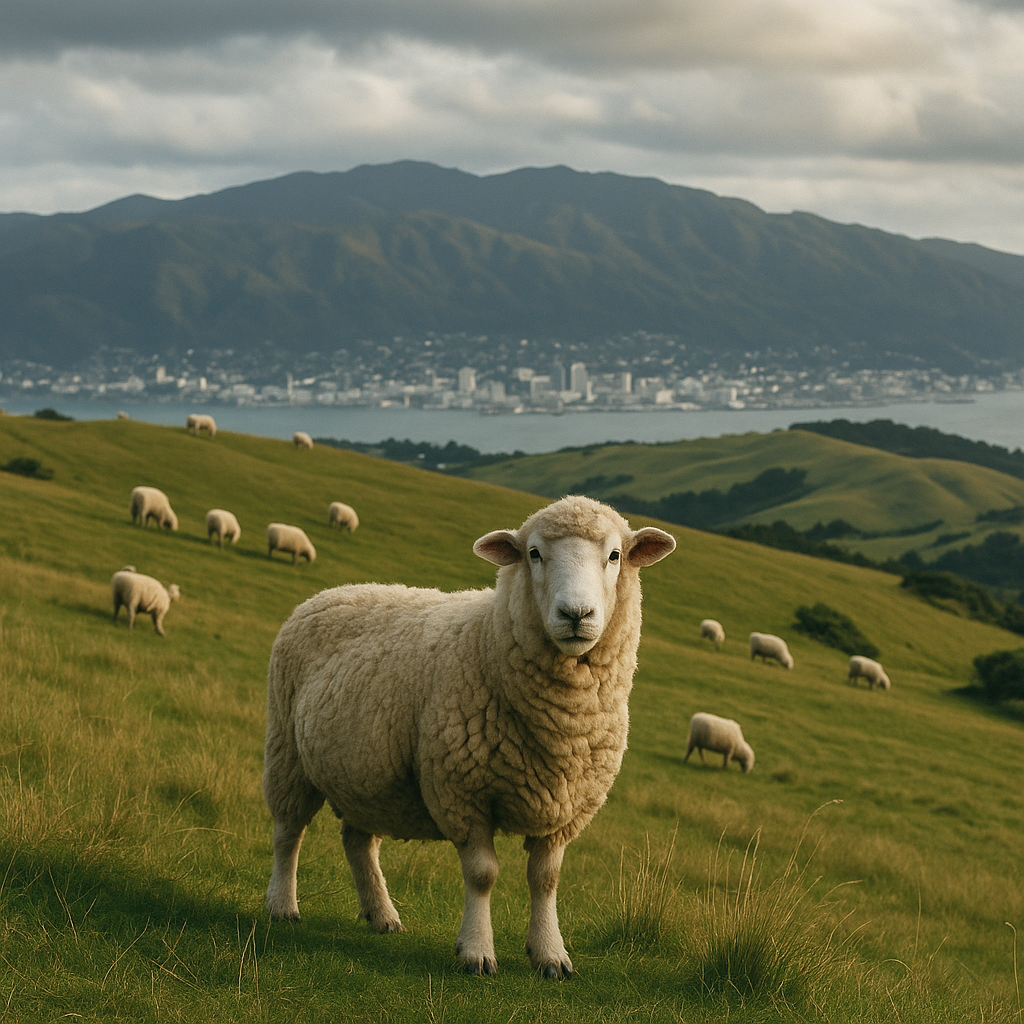
Wellington, New Zealand, has long been known for its unique sheep-to-human ratio, which has often been the subject of humor among New Zealanders living abroad. The country boasts a sheep population of approximately 23.6 million, compared to just 5.3 million people. This means that there are about 4.5 sheep for every New Zealander, according to recent statistics released by the government. However, this ratio has significantly decreased from 1982, when there were around 22 sheep for each person, highlighting a notable shift in the agricultural landscape of the nation.
Historically, sheep farming has been a cornerstone of New Zealand's economy. At its peak in 1982, the sheep population soared to over 70 million, while the human population was only 3.2 million. This thriving industry not only provided meat and wool but also shaped the country's international image, particularly before the tourism boom brought by the "Lord of the Rings" films. Pictures of serene green pastures dotted with sheep against stunning mountain backdrops became synonymous with New Zealand's identity.
In recent years, however, the sheep industry has faced significant challenges. A decline in global wool prices, driven by a shift towards synthetic fibers, has forced many farmers to reconsider their agricultural practices. As a result, the number of sheep has steadily decreased, with dairy farming now taking precedence in New Zealand's agricultural exports. In 2023, it was reported that the sheep population had dipped below five sheep per person for the first time, indicating a worrying trend for the traditional sheep farming sector.
To adapt to changing market conditions, many farmers have turned to more profitable ventures, such as dairy farming or converting their land for pine forestry to sell carbon offsets. Toby Williams, a representative from the Federated Farmers lobby group, expressed concern that the wool industry may be on the verge of collapse, stating that it is approaching a critical tipping point where it may no longer exist in its current form. This shift reflects a broader transformation in New Zealand's agricultural priorities.
In response to the declining sheep population, the New Zealand government has implemented measures aimed at revitalizing the wool industry. New guidelines encourage the use of locally sourced wool products in public buildings, and there are plans to limit the conversion of farmland to carbon forestry. Despite these efforts, experts remain skeptical about their effectiveness in reversing the trend of decreasing sheep numbers. Similar patterns are observed in neighboring Australia, where sheep outnumber people, but the national flock is also diminishing, with approximately three sheep per Australian.
Original news source: Yes, New Zealand still has more sheep than people. But humans are catching up (AP News)
🎧 Listen:
📖 Vocabulary:
Group or Classroom Activities
Warm-up Activities:
– CHARADES
Instructions: Divide the class into small groups. Each group will take turns acting out different phrases or concepts related to sheep farming and New Zealand's agriculture without speaking, while the other groups guess what they are. Examples can include "sheep shearing," "wool production," or "dairy farming."
– OPINION POLL
Instructions: Create a set of statements related to the sheep industry and agriculture in New Zealand (e.g., "The wool industry is vital for New Zealand's economy"). Students will circulate the room, asking their classmates whether they agree or disagree with each statement. After the poll, they will share the results with the class.
– ARTICLE TIMELINE
Instructions: Provide students with key events and statistics from the article (e.g., sheep population peak in 1982, current sheep-to-human ratio). In small groups, students will work together to arrange these events chronologically on a timeline, discussing the significance of each event as they go.
– MIND MAP
Instructions: On a large piece of paper or whiteboard, have students create a mind map based on the article. They will start with "New Zealand Sheep Farming" at the center and branch out with related themes such as "Economic Impact," "Population Changes," and "Agricultural Shifts." Encourage them to use relevant vocabulary from the article.
– FUTURE PREDICTIONS
Instructions: In pairs, students will discuss and make predictions about the future of sheep farming in New Zealand over the next decade. They should consider current trends mentioned in the article and come up with at least two positive and two negative predictions. Afterward, pairs will share their predictions with the class.
🤔 Comprehension Questions:
The current sheep-to-human ratio in New Zealand is about 4.5 sheep for every New Zealander.
Since 1982, the sheep population in New Zealand has significantly decreased from around 70 million to approximately 23.6 million.
Before the tourism boom, the sheep farming industry shaped New Zealand's international image by creating picturesque images of serene green pastures dotted with sheep against stunning mountain backdrops.
The sheep industry has faced challenges due to a decline in global wool prices driven by a shift towards synthetic fibers, forcing many farmers to reconsider their agricultural practices.
Farmers have adapted by turning to more profitable ventures like dairy farming or converting their land for pine forestry to sell carbon offsets.
Toby Williams expressed concern that the wool industry may be on the verge of collapse and is approaching a critical tipping point where it may no longer exist in its current form.
The New Zealand government has implemented measures such as encouraging the use of locally sourced wool products in public buildings and plans to limit the conversion of farmland to carbon forestry.
Similar trends are observed in Australia, where sheep outnumber people, but the national flock is also diminishing, with approximately three sheep per Australian.
🎧✍️ Listen and Fill in the Gaps:
Wellington, New Zealand, has long been for its unique sheep-to-human ratio, which has often been the subject of humor among New Zealanders abroad. The country boasts a sheep population of approximately 23.6 million, compared to just 5.3 million people. This means that there are about 4.5 sheep for every New Zealander, according to recent statistics by the government. However, this ratio has significantly decreased from 1982, when there were around 22 sheep for each person, highlighting a notable in the agricultural landscape of the nation. Historically, sheep farming has been a cornerstone of New Zealand's economy. At its peak in 1982, the sheep population soared to over 70 million, while the human population was only 3.2 million. This thriving industry not only provided meat and wool but also shaped the country's international , particularly before the tourism boom brought by the "Lord of the Rings" films. Pictures of serene green pastures dotted with against stunning mountain backdrops became synonymous with New Zealand's identity. In recent years, however, the sheep industry has faced significant challenges. A in global wool prices, driven by a shift towards synthetic , has forced many farmers to reconsider their agricultural practices. As a result, the number of sheep has steadily decreased, with dairy farming now taking precedence in New Zealand's agricultural exports. In 2023, it was reported that the sheep population had dipped below five sheep per person for the first time, a worrying trend for the traditional sheep farming sector. To adapt to changing conditions, many have turned to more profitable ventures, such as dairy farming or converting their land for pine forestry to sell carbon offsets. Toby Williams, a from the Federated Farmers lobby group, expressed concern that the wool industry may be on the verge of collapse, stating that it is approaching a critical tipping point where it may no longer exist in its current form. This shift reflects a broader transformation in New Zealand's agricultural priorities. In response to the declining sheep population, the New Zealand government has implemented aimed at revitalizing the wool industry. New guidelines encourage the use of locally sourced wool products in public , and there are plans to limit the conversion of farmland to carbon . Despite these efforts, experts remain skeptical about their effectiveness in reversing the trend of decreasing sheep numbers. Similar patterns are in neighboring Australia, where sheep outnumber people, but the national flock is also diminishing, with approximately three sheep per Australian.
💬 Discussion Questions:
1. What is a significant agricultural product in your country, and how does it compare to New Zealand's sheep farming?
2. How would you feel if your country faced a similar decline in a traditional agricultural industry?
3. Do you like the idea of using locally sourced materials in public buildings? Why or why not?
4. What is a common stereotype about your country that you find humorous?
5. How do you think the decline in sheep farming might affect New Zealand's cultural identity?
6. Do you think synthetic fibers will completely replace natural fibers like wool in the future? Why or why not?
7. What is a personal experience you have had with agriculture or farming in your community?
8. How would you feel if you were a farmer facing the challenges described in the article?
9. Do you think governments should intervene in struggling industries? Why or why not?
10. What is a sustainable practice that you believe should be adopted in agriculture?
11. How do you think tourism can impact traditional industries like sheep farming?
12. Do you think the shift towards dairy farming in New Zealand is a positive change? Why or why not?
13. What is a challenge facing farmers in your region, and how do you think it can be addressed?
14. How would you feel if your favorite traditional product was at risk of disappearing?
15. Do you think the trend of decreasing sheep numbers in New Zealand will continue, or do you see potential for recovery? Why?
Individual Activities
📖💭 Vocabulary Meanings:
Click a dot next to a word, then click the dot next to its meaning to draw a line connecting them.
Words
Meanings
🔡 Multiple Choice Questions:
🕵️ True or False Questions:
📝 Write a Summary:
Write a summary of this news article in two sentences.
Check your writing now with the best free AI for English writing!