

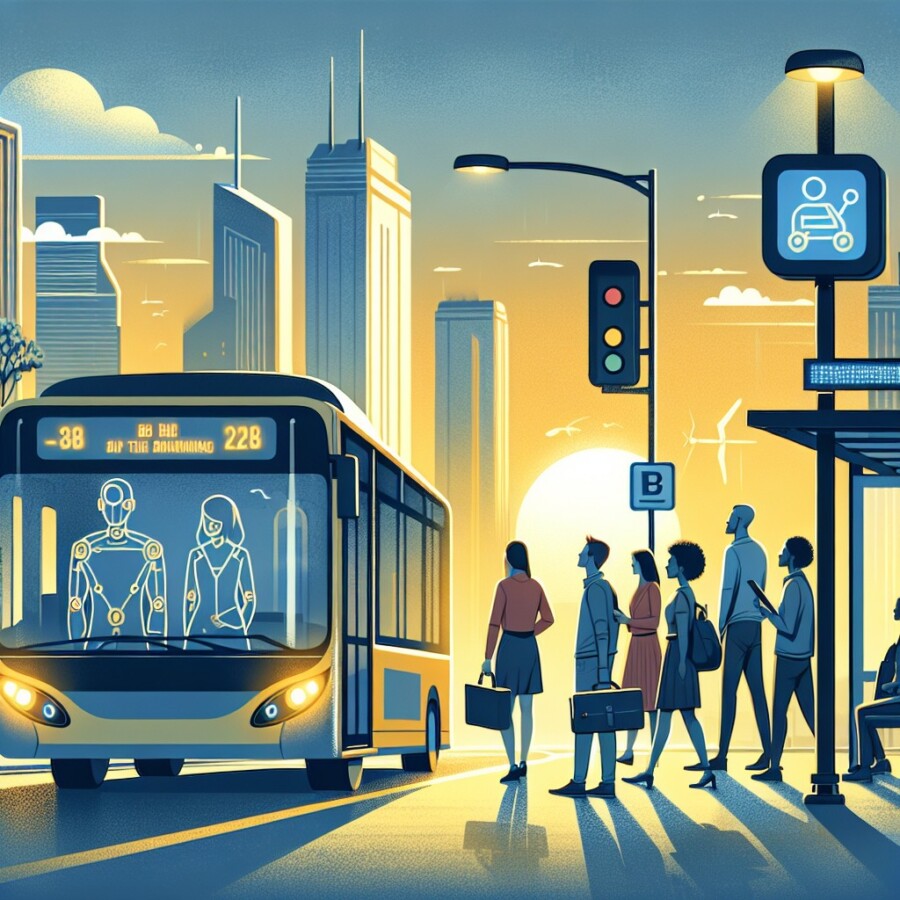
UK bus operator First Bus is using artificial intelligence (AI) to improve its timetables and prevent bus bunching. Bus bunching occurs when multiple buses arrive at once, causing inconvenience for passengers. With the help of AI-powered software, First Bus can design and update timetables more efficiently. The software can make automatic adjustments based on road congestion, reducing the likelihood of buses bunching up. The use of AI has resulted in a 20% increase in punctuality during peak periods. First Bus plans to roll out the AI technology across all its UK routes.
The AI software used by First Bus is provided by London-based tech firm Prospective. The software uses billions of data points, including GPS location sensors and ticketing records, to train the AI. Prospective's simulation engine can run thousands of scenarios per minute, allowing for real-time optimization of bus schedules. The software also takes into account the needs of electric buses, which require coordinated charging schedules and precise management of vehicle movements.
The use of AI in public transport planning is not limited to the UK. In Japan, a company called Next Mobility uses AI to optimize routes for its on-demand, shared minibuses. The AI allocates vehicles, processes reservations, provides dispatch instructions, and sends notifications to passengers. The service, called KnowRoute, operates permanently in 30 locations across Japan. The AI software used by KnowRoute is provided by Canadian firm Spare, which uses data about demographics, rider demand, and other factors to predict minibus requirements.
AI has the potential to revolutionize public transport planning by analyzing large amounts of data and optimizing routes and schedules. While local knowledge is still important, AI can help identify patterns and make more efficient decisions. The use of AI in public transport planning is expected to grow in the future, improving the efficiency and reliability of bus services.
Original news source: How AI is helping to prevent three buses turning up at once (BBC)
🎧 Listen:
📖 Vocabulary:
Group or Classroom Activities
Warm-up Activities:
– News Summary
Instructions: Divide the class into small groups. Provide each group with a copy of the article. Instruct them to read the article and collaboratively write a concise summary of the main points. After a given time limit, have each group share their summary with the rest of the class.
– Opinion Poll
Instructions: Ask the class to form pairs or small groups. Provide each group with a list of statements related to the use of AI in public transport planning. Instruct each group to discuss the statements and indicate whether they agree or disagree, providing reasons for their opinions. After the discussion, have each group present their opinions to the class and facilitate a class-wide discussion.
– Word Association
Instructions: Write the word "AI" on the board. Instruct each student to think of a word or phrase that is associated with AI in the context of public transport planning. Have each student share their word or phrase with the class, explaining their association. Encourage students to build on each other's associations and create a word association chain.
– Vocabulary Pictionary
Instructions: Write a selection of vocabulary words from the article on separate pieces of paper and place them in a hat or bowl. Divide the class into two teams. One member from each team takes turns picking a word from the hat and drawing a visual representation of it on the board. The rest of their team must guess the word within a time limit. The team with the most correct guesses wins.
– Speed Summarizing
Instructions: Divide the class into pairs. Instruct each pair to take turns summarizing the article to their partner within a time limit (e.g., 2 minutes). After the first round, have the pairs switch roles and summarize again. Encourage students to focus on the key points of the article and to speak as fluently and concisely as possible. After both rounds, ask a few pairs to share their summaries with the rest of the class.
🤔 Comprehension Questions:
🎧✍️ Listen and Fill in the Gaps:
UK bus First Bus is using artificial intelligence (AI) to improve its timetables and prevent bus . Bus bunching occurs when multiple buses arrive at once, causing inconvenience for passengers. With the help of AI-powered software, First Bus can design and update timetables more efficiently. The software can make automatic adjustments based on road congestion, reducing the of buses bunching up. The use of AI has resulted in a 20% in punctuality during peak periods. First Bus plans to roll out the AI across all its UK routes. The AI software used by First Bus is provided by London-based tech firm Prospective. The software uses billions of data points, including GPS location sensors and records, to the AI. Prospective's simulation engine can run thousands of per minute, allowing for real-time optimization of bus schedules. The software also takes into account the needs of electric buses, which require coordinated charging and precise management of vehicle movements. The use of AI in transport planning is not limited to the UK. In Japan, a company called Next Mobility uses AI to optimize routes for its on-demand, shared minibuses. The AI vehicles, processes reservations, provides dispatch instructions, and sends notifications to passengers. The service, called KnowRoute, operates permanently in 30 across Japan. The AI software used by KnowRoute is provided by Canadian firm Spare, which uses data about , rider demand, and other factors to predict requirements. AI has the potential to revolutionize public transport planning by analyzing large amounts of data and optimizing routes and schedules. While local knowledge is still important, AI can help identify patterns and make more decisions. The use of AI in public transport planning is to grow in the future, improving the efficiency and reliability of bus services.
💬 Discussion Questions:
1. What do you think about the use of AI in improving bus timetables?
2. How would you feel if you were a passenger on a bus that arrived late due to bus bunching?
3. Do you think AI technology can effectively prevent bus bunching? Why or why not?
4. What is your opinion on the use of AI in public transport planning?
5. Have you ever experienced bus bunching? How did it make you feel?
6. Do you think AI technology can be applied to other aspects of public transportation? Why or why not?
7. How do you think the use of AI in public transport planning can improve the efficiency of bus services?
8. What are some potential challenges or drawbacks of using AI in public transport planning?
9. How do you think the use of AI in public transport planning can benefit passengers?
10. Do you like the idea of AI making automatic adjustments to bus timetables based on road congestion? Why or why not?
11. How would you feel if you were a bus driver relying on AI technology to determine your schedule and routes?
12. What is your opinion on the use of AI in coordinating the charging schedules of electric buses?
13. Have you ever used an on-demand, shared minibus service? What was your experience like?
14. Do you think AI technology can effectively predict minibus requirements? Why or why not?
15. How do you think the use of AI in public transport planning can contribute to a more sustainable transportation system?
Individual Activities
📖💭 Vocabulary Meanings:
Click a dot next to a word, then click the dot next to its meaning to draw a line connecting them.
Words
Meanings
🔡 Multiple Choice Questions:
🕵️ True or False Questions:
📝 Write a Summary:
Write a summary of this news article in two sentences.
Check your writing now with the best free AI for English writing!