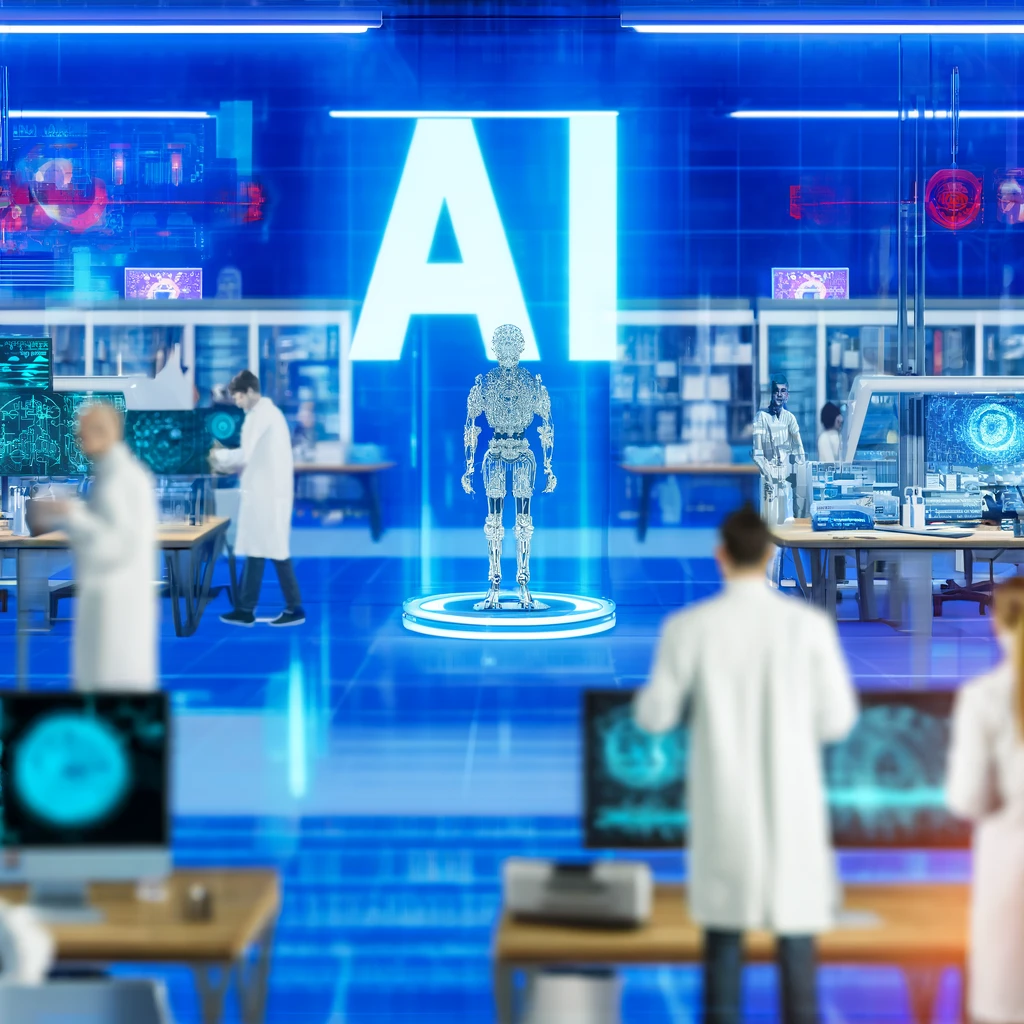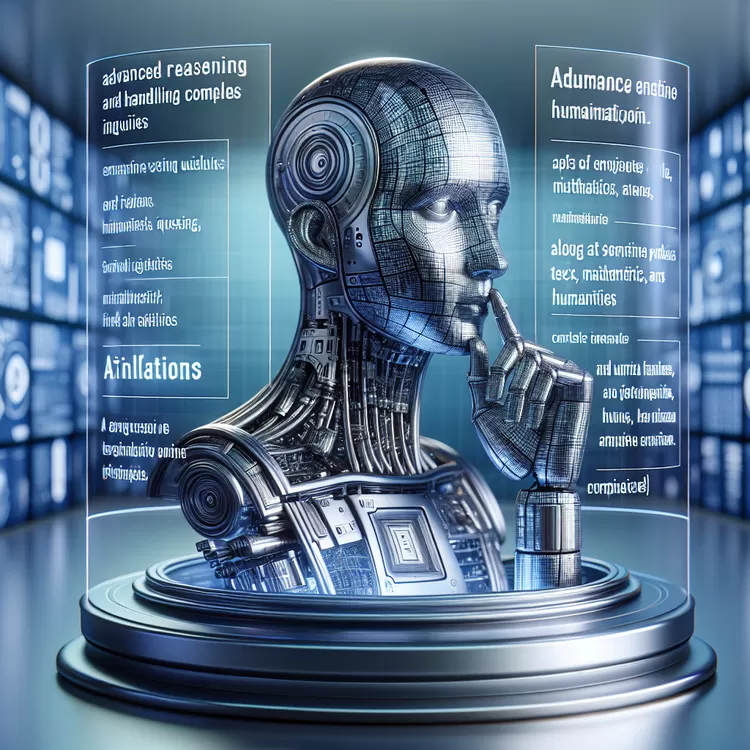
Google has unveiled a new artificial intelligence (AI) model called Gemini, which the company claims has advanced reasoning capabilities and can "think more carefully" when answering difficult questions. This is significant because AI content generators have been known to sometimes create false information, a phenomenon referred to as hallucinations. Gemini has been tested in various subject areas, including mathematics and humanities, to assess its problem-solving and knowledge abilities. Sundar Pichai, the CEO of Google, believes that Gemini represents a new era for AI.
Google approached the launch of its AI chatbot, Bard, earlier this year with caution, describing it as an experiment. Bard made a mistake during its publicity demo by providing an incorrect answer to a question about space. However, Google is confident in the capabilities of its new model, claiming that it is the most capable one yet and can outperform human experts in various intelligence tests. Gemini has the ability to recognize and generate text, images, and audio, but it is not a standalone product. Instead, it will be integrated into Google's existing tools, including search and Bard.
Gemini has set a new standard by demonstrating its ability to learn from sources other than text, such as pictures. This feature has the potential to enable innovations that could transform generative AI, according to Chirag Dekate, an analyst from Gartner. While Google's Gemini outperforms OpenAI's platform GPT-4 on 30 out of 32 widely-used academic benchmarks, OpenAI is set to release a more powerful version of its software next year. The competition in the AI field is also growing, with Elon Musk's xAI seeking to raise funds for research and development, and Chinese firm Baidu making advancements in its own AI products.
As AI technology continues to evolve rapidly, concerns about its potential to cause harm are also increasing. Governments worldwide are working on developing rules and legislation to address the future risks of AI. In November, a summit in the UK discussed the subject, resulting in a declaration calling for the safe development of AI. It is crucial to address these potential dangers with a sense of urgency, unity, and collective strength, as emphasized by The King.
Original news source: Google claims new Gemini AI 'thinks more carefully' (BBC)
🎧 Listen:
Group or Classroom Activities
Warm-up Activities:
– News Summary
Instructions: In pairs, students will read the article and then summarize the main points in their own words. They can take turns sharing their summaries with the class.
– Opinion Poll
Instructions: Divide the class into small groups. Each group will come up with a question related to AI technology and its potential risks. They will then conduct an opinion poll within the class, asking their classmates for their opinions on the topic. After gathering the data, each group will present their findings to the class.
– Sketch It
Instructions: Provide each student with a piece of paper and a pencil. In pairs, students will take turns describing a scene or concept related to AI technology, while their partner tries to sketch it based on their description. Afterward, students will compare their sketches and discuss any differences or similarities.
– Keyword Taboo
Instructions: Write down a list of keywords related to the article on separate index cards. Divide the class into two teams. One player from each team will come to the front of the class. The teacher will show them a keyword from the article, and they must try to describe it to their team without using the keyword itself. The team that guesses correctly gets a point, and the game continues with new players and keywords.
– Think-Pair-Share
Instructions: In pairs, students will have a few minutes to think about and write down their thoughts on the following question: "What are your thoughts on the future of AI technology?" Afterward, they will share their ideas with their partner and engage in a discussion. Finally, a few pairs will share their thoughts with the whole class.
🤔 Comprehension Questions:
Gemini
Gemini has been tested in various subject areas, including mathematics and humanities, to assess its problem-solving and knowledge abilities.
Google described Bard as an experiment.
Bard provided an incorrect answer to a question about space during its publicity demo.
Gemini can recognize and generate text, images, and audio.
According to Chirag Dekate, Gemini's ability to learn from sources other than text has the potential to enable innovations that could transform generative AI.
Gemini outperforms OpenAI's platform GPT-4 on 30 out of 32 widely-used academic benchmarks.
Concerns about the potential harm caused by AI technology are increasing.
🎧✍️ Listen and Fill in the Gaps:
has unveiled a new artificial intelligence (AI) called Gemini, which the company claims has advanced reasoning capabilities and can "think more carefully" when difficult . This is significant because AI content generators have been known to sometimes create false information, a phenomenon referred to as hallucinations. Gemini has been tested in various subject areas, including mathematics and humanities, to assess its problem-solving and knowledge abilities. Sundar Pichai, the CEO of Google, believes that Gemini represents a new era for AI. Google approached the launch of its AI chatbot, Bard, earlier this year with caution, describing it as an experiment. Bard made a mistake during its publicity demo by providing an incorrect answer to a question about space. However, Google is confident in the of its new model, claiming that it is the most one yet and can outperform human experts in various intelligence tests. Gemini has the ability to recognize and text, images, and , but it is not a standalone product. Instead, it will be integrated into Google's existing tools, including search and Bard. Gemini has set a new by demonstrating its ability to from sources other than text, such as pictures. This feature has the potential to enable innovations that could transform AI, according to Chirag Dekate, an analyst from Gartner. While Google's Gemini outperforms 's platform GPT-4 on 30 out of 32 widely-used academic benchmarks, OpenAI is set to release a more powerful version of its software next year. The competition in the AI field is also growing, with Elon Musk's xAI seeking to raise funds for research and development, and Chinese firm Baidu advancements in its own AI products. As AI technology to evolve rapidly, concerns about its potential to cause harm are also increasing. Governments worldwide are working on developing rules and legislation to the risks of AI. In November, a summit in the UK discussed the subject, resulting in a declaration calling for the safe development of AI. It is crucial to address these potential dangers with a sense of urgency, unity, and collective strength, as emphasized by The King.
💬 Discussion Questions:
1. What is your opinion on the advancements in artificial intelligence, such as Google's Gemini?
2. How would you feel if AI technology like Gemini became more advanced than human experts in various fields?
3. Do you think it is possible for AI to completely replace human experts? Why or why not?
4. What potential dangers do you see in the rapid evolution of AI technology?
5. How do you think governments should address the future risks of AI?
6. Do you believe there should be strict regulations and legislation in place for the development of AI? Why or why not?
7. Have you ever had an experience where AI technology provided false information? How did it affect your perception of AI?
8. What are some potential benefits of AI technology like Gemini being integrated into existing tools like search engines?
9. How do you think AI technology can transform generative AI, as mentioned by Chirag Dekate?
10. Do you think AI technology will continue to advance at a rapid pace? Why or why not?
11. What role do you think AI technology will play in the future of education and learning?
12. How do you think AI technology like Gemini can be used to benefit society as a whole?
13. Have you ever used AI technology in your daily life? How has it made your life easier or more convenient?
14. How do you think AI technology will impact job opportunities and the workforce in the future?
15. Do you think it is necessary for individuals to have a basic understanding of AI technology? Why or why not?
Individual Activities
🔡 Multiple Choice Questions:
🕵️ True or False Questions:
📝 Write a Summary:
Write a summary of this news article in two sentences.
Check your writing now with the best free AI for English writing!