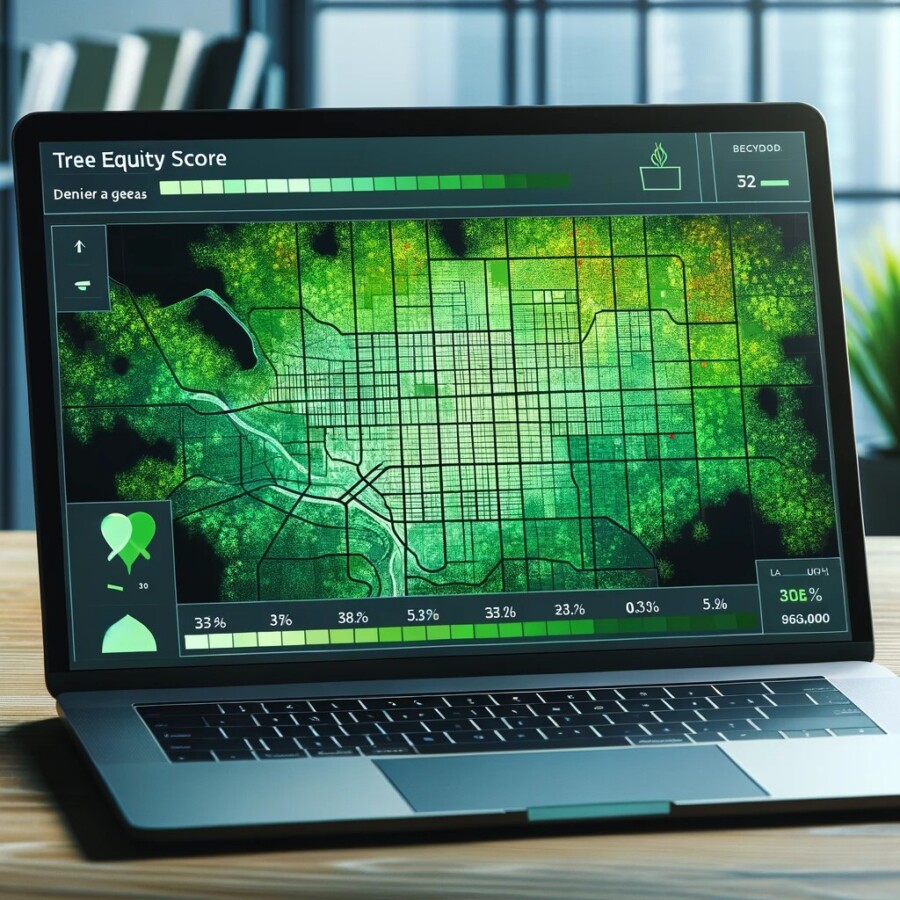
A new interactive map has revealed that urban areas with less tree cover have higher levels of pollution and poorer air quality. The map, created by the Woodland Trust, American Forests, and the Centre for Sustainable Healthcare, uses data from Google and various indicators to generate a "tree equity score" for different neighborhoods in the UK. The score indicates the need for more trees in a particular area. The map shows that deprived areas have less tree cover and higher levels of air pollution compared to more affluent neighborhoods. Additionally, areas with higher tree cover have lower levels of pollution and are cooler during heatwaves.
The lack of tree cover in urban areas is a concern for the health and well-being of residents. Trees play a crucial role in improving air quality and reducing pollution. They also provide shade and help regulate temperatures during hot weather. However, the distribution of trees is often unfair, with wealthier neighborhoods having better access to green spaces. This exacerbates social inequalities and prevents people in deprived areas from benefiting from the positive effects of trees.
The creators of the map hope that it will raise awareness among policymakers and encourage them to prioritize tree planting in urban areas. They argue that trees should be seen as critical infrastructure, just like electricity and water supplies, and that everyone should have the right to access them. In the US, a similar initiative called "tree equity" has led to the planting of trees in deprived areas and the creation of jobs for local residents.
Some UK councils, such as Birmingham and Belfast, are already considering the link between tree cover and deprivation in their strategies. The map's creators hope that the tree equity score will provide a uniform index for all authorities to prioritize tree planting in areas that need it the most. The aim is to create a healthier and more equitable environment for all residents.
At Lowfield Primary School in Sheffield, children have planted a rowan tree in their playground to combat air pollution. The students understand the importance of trees in improving air quality and are eager to see more trees planted in their neighborhood. This small initiative is a step in the right direction, but more needs to be done to ensure that all communities have access to the benefits of trees.
Original news source: Air pollution: map shows 'concrete jungles' more polluted (BBC)
🎧 Listen:
Group or Classroom Activities
Warm-up Activities:
– News Summary
Instructions: Ask the students to read the article and write a summary of the main points in their own words. They should focus on the relationship between tree cover, pollution, and social inequalities. After they have written their summaries, have them share with a partner and discuss any similarities or differences.
– Opinion Poll
Instructions: Divide the class into groups and assign each group a statement related to the article, such as "Trees should be considered critical infrastructure." Have the groups discuss the statement and come up with arguments for and against it. Then, have each group present their arguments to the class and conduct a class-wide opinion poll to see which arguments are most persuasive.
– Sketch It
Instructions: Provide the students with a blank sheet of paper and ask them to sketch a visual representation of the relationship between tree cover, pollution, and social inequalities based on the article. Encourage them to be creative and include labels or captions to explain their drawings. After they have finished, have them share their sketches with a partner and explain their thought process.
– Vocabulary Pictionary
Instructions: Write down key vocabulary words from the article on separate pieces of paper and put them in a hat or bowl. Divide the class into pairs or small groups. One student from each group will pick a word from the hat and without saying the word, they must draw a picture to represent it. The other students in the group must guess what word they are drawing. Encourage the use of English vocabulary and discussion of the meanings of the words.
– Pros and Cons
Instructions: Divide the class into two groups and assign each group a position: one group will argue for the importance of tree planting in urban areas, and the other group will argue against it. Give the groups some time to brainstorm and come up with their arguments. Then, have each group present their arguments to the class and engage in a structured debate. Encourage the use of evidence and persuasive language.
🤔 Comprehension Questions:
The interactive map generates a "tree equity score" for different neighborhoods in the UK by using data from Google and various indicators.
The map reveals that urban areas with less tree cover have higher levels of pollution and poorer air quality.
The lack of tree cover in urban areas is a concern for residents' health and well-being because trees play a crucial role in improving air quality and reducing pollution. They also provide shade and help regulate temperatures during hot weather.
Trees improve air quality and reduce pollution by absorbing carbon dioxide, a greenhouse gas that contributes to climate change. They also filter pollutants from the air, such as particulate matter and nitrogen dioxide.
The distribution of trees is often unfair in urban areas because wealthier neighborhoods have better access to green spaces, while deprived areas have less tree cover. This exacerbates social inequalities and prevents people in deprived areas from benefiting from the positive effects of trees.
The creators of the map hope to raise awareness among policymakers and encourage them to prioritize tree planting in urban areas. They argue that trees should be seen as critical infrastructure and that everyone should have the right to access them.
A similar initiative called "tree equity" in the US has led to the planting of trees in deprived areas and the creation of jobs for local residents.
Some UK councils, such as Birmingham and Belfast, are considering the link between tree cover and deprivation in their strategies by using the tree equity score to prioritize tree planting in areas that need it the most.
🎧✍️ Listen and Fill in the Gaps:
A new interactive map has revealed that urban areas with less tree cover have higher levels of pollution and poorer air quality. The map, created by the Woodland , American Forests, and the Centre for Sustainable Healthcare, uses data from Google and various indicators to generate a "tree equity score" for neighborhoods in the UK. The score indicates the need for more trees in a area. The map shows that deprived areas have less tree cover and higher levels of air pollution compared to more neighborhoods. Additionally, areas with higher tree cover have lower levels of pollution and are cooler during heatwaves. The lack of tree cover in urban areas is a concern for the health and well-being of residents. play a crucial role in improving air quality and reducing pollution. They also provide shade and help regulate temperatures during hot weather. However, the distribution of trees is often unfair, with wealthier neighborhoods having better to green spaces. This exacerbates social and prevents people in deprived areas from benefiting from the positive effects of trees. The creators of the map hope that it will awareness among and encourage them to prioritize tree planting in urban areas. They argue that trees should be seen as critical infrastructure, just like electricity and water supplies, and that everyone should have the right to access them. In the US, a similar initiative called "tree equity" has led to the planting of trees in deprived areas and the creation of jobs for local . Some UK councils, such as Birmingham and Belfast, are already considering the link between tree cover and in their strategies. The map's hope that the tree equity score will provide a uniform index for all authorities to prioritize tree planting in areas that need it the most. The aim is to a and more equitable for all residents. At Lowfield Primary School in Sheffield, children have planted a rowan tree in their playground to combat air pollution. The students understand the importance of trees in improving air quality and are eager to see more trees planted in their neighborhood. This small initiative is a step in the right direction, but more needs to be done to ensure that all communities have access to the of trees.
💬 Discussion Questions:
1. What is the relationship between tree cover and air pollution in urban areas?
2. How would you feel if you lived in a neighborhood with very little tree cover and high levels of air pollution?
3. Do you like spending time in green spaces with lots of trees? Why or why not?
4. Do you think it is fair that wealthier neighborhoods often have better access to green spaces and trees? Why or why not?
5. How do you think the distribution of trees in urban areas can exacerbate social inequalities?
6. Why do you think the creators of the map want policymakers to prioritize tree planting in urban areas?
7. Do you agree that trees should be seen as critical infrastructure, like electricity and water supplies? Why or why not?
8. How do you think planting trees in deprived areas can benefit local residents?
9. Why do you think some UK councils are considering the link between tree cover and deprivation in their strategies?
10. What do you think the tree equity score can help achieve in terms of tree planting in urban areas?
11. How do you think planting more trees in urban areas can create a healthier environment?
12. Why do you think it is important for all communities to have access to the benefits of trees?
13. How do you think planting a rowan tree in a school playground can combat air pollution?
14. What other initiatives do you think can be taken to ensure that all communities have access to the benefits of trees?
15. How can individuals contribute to improving tree cover and air quality in their own neighborhoods?
Individual Activities
🔡 Multiple Choice Questions:
🕵️ True or False Questions:
📝 Write a Summary:
Write a summary of this news article in two sentences.
Check your writing now with the best free AI for English writing!