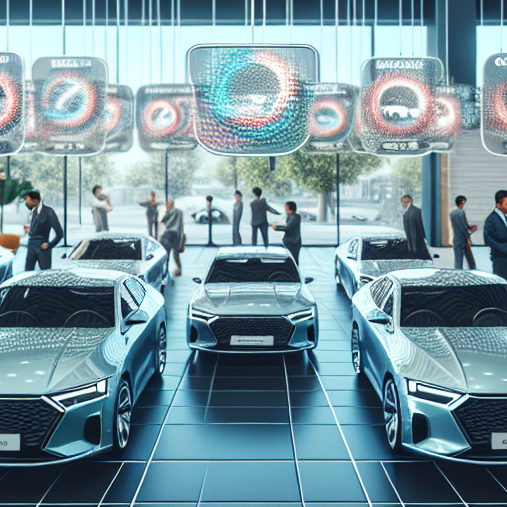
A car company in Italy has been fined $6.4 million by the Italian government for falsely claiming that their vehicles were made in Italy when they were actually manufactured in China. DR Automobiles, based in southern Italy, assembles low-cost cars using components produced by Chinese car makers. The company marketed their cars as being Italian-made, but in reality, they were mostly of Chinese origin, with only minor assembly and finishing work done in Italy. The competition regulator stated that this misleading practice coincided with a period of increased sales for the company in the Italian market.
This incident is part of a larger trend in Italy and the European Union (EU) of cracking down on cars produced outside of the trading bloc. Last month, Moroccan-made Fiat Topolinos were seized in Italy because they had Italian flag insignia, leading to the removal of the flags by Fiat's parent company. Additionally, the EU has threatened to impose import taxes of up to 38% on Chinese electric vehicles, citing them as a threat to the region's motor industry. China has responded by stating that these tariffs violate international trade rules and are an example of protectionism.
The fine imposed on DR Automobiles highlights the importance of accurate branding and labeling in the automotive industry. Consumers rely on this information to make informed purchasing decisions, and misleading practices can harm both consumers and the reputation of the company. As the global automotive market becomes increasingly competitive, it is crucial for companies to adhere to regulations and be transparent about the origin of their products.
DR Automobiles has stated that it will appeal against the fine, arguing that it never claimed its vehicles were completely made in Italy. The outcome of this appeal will determine whether the company will face further consequences for its misleading marketing practices. In the meantime, this case serves as a reminder for companies to ensure that their branding accurately reflects the true origin of their products, in order to maintain consumer trust and comply with regulations.
Original news source: Firm fined for selling China-made cars as Italian (BBC)
🎧 Listen:
📖 Vocabulary:
Group or Classroom Activities
Warm-up Activities:
– News Summary
Instructions: Have students read the article individually or in pairs. Then, ask them to summarize the main points of the article in a brief news summary, focusing on the key information and omitting any unnecessary details. They can present their summaries to the class or write them down and share them with a partner.
– Opinion Poll
Instructions: Divide the class into small groups. Give each group a list of questions related to the article, such as "Do you think the car company should be fined for their misleading marketing practices?" or "Should import taxes be imposed on Chinese electric vehicles?". Ask the groups to discuss their opinions and come to a consensus on each question. Then, have each group present their opinions to the class and facilitate a class discussion on the different viewpoints.
– Sketch It
Instructions: Provide each student with a piece of paper and a pen or pencil. Ask them to choose a specific scene or concept from the article and sketch it on their paper. They can use symbols, stick figures, or any other visual representation to depict their chosen idea. After a set amount of time, have students share their sketches with a partner or with the whole class, explaining their chosen scene or concept and why they decided to draw it.
– Vocabulary Pictionary
Instructions: Write a list of vocabulary words from the article on the board, such as "misleading," "origin," "regulations," "transparent," etc. Divide the class into two teams. One person from each team will come to the board and choose a word. They must then draw a visual representation of that word while their team tries to guess what it is. The team that guesses correctly earns a point. Continue until all the words have been guessed or until time runs out. The team with the most points at the end wins.
– Future Predictions
Instructions: Ask students to imagine and discuss the potential consequences of the car company's misleading marketing practices in the future. Will it impact their sales? Will it damage their reputation? Will it lead to changes in regulations? Divide the class into pairs or small groups and give them time to brainstorm and discuss their predictions. Then, have each group present their predictions to the class and facilitate a discussion on the likelihood and potential outcomes of each scenario.
🤔 Comprehension Questions:
DR Automobiles was fined for falsely claiming that their vehicles were made in Italy when they were actually manufactured in China.
The cars were actually manufactured in China.
The company marketed their cars as being Italian-made.
The misleading marketing practices coincided with a period of increased sales for the company in the Italian market.
Moroccan-made Fiat Topolinos were seized in Italy because they had Italian flag insignia, which was misleading.
The EU has threatened to impose import taxes of up to 38% on Chinese electric vehicles.
China responds by stating that these tariffs violate international trade rules and are an example of protectionism.
Accurate branding and labeling is important in the automotive industry because consumers rely on this information to make informed purchasing decisions, and misleading practices can harm both consumers and the reputation of the company.
🎧✍️ Listen and Fill in the Gaps:
A car company in Italy has been fined $6.4 million by the Italian government for falsely claiming that their vehicles were made in Italy when they were actually manufactured in China. DR Automobiles, based in Italy, assembles low-cost cars components by Chinese car makers. The company marketed their cars as being Italian-made, but in reality, they were mostly of Chinese origin, with only assembly and finishing work done in Italy. The competition regulator stated that this misleading practice coincided with a period of increased sales for the company in the Italian market. This incident is part of a larger trend in Italy and the European Union (EU) of cracking down on cars produced outside of the bloc. Last month, Moroccan-made Fiat Topolinos were in Italy because they had Italian flag insignia, leading to the removal of the flags by Fiat's company. Additionally, the EU has threatened to import taxes of up to 38% on Chinese electric vehicles, citing them as a threat to the region's motor industry. China has responded by stating that these tariffs violate international trade rules and are an example of protectionism. The fine imposed on DR Automobiles highlights the importance of branding and labeling in the industry. Consumers rely on this information to make purchasing decisions, and misleading practices can harm both consumers and the reputation of the . As the global automotive market becomes increasingly competitive, it is crucial for companies to adhere to regulations and be transparent about the of their products. DR Automobiles has stated that it will appeal against the fine, arguing that it never claimed its were completely made in Italy. The outcome of this appeal will determine whether the company will face further consequences for its misleading marketing practices. In the meantime, this case serves as a for companies to ensure that their branding accurately reflects the true origin of their products, in order to maintain consumer and comply with regulations.
💬 Discussion Questions:
1. What do you think about companies falsely claiming that their products are made in a certain country?
2. How important is it for you to know where a product is made before you purchase it?
3. Do you think companies should face fines for misleading consumers about the origin of their products? Why or why not?
4. Have you ever been deceived by a company's marketing claims? How did it make you feel?
5. How do you think misleading marketing practices can harm consumers?
6. What steps do you think companies should take to ensure that their branding accurately reflects the origin of their products?
7. How would you feel if you discovered that a product you purchased was not made in the country it claimed to be made in?
8. Do you think consumers have a right to know where a product is made? Why or why not?
9. How do you think misleading marketing practices can harm the reputation of a company?
10. How would you feel if you found out that a company you trusted had been falsely claiming the origin of its products?
11. What do you think about the EU's threat to impose import taxes on Chinese electric vehicles?
12. Do you think import taxes on Chinese electric vehicles are an example of protectionism? Why or why not?
13. How do you think tariffs on Chinese electric vehicles could impact the global motor industry?
14. What steps do you think the automotive industry should take to ensure accurate branding and labeling?
15. How do you think the outcome of DR Automobiles' appeal will affect other companies in the automotive industry?
Individual Activities
📖💭 Vocabulary Meanings:
Click a dot next to a word, then click the dot next to its meaning to draw a line connecting them.
Words
Meanings
🔡 Multiple Choice Questions:
🕵️ True or False Questions:
📝 Write a Summary:
Write a summary of this news article in two sentences.
Check your writing now with the best free AI for English writing!