

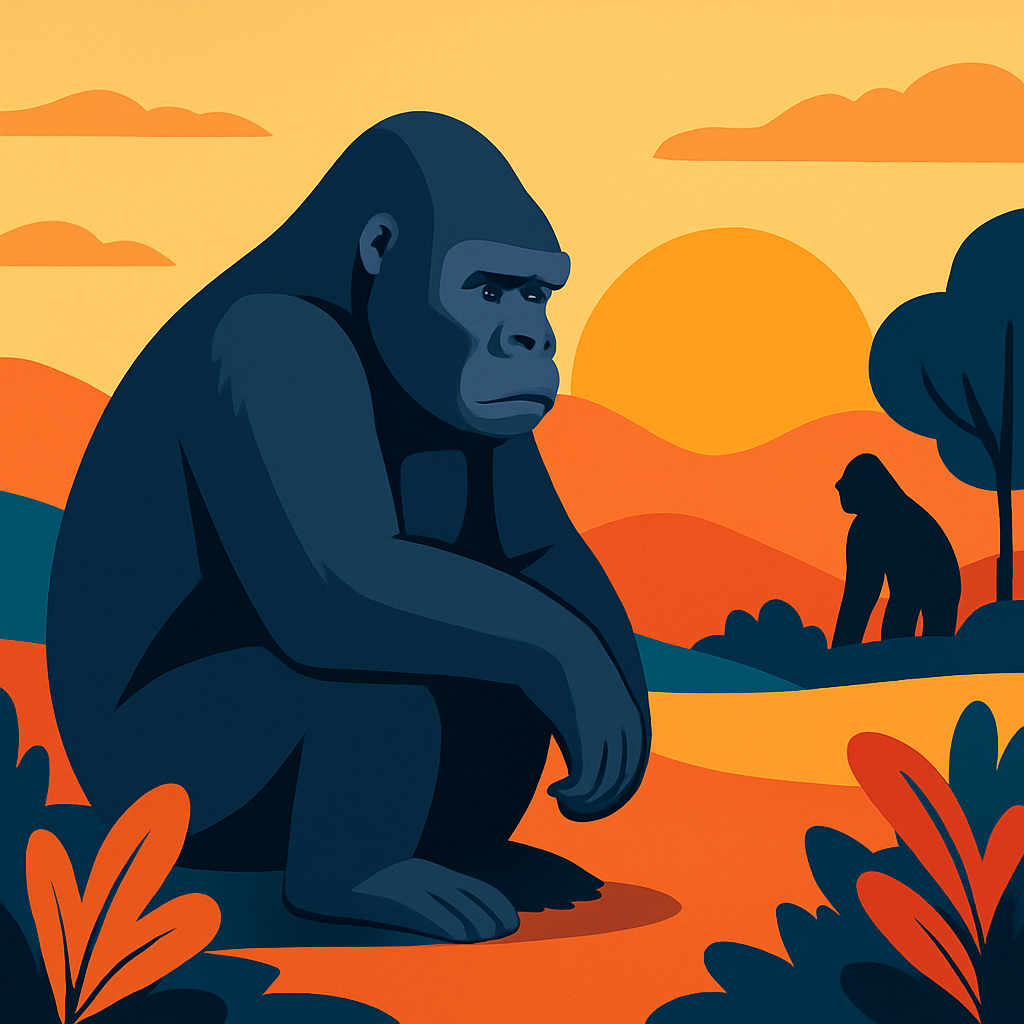
Captured by poachers as a young gorilla, Jojo was removed from his natural environment and kept alone in a private zoo, far from his family's social bonds. Now residing at a sanctuary in Gabon, he is cared for diligently but lacks the companionship of a fellow gorilla, a vital part of his well-being.
Scientists and caretakers at the sanctuary recognize Jojo’s deep need for connection, understanding the long-term psychological scars his solitary existence has imposed. Loneliness and stress have become chronic for Jojo, visibly evident through behaviors signaling a desire for social interaction, which are critical to gorilla psychology.
Experts like Professor Gillian Forrester have been closely monitoring Jojo’s condition. They have observed signs of stress that suggest forging a bond with another gorilla could be pivotal in ameliorating his emotional state. Careful introductions could foster healing through the natural social structures Jojo has been deprived of.
The logistical challenges of moving an appropriate companion to Gabon or relocating Jojo are numerous, compounded by international regulations that do not easily accommodate such social pairing efforts outside of typical breeding programs. These regulations are not designed for rehabilitating emotional well-being, which is Jojo's primary need.
Despite the complexities, there is hope within the community of conservationists and sanctuary workers that a suitable solution can be found. By addressing his loneliness and trauma, they aim to afford Jojo the chance for a normal social life, ultimately preparing him for potential rewilding opportunities and improving his quality of life.
Original news source: Jojo the gorilla has spent his life alone. Can he finally find a companion? – BBC News (BBC)
🎧 Listen:
📖 Vocabulary:
Group or Classroom Activities
Warm-up Activities:
1. Discuss a time when you had to adapt to a new environment. How did it make you feel?
2. Have you ever observed animal behavior in a zoo or sanctuary? What did you notice?
3. Why is companionship important for both humans and animals? Share your thoughts.
4. Think of a time when you helped someone in need. How did it affect both of you?
5. What challenges do you think conservationists face today in protecting wildlife?
🤔 Comprehension Questions:
He was captured by poachers as a young gorilla.
He lacks the companionship of a fellow gorilla, which affects his well-being.
They observed signs of stress suggesting his need for social interaction.
Professor Gillian Forrester is one of the experts monitoring Jojo.
Logistical challenges and international regulations make it difficult.
To address his loneliness and trauma and prepare him for rewilding opportunities.
They hope to find a solution that affords him social life and improves his quality of life.
🎧✍️ Listen and Fill in the Gaps:
by poachers as a young gorilla, Jojo was removed from his natural environment and kept alone in a private zoo, far from his family's social bonds. Now at a sanctuary in Gabon, he is cared for diligently but lacks the companionship of a gorilla, a vital part of his well-being. Scientists and at the sanctuary recognize Jojo’s deep need for connection, understanding the long-term psychological scars his solitary existence has imposed. Loneliness and stress have for Jojo, visibly evident through behaviors signaling a desire for social interaction, which are critical to gorilla psychology. Experts like Professor Gillian Forrester have been monitoring Jojo’s condition. They have signs of stress that suggest forging a bond with another could be pivotal in ameliorating his emotional state. Careful introductions could healing through the natural social structures Jojo has been of. The logistical of moving an appropriate companion to Gabon or relocating Jojo are numerous, compounded by international regulations that do not easily accommodate such social pairing efforts outside of typical breeding programs. These regulations are not designed for rehabilitating emotional well-being, which is primary need. Despite the complexities, there is hope within the of conservationists and workers that a suitable solution can be found. By addressing his loneliness and trauma, they aim to afford Jojo the chance for a normal social life, ultimately him for potential rewilding opportunities and improving his quality of life.
💬 Discussion Questions:
1. How important do you think social connections are for humans compared to animals?
2. What psychological effects do you think captivity can have on animals?
3. In what ways can sanctuaries help animals recover from trauma?
4. Should international regulations be more flexible to accommodate emotional needs of animals?
5. How can we ensure that human interventions do not harm wildlife?
6. What role do conservationists play in maintaining biodiversity?
7. Share your opinion on the ethical treatment of animals in captivity.
8. How could Jojo's situation be a lesson for improving animal welfare laws?
9. What are the potential benefits of rewilding animals?
10. Discuss the balance between protecting endangered species and respecting their natural habitats.
11. How do you think public awareness can influence wildlife conservation efforts?
12. Have you ever participated in or supported conservation initiatives? Share your experience.
Individual Activities
📖💭 Vocabulary Meanings:
Click a dot next to a word, then click the dot next to its meaning to draw a line connecting them.