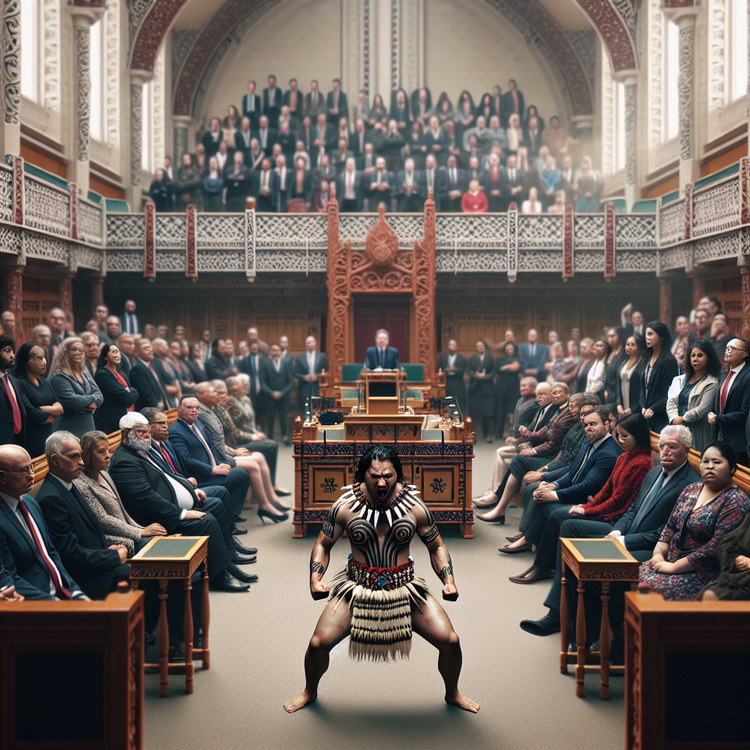
The haka is an important part of Maori culture and is often performed on significant occasions. It is a powerful display of strength, pride, and identity. Waititi's decision to perform the haka before swearing his oath was seen as a bold statement of his commitment to Maori rights and his determination to bring attention to the issues facing the Maori community.
Waititi's actions have sparked a debate about the role of Maori culture and language in New Zealand's government and society. Some argue that it is important to preserve and promote Maori culture as an integral part of the country's identity, while others believe that it is unnecessary and divisive. The controversy surrounding affirmative action policies and the use of the Maori language reflects the ongoing struggle for recognition and equality for Maori people in New Zealand.
Waititi's haka performance has garnered both praise and criticism. Supporters see it as a powerful and symbolic act of defiance and a reminder of the importance of Maori culture in New Zealand. Critics argue that it was inappropriate and disrespectful to break protocol during the induction ceremony. However, Waititi's actions have brought attention to the issues facing the Maori community and have sparked a broader discussion about the place of indigenous cultures in modern society.
Overall, Waititi's haka performance before swearing his oath to King Charles has ignited a debate about Maori rights and the role of Maori culture in New Zealand. It has highlighted the ongoing struggle for recognition and equality for the Maori community and has sparked a broader discussion about the place of indigenous cultures in society.
Original news source: Watch: Maori MP performs haka before swearing oath to King (BBC)
🎧 Listen:
📖 Vocabulary:
Group or Classroom Activities
Warm-up Activities:
– Charades
Instructions: Divide the class into two teams. Assign each team a word or phrase related to the article (e.g. "haka," "Maori culture," "affirmative action"). One member from each team will come to the front and act out the word or phrase without speaking. The team members will try to guess the word or phrase within a time limit. The team that guesses correctly gets a point. Repeat with different words or phrases from the article.
– News Summary
Instructions: In pairs or small groups, students will take turns summarizing the main points of the article to their partner(s). They should try to include key details and important information while keeping their summary concise. After each summary, the listeners can ask questions or provide feedback. Rotate partners and repeat the activity with different sections of the article.
– Opinion Poll
Instructions: Create a list of statements related to the article (e.g. "Maori culture should be protected and promoted," "Affirmative action policies are necessary for achieving equality"). Have students walk around the classroom and ask their classmates for their opinions on each statement. They should record the responses (agree/disagree) and ask follow-up questions to understand different perspectives. Afterward, students can share their findings and engage in a class discussion about the opinions expressed.
– Vocabulary Pictionary
Instructions: Write a selection of vocabulary words from the article on small slips of paper. Divide the class into teams. One member from each team will pick a word and draw it on the board without using any letters or numbers. The rest of their team will try to guess the word. The team that guesses correctly gets a point. Repeat with different vocabulary words from the article.
– Think-Pair-Share
Instructions: Ask the students to take a few minutes to think about the following question: "What impact do you think Waititi's haka performance will have on the Maori rights movement in New Zealand?" Afterward, have them pair up with a classmate and discuss their thoughts. Encourage them to share their opinions, provide reasons, and ask questions of each other. Finally, have a class discussion where students can share their ideas and engage in a respectful debate on the topic.
🤔 Comprehension Questions:
The Maori haka is a traditional dance that symbolizes strength and unity in Maori culture. It is often performed on significant occasions and is a powerful display of pride and identity.
Waititi chose to perform the haka as a bold statement of his commitment to Maori rights and to bring attention to the issues facing the Maori community.
Waititi's haka performance has garnered both praise and criticism. Supporters see it as a powerful and symbolic act of defiance, while critics argue that it was inappropriate and disrespectful to break protocol during the induction ceremony.
Some arguments for preserving and promoting Maori culture in New Zealand include the importance of cultural heritage, the need for recognition and equality for the Maori community, and the role of Maori culture in shaping the country's identity.
Some arguments against preserving and promoting Maori culture in New Zealand include the belief that it is unnecessary and divisive, concerns about the use of public resources for cultural preservation, and a lack of understanding or appreciation for Maori culture.
Waititi's haka performance has sparked a broader discussion about the place of indigenous cultures in modern society. It has raised questions about the recognition and equality of indigenous peoples, the preservation of cultural heritage, and the role of indigenous cultures in shaping national identity.
The Maori community in New Zealand faces issues such as inequality, limited access to education and healthcare, high rates of incarceration, and the preservation of their language and cultural traditions.
Waititi's haka performance has brought attention to the struggles of the Maori community by highlighting the ongoing issues of inequality, the need for recognition and equality, and the preservation of Maori culture and language. It has sparked a broader discussion about these issues and the place of indigenous cultures in New Zealand.
🎧✍️ Listen and Fill in the Gaps:
Rawiri Waititi, a politician in New Zealand, recently made headlines for breaking protocol during his induction into parliament. Before swearing an oath to King Charles, Waititi a Maori haka, a traditional dance that is a symbol of strength and unity. Along with five other parliamentarians, Waititi chose to pledge allegiance to their grandchildren, young people, and the country's founding document, the of . Waititi is the co-leader of Te Pati Maori, a political party that advocates for Maori rights. His induction coincided with controversy surrounding government plans to review affirmative action and reduce the use of the Maori language. The haka is an important part of Maori culture and is often performed on significant occasions. It is a powerful display of strength, pride, and identity. Waititi's decision to perform the haka before swearing his oath was seen as a bold statement of his commitment to Maori rights and his determination to attention to the issues facing the Maori . Waititi's actions have sparked a debate about the role of Maori culture and language in New Zealand's government and . Some argue that it is important to and Maori culture as an integral part of the country's identity, while others believe that it is unnecessary and divisive. The controversy surrounding affirmative action policies and the use of the Maori language reflects the ongoing struggle for recognition and equality for Maori people in New Zealand. Waititi's haka performance has garnered both praise and criticism. Supporters see it as a and act of defiance and a reminder of the importance of Maori culture in New Zealand. Critics argue that it was inappropriate and disrespectful to protocol during the induction ceremony. However, Waititi's actions have brought attention to the issues the Maori community and have a broader discussion about the place of indigenous cultures in modern society. Overall, Waititi's haka performance before swearing his oath to King Charles has ignited a debate about Maori rights and the role of Maori culture in New Zealand. It has highlighted the ongoing struggle for and equality for the Maori community and has sparked a broader discussion about the place of indigenous cultures in society.
💬 Discussion Questions:
1. What is a Maori haka and why is it important in Maori culture?
2. How would you feel if a politician in your country broke protocol during their induction ceremony? Why?
3. Do you think it is important for politicians to prioritize the needs and rights of indigenous communities? Why or why not?
4. What is your opinion on affirmative action policies? Do you think they are necessary for achieving equality? Why or why not?
5. How do you think the use of the Maori language in government and society can promote inclusivity and diversity?
6. Do you believe that indigenous cultures should be preserved and promoted as an integral part of a country's identity? Why or why not?
7. How do you think Waititi's haka performance has impacted the Maori community in New Zealand?
8. What are some ways that governments can work towards achieving recognition and equality for indigenous communities?
9. How do you think the controversy surrounding the use of the Maori language reflects broader issues of language preservation and cultural identity?
10. Do you think it is important for politicians to use their platform to bring attention to the issues facing marginalized communities? Why or why not?
11. How do you think Waititi's actions have influenced the public's perception of Maori culture and rights in New Zealand?
12. What are some potential benefits and drawbacks of breaking protocol during a public ceremony to make a statement?
13. How can society strike a balance between preserving indigenous cultures and embracing modernity?
14. Do you think it is necessary for governments to review and update affirmative action policies? Why or why not?
15. How can individuals and communities support and advocate for the rights of indigenous peoples in their own countries?
Individual Activities
📖💭 Vocabulary Meanings:
Click a dot next to a word, then click the dot next to its meaning to draw a line connecting them.
Words
Meanings
🔡 Multiple Choice Questions:
🕵️ True or False Questions:
📝 Write a Summary:
Write a summary of this news article in two sentences.
Check your writing now with the best free AI for English writing!