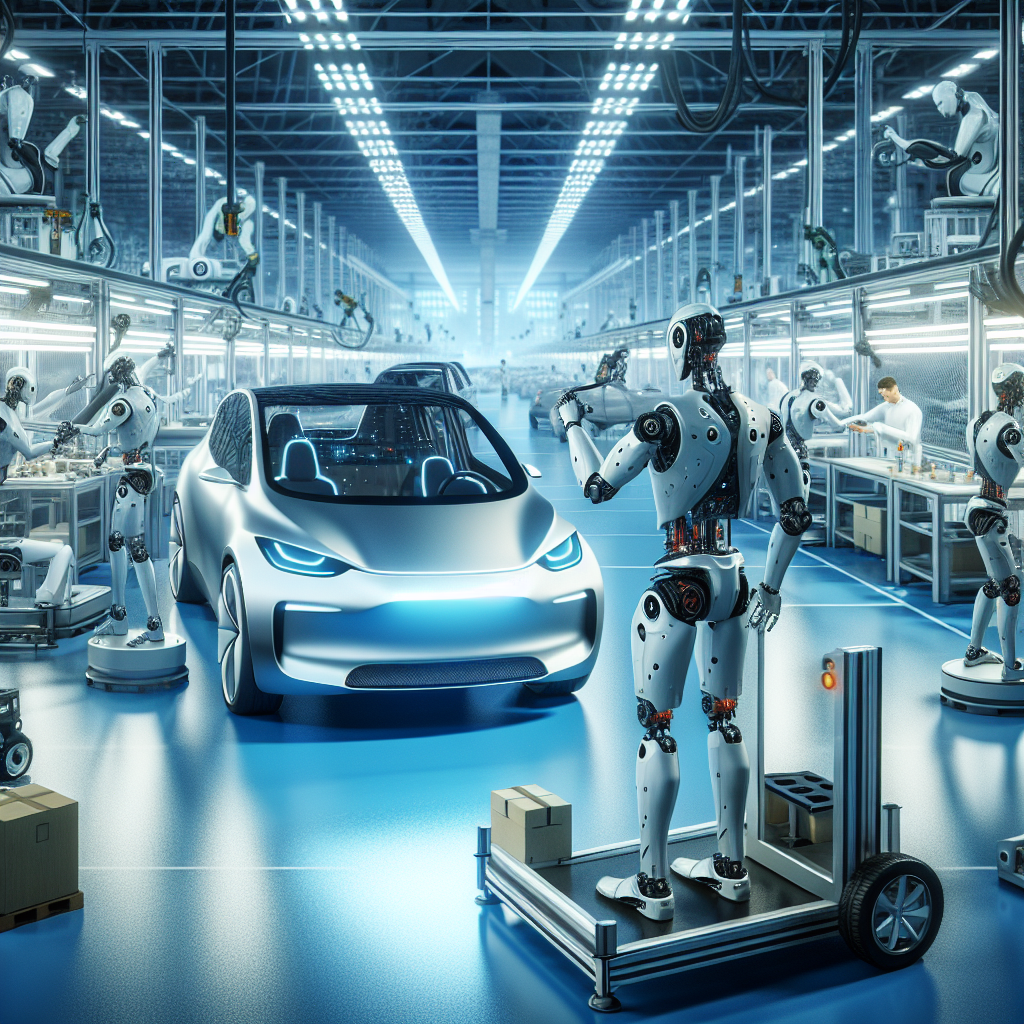
Elon Musk, the CEO of Tesla, has announced that the company plans to begin utilizing humanoid robots in its factories as early as next year. In a recent social media update, Musk revealed that Tesla will not only start using these robots internally but will also begin production for commercial sale by 2026. This move comes as Tesla faces challenges related to declining demand for its electric vehicles, prompting the company to explore innovative solutions to reduce operational costs.
The announcement of humanoid robots follows a significant drop in Tesla's profits, which fell nearly 50% in the second quarter of the year. The company's profits decreased from $2.7 billion to less than $1.5 billion, largely due to a slump in sales. Despite implementing price cuts and incentives to attract customers, Tesla reported a 7% year-on-year decline in automotive revenue. However, the company did manage to achieve a slight overall revenue increase of 2%, thanks to growth in its energy storage sector.
Musk's focus on robotics and artificial intelligence comes at a time when the demand for electric vehicles is slowing down. He has previously expressed confidence that the humanoid robot, named Optimus, would be ready for deployment in Tesla factories by the end of this year. In his latest statement, he reiterated that Tesla aims to have low production of these robots for internal use in 2024, with hopes for higher production levels for external clients by 2026.
Tesla's vision for the Optimus robot is to create an "autonomous humanoid robot" capable of performing tasks that are deemed unsafe, repetitive, or tedious. Musk has set an ambitious goal for the robots to be mass-produced at a cost of less than $20,000 each. However, he is known for making bold predictions regarding timelines, which have not always been met. For instance, he previously anticipated the rollout of self-driving taxis by 2020, a timeline that has since been pushed back.
In addition to Tesla, other companies such as Honda and Boston Dynamics are also working on developing their own humanoid robots. As Tesla continues to innovate in the fields of artificial intelligence and robotics, the company's future endeavors will depend on both technological advancements and regulatory approvals. Musk has indicated that Tesla is still actively pursuing the development of robo-taxis, although the timeline for their introduction remains uncertain.
Original news source: Musk says Tesla to use humanoid robots next year (BBC)
🎧 Listen:
📖 Vocabulary:
Group or Classroom Activities
Warm-up Activities:
– CHARADES
Instructions: Divide the class into small groups. Each group will take turns acting out key concepts or terms from the article (e.g., "humanoid robot," "autonomous," "artificial intelligence"). The rest of the class will guess what they are acting out. This activity helps reinforce vocabulary and encourages creative thinking.
– OPINION POLL
Instructions: Students will read the article and then express their opinions on the use of humanoid robots in factories. Create a set of statements (e.g., "Humanoid robots will improve workplace safety") for students to agree or disagree with. Students will walk around the classroom, asking their peers for their opinions and tallying the responses.
– MIND MAP
Instructions: In small groups, students will create a mind map based on the article. They should start with "Tesla's Humanoid Robots" in the center and branch out to include related ideas such as "challenges," "benefits," "timeline," and "other companies." This visual organization helps students synthesize information and understand the connections between concepts.
– SYNONYM CHALLENGE
Instructions: Provide students with a list of key vocabulary from the article. Students will work in pairs to come up with synonyms for each word. Afterward, they will share their synonyms with the class, and the teacher will facilitate a discussion on the nuances of the words and their context in the article.
– FUTURE PREDICTIONS
Instructions: After reading the article, students will engage in a discussion about the future of humanoid robots in the workforce. They will make predictions about how these robots might impact jobs, industry standards, and daily life in the next 5-10 years. Each student will share their predictions, and the class can discuss the feasibility and implications of these ideas.
🤔 Comprehension Questions:
Elon Musk announced that Tesla plans to begin utilizing humanoid robots in its factories as early as next year and will also start production for commercial sale by 2026.
Tesla's profits fell nearly 50% in the second quarter of the year, decreasing from $2.7 billion to less than $1.5 billion, largely due to a slump in sales.
Tesla is facing declining demand for its electric vehicles, which has prompted the company to explore innovative solutions to reduce operational costs.
Tesla aims to have low production of the Optimus robot for internal use in 2024, with hopes for higher production levels for external clients by 2026.
The intended functions of the Optimus robot include performing tasks that are deemed unsafe, repetitive, or tedious, with a target production cost of less than $20,000 each.
Tesla reported a 7% year-on-year decline in automotive revenue, but managed to achieve a slight overall revenue increase of 2% thanks to growth in its energy storage sector.
Other companies mentioned include Honda and Boston Dynamics, which are also working on developing their own humanoid robots.
Tesla's future endeavors in robotics and artificial intelligence will depend on technological advancements and regulatory approvals.
🎧✍️ Listen and Fill in the Gaps:
Elon Musk, the CEO of , has announced that the company plans to begin utilizing humanoid robots in its factories as early as next year. In a recent social media update, Musk revealed that Tesla will not only start using these robots internally but will also begin production for commercial sale by 2026. This move as Tesla faces challenges related to declining for its electric vehicles, prompting the company to explore innovative solutions to reduce operational costs. The announcement of humanoid robots follows a significant drop in Tesla's profits, which fell nearly 50% in the quarter of the year. The 's profits decreased from $2.7 billion to less than $1.5 billion, largely due to a slump in sales. Despite price cuts and incentives to attract customers, Tesla a 7% year-on-year decline in automotive revenue. However, the company did manage to achieve a slight revenue increase of 2%, thanks to growth in its energy storage sector. Musk's focus on robotics and artificial intelligence comes at a time when the demand for electric vehicles is slowing down. He has previously expressed confidence that the humanoid robot, named Optimus, would be ready for in Tesla factories by the end of this year. In his latest , he reiterated that Tesla aims to have low production of these s for internal use in 2024, with hopes for higher production levels for external clients by 2026. Tesla's vision for the Optimus robot is to an "autonomous humanoid robot" capable of performing tasks that are deemed unsafe, repetitive, or tedious. Musk has set an ambitious goal for the robots to be mass-produced at a cost of less than $20,000 each. However, he is known for making bold predictions regarding timelines, which have not always been met. For instance, he previously anticipated the of self-driving taxis by 2020, a timeline that has since been pushed back. In to Tesla, companies such as Honda and Boston Dynamics are also working on developing their own humanoid . As Tesla continues to innovate in the fields of artificial intelligence and robotics, the company's future endeavors will depend on both technological advancements and regulatory approvals. Musk has indicated that Tesla is still actively pursuing the development of robo-taxis, although the timeline for their introduction remains uncertain.
💬 Discussion Questions:
1. What is your opinion on the use of humanoid robots in factories? Do you think it is a positive development? Why or why not?
2. How would you feel if a humanoid robot were to take over your job? Would you be concerned or excited about the change?
3. Do you like the idea of having robots assist in everyday tasks? Why or why not?
4. What is a potential benefit of using humanoid robots in industries like automotive manufacturing?
5. How do you think the introduction of humanoid robots will impact the job market in the future?
6. Do you think companies should prioritize the development of humanoid robots over hiring human workers? Why or why not?
7. What is a concern you have about the increasing use of artificial intelligence and robotics in our lives?
8. How would you feel if you had to interact with a humanoid robot on a daily basis? Would you find it comfortable or unsettling?
9. Do you think Elon Musk's ambitious timelines for technology development are realistic? Why or why not?
10. What is a task you believe would be better suited for a robot than a human? Why?
11. How do you think society should address the ethical implications of using humanoid robots in the workforce?
12. Do you think the production of humanoid robots will lead to a decrease in human creativity and innovation? Why or why not?
13. What is a potential drawback of relying too heavily on robots in industries?
14. How would you feel if robots became commonplace in your home, assisting with chores and daily tasks? Would you welcome that or prefer to do things yourself?
15. Do you believe that advancements in robotics will ultimately improve or hinder our quality of life? Why?
Individual Activities
📖💭 Vocabulary Meanings:
Click a dot next to a word, then click the dot next to its meaning to draw a line connecting them.
Words
Meanings
🔡 Multiple Choice Questions:
🕵️ True or False Questions:
📝 Write a Summary:
Write a summary of this news article in two sentences.
Check your writing now with the best free AI for English writing!