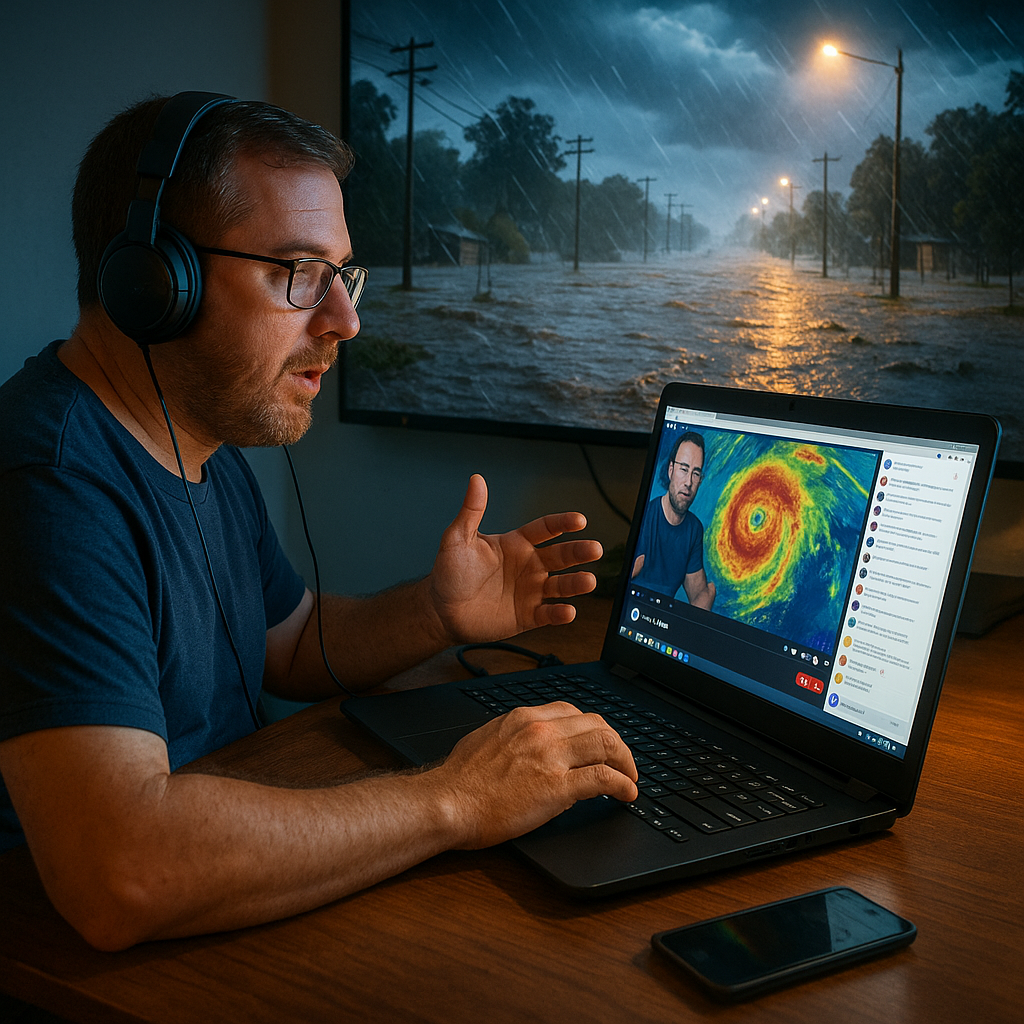
In recent months, many residents of North Queensland, Australia, have faced significant challenges due to extreme weather conditions, including severe flooding. Among those affected is Andrew Brown, a cybersecurity lecturer who has gained recognition as an amateur weather forecaster through his Facebook page, Wally's Weather. With over 107,000 followers and 24 million monthly views, Brown has become a vital source of weather updates for his community, especially during the record-breaking floods that forced hundreds to evacuate their homes. His commitment to providing timely information has led him to post updates around the clock, even during the night, to ensure that his audience is well-informed.
The rise of weather influencers like Brown reflects a broader trend in which the public increasingly turns to social media for news and weather information. According to research from the Pew Research Centre, approximately 20% of adults in the United States rely on social media for such updates. This shift indicates that many people trust influencers as much as, or even more than, traditional journalists. Prof. Daniel Angus, director of the Digital Media Research Centre at Queensland University of Technology, notes that weather influencers often provide localized, real-time updates that mainstream media may overlook, particularly in rural areas. Their direct engagement with the audience fosters a sense of community and relatability that traditional news outlets may lack.
However, the popularity of weather influencers is not without its drawbacks. Prof. Angus points out that some influencers have been criticized for sensationalizing weather events, which can lead to misinformation and public panic. For instance, Higgins Storm Chasing, another weather influencer, faced backlash for making exaggerated predictions about rainfall and flooding in 2018 that did not materialize. Unlike official meteorological organizations, these influencers are not held to the same standards, which raises concerns about accountability and the potential for scaremongering.
Experts like Alan Sealls, a former TV weatherman and current meteorology professor, emphasize the importance of trained meteorologists in providing accurate forecasts. While some weather influencers possess the knowledge and equipment to deliver reliable updates during crises, others may lack formal training and contribute to confusion by promoting long-range forecasts that are inherently uncertain. Sealls argues that trained professionals are better equipped to avoid misleading the public, especially when discussing extreme weather events.
Despite the challenges, the world of weather influencing offers opportunities for individuals like Andrew Brown to monetize their expertise. While Brown has invested significantly in forecasting equipment and has introduced paid subscriptions to cover costs, he remains focused on providing valuable information to his community. Similarly, other influencers, such as Andrew Markowitz, have found ways to earn income through sponsorships and donations while maintaining their primary jobs. As the landscape of weather forecasting continues to evolve, the balance between traditional meteorological expertise and the rise of social media influencers will remain a topic of discussion among experts and the public alike.
Original news source: Who should you trust for a weather forecast? (BBC)
🎧 Listen:
📖 Vocabulary:
Group or Classroom Activities
Warm-up Activities:
– CHARADES
Instructions: Divide the class into small groups. Each group will take turns acting out terms related to the article (e.g., flooding, influencer, weather forecast) without speaking, while the other groups guess the word or phrase.
– OPINION POLL
Instructions: Have students discuss their opinions on the impact of social media influencers in news reporting. Create a list of questions (e.g., "Do you trust weather influencers more than traditional meteorologists?") and conduct a class poll. Afterward, discuss the results as a class.
– MIND MAP
Instructions: In small groups, have students create a mind map on the topic of “Weather Influencers.” They should include branches for pros, cons, public perception, and examples. Afterward, each group can present their mind map to the class.
– HEADLINE CREATION
Instructions: Ask students to create catchy headlines for the article, focusing on its main points. After they brainstorm individually, students can share their headlines in pairs, discussing which one they think best captures the essence of the article.
– TWO TRUTHS AND A LIE
Instructions: Each student will come up with two true statements and one false statement inspired by the article's content regarding weather influencers and their impact. They will share these with a partner, who must identify which statement is the lie. Afterward, partners can switch and share with another pair.
🤔 Comprehension Questions:
Andrew Brown is a cybersecurity lecturer who has gained recognition as an amateur weather forecaster through his Facebook page, Wally's Weather. During the recent flooding in North Queensland, he has taken on the role of providing vital weather updates to his community, especially during the record-breaking floods that forced hundreds to evacuate their homes.
Wally's Weather has become a vital source of weather updates for residents, with over 107,000 followers and 24 million monthly views. Brown's commitment to providing timely information has led him to post updates around the clock, ensuring that his audience is well-informed during extreme weather conditions.
The article highlights a trend where approximately 20% of adults in the United States rely on social media for news and weather updates, indicating that many people trust influencers as much as, or even more than, traditional journalists.
Prof. Daniel Angus notes that weather influencers often provide localized, real-time updates that mainstream media may overlook, particularly in rural areas. Their direct engagement with the audience fosters a sense of community and relatability that traditional news outlets may lack.
Prof. Angus raises concerns that some weather influencers have been criticized for sensationalizing weather events, which can lead to misinformation and public panic. This lack of accountability compared to official meteorological organizations raises issues about the potential for scaremongering.
Experts like Alan Sealls emphasize the importance of trained meteorologists in providing accurate forecasts. While some weather influencers may have the knowledge and equipment to deliver reliable updates, others may lack formal training and contribute to confusion, making trained professionals better equipped to avoid misleading the public.
Weather influencers like Andrew Brown have found opportunities to monetize their expertise by investing in forecasting equipment and introducing paid subscriptions to cover costs. Others, like Andrew Markowitz, have earned income through sponsorships and donations while maintaining their primary jobs.
The article suggests that there will be an ongoing discussion about the balance between traditional meteorological expertise and the rise of social media influencers as the landscape of weather forecasting continues to evolve.
🎧✍️ Listen and Fill in the Gaps:
In recent months, many residents of North Queensland, Australia, have faced significant challenges due to extreme weather conditions, including severe flooding. Among those affected is Andrew Brown, a lecturer who has gained recognition as an amateur weather forecaster through his Facebook page, Wally's Weather. With over 107,000 followers and 24 million monthly , Brown has become a source of weather updates for his community, especially during the record-breaking floods that forced hundreds to evacuate their homes. His commitment to providing timely information has led him to post updates around the clock, even during the night, to ensure that his audience is well-informed. The rise of weather influencers like Brown reflects a broader trend in which the public increasingly turns to media for news and information. According to research from the Pew Research Centre, approximately 20% of in the United States rely on social media for such updates. This shift indicates that many people trust influencers as much as, or even more than, traditional journalists. Prof. Daniel , director of the Digital Media Research Centre at Queensland University of Technology, notes that weather influencers often provide localized, real-time updates that mainstream media may , particularly in rural areas. Their direct engagement with the audience fosters a sense of community and relatability that traditional news outlets may lack. However, the popularity of weather influencers is not without its drawbacks. Prof. Angus points out that some influencers have been criticized for sensationalizing weather events, which can lead to misinformation and public panic. For , Storm Chasing, another weather influencer, faced backlash for making exaggerated predictions about rainfall and flooding in 2018 that did not materialize. Unlike official meteorological organizations, these influencers are not held to the same standards, which raises concerns about accountability and the potential for scaremongering. Experts like Alan Sealls, a former TV weatherman and current meteorology , emphasize the importance of trained meteorologists in providing accurate forecasts. While some weather influencers possess the knowledge and equipment to deliver reliable updates during crises, others may lack training and contribute to confusion by promoting long-range forecasts that are inherently uncertain. Sealls argues that trained professionals are better to avoid misleading the public, especially when discussing extreme weather events. Despite the challenges, the of weather influencing offers opportunities for individuals like Andrew Brown to monetize their expertise. While Brown has invested significantly in forecasting equipment and has paid subscriptions to cover costs, he remains focused on providing valuable information to his community. Similarly, other influencers, such as Andrew Markowitz, have found ways to earn income through sponsorships and donations while maintaining their primary jobs. As the landscape of weather forecasting continues to , the balance between traditional meteorological expertise and the rise of social media influencers will remain a topic of discussion among experts and the public alike.
💬 Discussion Questions:
1. What is a weather influencer, and how do you think they differ from traditional meteorologists?
2. How would you feel if you had to rely on social media for important weather updates instead of traditional news sources?
3. Do you think social media has changed the way we perceive news and information? Why or why not?
4. What is a significant weather event you have experienced, and how did you stay informed during that time?
5. How do you feel about the idea of influencers providing critical information during emergencies? Do you think they can be trusted?
6. Do you like following social media accounts for weather updates? Why or why not?
7. How would you react if you learned that a weather influencer you trusted had provided inaccurate information?
8. Do you think there should be regulations for weather influencers to ensure the accuracy of their forecasts? Why or why not?
9. What is a potential risk of relying on influencers for weather information, in your opinion?
10. How do you think communities can better support each other during extreme weather events?
11. Do you believe that the engagement and relatability of weather influencers make them more effective than traditional news outlets? Why or why not?
12. How would you feel if you were a trained meteorologist and saw unqualified influencers sharing weather forecasts?
13. Do you think the popularity of weather influencers will continue to grow? Why or why not?
14. What is a way that you think weather influencers can improve their credibility and accountability in the eyes of the public?
15. How do you think the role of technology, such as smartphones and social media, has impacted our understanding of weather events?
Individual Activities
📖💭 Vocabulary Meanings:
Click a dot next to a word, then click the dot next to its meaning to draw a line connecting them.
Words
Meanings
🔡 Multiple Choice Questions:
🕵️ True or False Questions:
📝 Write a Summary:
Write a summary of this news article in two sentences.
Check your writing now with the best free AI for English writing!