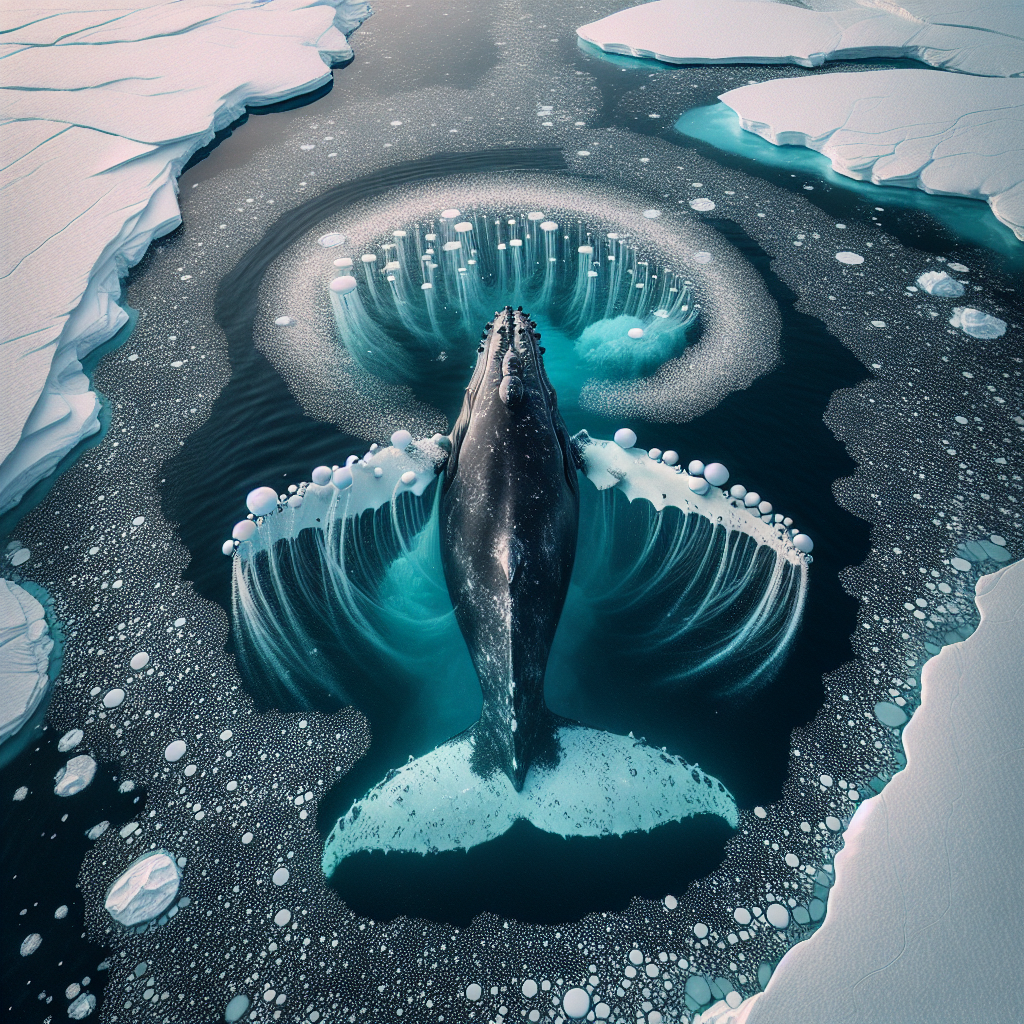
Scientists use flying cameras called drones to watch big whales in the cold Antarctic waters. They saw a whale making bubbles to catch food, a trick called "bubble-netting." These whales can move really well because of their big tails and flippers. Drones help scientists see these cool tricks up close.
Drones also show scientists that whale families are coming back to places where they were hunted before. They saw mommy whales with their babies, which is a good sign. Some whales are getting smaller because their food is changing. This might mean they are not as healthy. Drones help scientists learn more about these changes.
Original news source: Drones reveal Antarctic whale 'acrobatics' (BBC)
🎧 Listen:
📖 Vocabulary:
Group or Classroom Activities
Warm-up Activities:
– Charades
Instructions: Divide the class into two teams. Give each team a set of cards with words or phrases related to the article (e.g. whale, bubble-netting, drones, etc.). One member from each team will come to the front of the class and act out the word or phrase without speaking. The rest of the team must guess what it is within a certain time limit (e.g. one minute). The team that guesses correctly gets a point. Continue until all the cards have been used or for a set number of rounds. The team with the most points wins.
– News Summary
Instructions: In pairs, students will take turns summarizing the main points of the article to their partner. They should try to include important details and use their own words. After each summary, the listener can ask questions or provide feedback. Then, they switch roles and the other student summarizes the article. Encourage students to use phrases like "In the article, it says that…" or "According to the scientists…" to help them practice using reported speech.
– Opinion Poll
Instructions: Have students form small groups. Each group will discuss the following question: "Do you think drones are helpful for studying whales? Why or why not?" After they have had a chance to discuss, each group will appoint a spokesperson to share their group's opinion with the class. As a class, vote on which opinion is the most convincing and have a short discussion about the different perspectives.
– Vocabulary Pictionary
Instructions: Write a list of vocabulary words from the article on the board (e.g. whale, bubble-netting, drones, etc.). Divide the class into pairs. One student from each pair will choose a word and draw a picture to represent it. The other student must guess the word based on the drawing. They can also ask questions to help them guess. After a set amount of time, switch roles. Encourage students to use English words and phrases to describe their drawings and guess the words.
– Headline Creation
Instructions: Divide the class into small groups. Each group will create a headline for an article about the use of drones to study whales. Encourage them to be creative and use some of the vocabulary words from the article in their headlines. After a set amount of time, each group will share their headline with the class. As a class, vote on the most interesting or catchy headline. This activity can also lead into a discussion about the importance of headlines in attracting readers to news articles.
🤔 Comprehension Questions:
Scientists use drones to watch big whales in the cold Antarctic waters.
The scientists saw the whale making bubbles to catch food, a trick called "bubble-netting."
Whales can move really well in the water because of their big tails and flippers.
Drones help scientists see the cool tricks of the whales by flying close to them and taking videos.
When the scientists used drones to watch the whales, they saw mommy whales with their babies, which is a good sign.
Some whales are getting smaller because their food is changing.
Drones help scientists learn more about the changes in the whales by allowing them to see the whales up close and study their behavior.
🎧✍️ Listen and Fill in the Gaps:
Scientists use flying cameras called drones to watch big whales in the cold Antarctic waters. They saw a whale bubbles to catch food, a called "bubble-netting." These whales can move really well because of their big and flippers. help scientists see these cool tricks up close. Drones also show scientists that families are coming back to places where they were hunted before. They saw mommy whales with their babies, which is a good . Some whales are getting smaller because their food is changing. This might they are not as healthy. Drones help scientists learn about these changes.
💬 Discussion Questions:
1. What is a drone?
2. How do drones help scientists watch big whales?
3. What is "bubble-netting"?
4. How do whales catch food using bubble-netting?
5. How do whales move in the water?
6. Why do scientists use drones to see whale families?
7. How do drones help scientists learn about changes in whale populations?
8. How would you feel if you saw a whale making bubbles to catch food?
9. Do you like watching videos or pictures of whales?
10. Do you think it's good that whale families are coming back to places where they were hunted before? Why or why not?
11. How would you feel if you saw a mommy whale with her baby?
12. Do you think it's important for scientists to learn more about changes in whale populations? Why or why not?
Individual Activities
📖💭 Vocabulary Meanings:
Click a dot next to a word, then click the dot next to its meaning to draw a line connecting them.
Words
Meanings
🔡 Multiple Choice Questions:
🕵️ True or False Questions:
📝 Write a Summary:
Write a summary of this news article in two sentences.
Check your writing now with the best free AI for English writing!