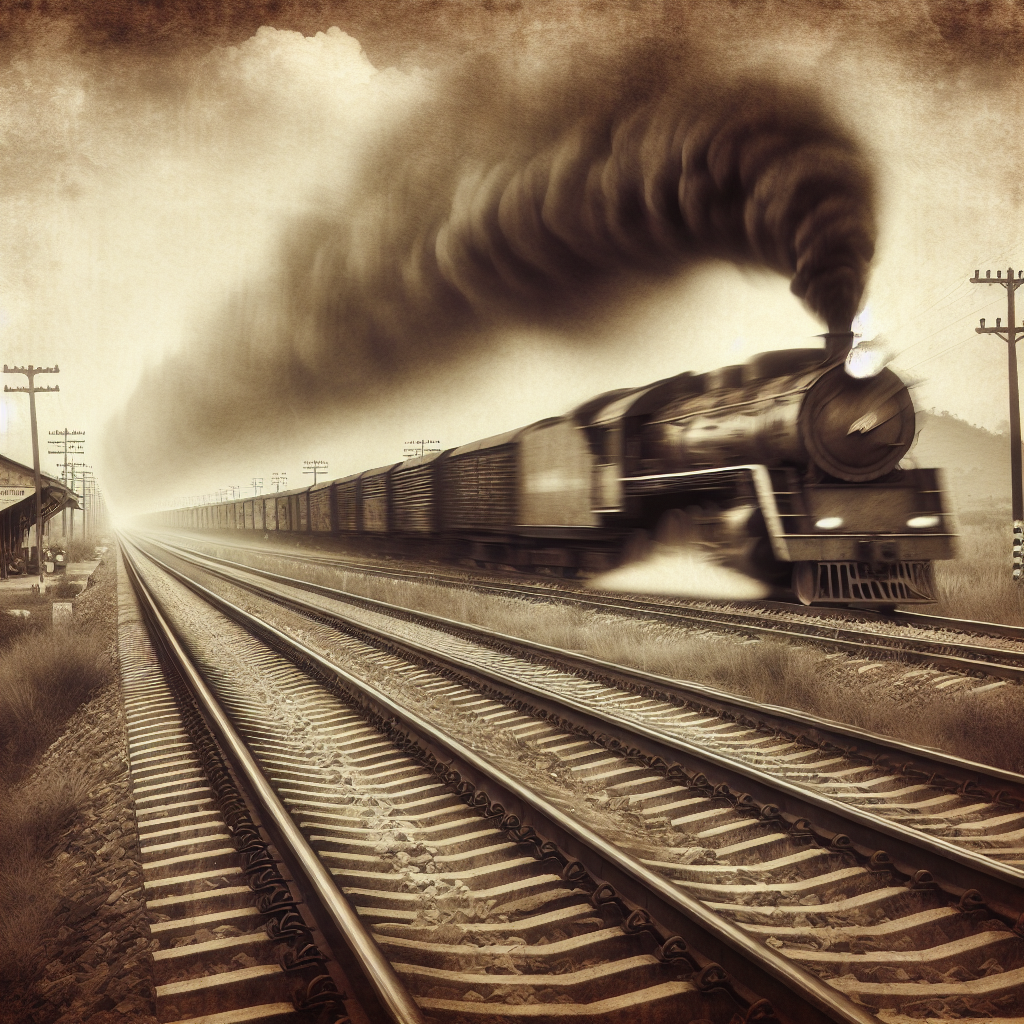
A train in India went on a very long trip without any drivers. It moved by itself for more than 70km. People saw it go very fast past many places where trains stop. This happened after the people driving the train got off for a little while in a place called Kathua. Then, the train started moving down a hill and went past five stops before people who work for the trains stopped it.
The train was carrying heavy things and was going really fast. The people who work for the trains did something smart to make it stop. They put wood on the tracks so the train would slow down and stop. They are now trying to find out why the train started moving by itself to make sure it doesn't happen again. Luckily, no one was hurt, and they stopped the train safely.
Original news source: Runaway Indian train travels 70km without driver (BBC)
🎧 Listen:
📖 Vocabulary:
Group or Classroom Activities
Warm-up Activities:
– Charades
Instructions: Divide the class into small groups. Give each group a word or phrase related to the article (e.g. train, driver, stop, hill, etc.). One student from each group will act out the word or phrase without speaking, while the rest of the group tries to guess what it is.
– News Summary
Instructions: Have the students take turns summarizing the main points of the article in their own words. Encourage them to use simple sentences and vocabulary they are familiar with.
– Vocabulary Pictionary
Instructions: Write down key vocabulary words from the article on individual pieces of paper or index cards. Divide the class into pairs. One student from each pair will pick a word and draw a picture to represent it, while the other student tries to guess the word.
– Keyword Hangman
Instructions: Choose a keyword from the article and draw a series of dashes on the board to represent each letter of the word. Have the students take turns guessing letters. If a letter is correct, write it in the corresponding dash. If a letter is incorrect, start drawing a hangman. The students must guess the word before the hangman is completed.
– Future Predictions
Instructions: Ask the students to imagine what might happen next in the story. Have them write or discuss their predictions in pairs or small groups. Encourage them to use the future tense and provide reasons for their predictions based on the information in the article.
🤔 Comprehension Questions:
The train in India started moving by itself without any drivers.
The train went more than 70km by itself.
The people driving the train got off in a place called Kathua.
The people who work for the trains put wood on the tracks to make the train slow down and stop.
They are still trying to find out why the train started moving by itself.
No, luckily no one was hurt.
Yes, they stopped the train safely.
🎧✍️ Listen and Fill in the Gaps:
A in India went on a very long trip without any drivers. It moved by itself for more than 70km. People saw it go very fast past many where trains stop. This happened after the people driving the train got off for a while in a place called Kathua. Then, the train moving down a hill and went past five stops before people who work for the trains stopped it. The train was carrying heavy things and was going really fast. The people who work for the trains did something smart to make it . They put wood on the so the train would down and stop. They are now trying to find out why the train started moving by itself to make sure it doesn't happen again. Luckily, no one was , and they stopped the train safely.
💬 Discussion Questions:
1. What is a train?
2. Have you ever been on a train before? How did it make you feel?
3. How would you feel if a train started moving without any drivers?
4. Do you think it's safe for a train to move without any drivers? Why or why not?
5. Have you ever seen a train go really fast? Where did you see it?
6. Do you like trains? Why or why not?
7. What do you think the people who work for the trains did to make it stop?
8. How do you think they felt when they saw the train moving by itself?
9. If you were on the train, what would you do if it started moving without any drivers?
10. Why do you think the train started moving by itself?
11. Do you think the people who work for the trains did a good job stopping the train? Why or why not?
12. What do you think they should do to make sure this doesn't happen again?
Individual Activities
📖💭 Vocabulary Meanings:
Click a dot next to a word, then click the dot next to its meaning to draw a line connecting them.
Words
Meanings
🔡 Multiple Choice Questions:
🕵️ True or False Questions:
📝 Write a Summary:
Write a summary of this news article in two sentences.
Check your writing now with the best free AI for English writing!