

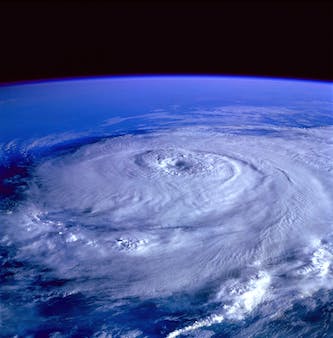
The smart program did a really good job, better than the old ways, most of the time. It made guesses really fast and didn't need a big computer. The old ways look at the air now to guess the weather, but the smart program learns from what happened before. The smart program guessed where the big storm would go nine days before it happened, but the old ways only guessed six days before. But because the weather is changing and getting more wild, it might be hard for the smart program to guess right about new kinds of big storms.
Original news source: AI could predict hurricane landfall sooner – report (BBC)
📖 Vocabulary:
Group or Classroom Activities
Warm-up Activities:
– Charades
Instructions: Write down several words related to weather, technology, and predictions (e.g., storm, computer, forecast, program, math). Students take turns acting out these words without speaking, while the rest of the class guesses the word. This activity will help familiarize students with key vocabulary from the article.
– News Reporter Role-play
Instructions: Students work in pairs. One student acts as a news reporter and the other as a meteorologist who has developed the GraphCast program. They role-play an interview where the reporter asks questions about how the program works and its advantages over old methods. This encourages students to practice speaking and listening skills using information from the article.
– Word Association
Instructions: The teacher says a word related to the article (e.g., “weather”). Students take turns saying the first word that comes to mind that is also related to the article's content. This activity fosters quick thinking and vocabulary recall.
– Sketch It
Instructions: Students are divided into small groups and given a word or phrase from the article (e.g., “smart program,” “big storm,” “hard math”). Each group has to draw a representation of their word or phrase without writing any words. They then present their drawing to the class, explaining how it relates to the article, which helps with comprehension and speaking skills.
– Future Predictions
Instructions: Discuss with the students the concept of weather prediction. Have each student write down their own prediction about the weather for the next day or week, using simple English sentences. They can then share their predictions with the class and discuss why they made those predictions, encouraging the use of future tense and critical thinking.
🤔 Comprehension Questions:
Some smart computer programs can guess where big storms will go.
The smart program is called GraphCast.
GraphCast guessed the storm right three days before the old ways did.
The smart programs are fast because they look at what happened before to guess the weather, not like the old ways that do lots of hard math.
The old ways look at the air now and do lots of hard math to guess the weather.
The smart program made a guess nine days before the storm happened.
It might be hard because the weather is changing and getting more wild, and the smart program learns from what happened before.
🎧✍️ Listen and Fill in the Gaps:
Some smart computer programs can guess where big storms will go better than older ways of guessing. A team a smart program called GraphCast that guessed right about a big storm in Canada three days before the old ways did. The old ways to do lots of hard and use big , but the smart program looks at what happened before to guess what the weather will do. The smart program is not ready to take over from the old ways, but it can help make better guesses faster. The smart program did a really good job, than the old ways, most of the time. It made es really fast and didn't need a big computer. The old ways look at the air now to guess the weather, but the smart program learns from what happened before. The smart program guessed where the big storm would go nine days before it , but the old only guessed six days before. But because the weather is changing and getting more wild, it might be hard for the smart program to guess right about new kinds of big storms.
💬 Discussion Questions:
1. What is a storm?
2. Do you like watching the rain from a storm? Why or why not?
3. Have you seen a big storm before? How did you feel?
4. What do you do when there is a big storm?
5. How do you think people guess the weather?
6. Do you think computers are smart? Why?
7. Do you like to know if a storm is coming? Why or why not?
8. Do you think it is good to guess the weather fast? Why?
9. What is a smart computer program?
10. Do you think learning from the past is important? Why or why not?
11. Do you think new computer programs can help us? Why?
12. How would you feel if a computer made a mistake about the weather?
Individual Activities
📖💭 Vocabulary Meanings:
Click a dot next to a word, then click the dot next to its meaning to draw a line connecting them.
Words
Meanings
🔡 Multiple Choice Questions:
🕵️ True or False Questions:
📝 Write a Summary:
Write a summary of this news article in two sentences.
Check your writing now with the best free AI for English writing!