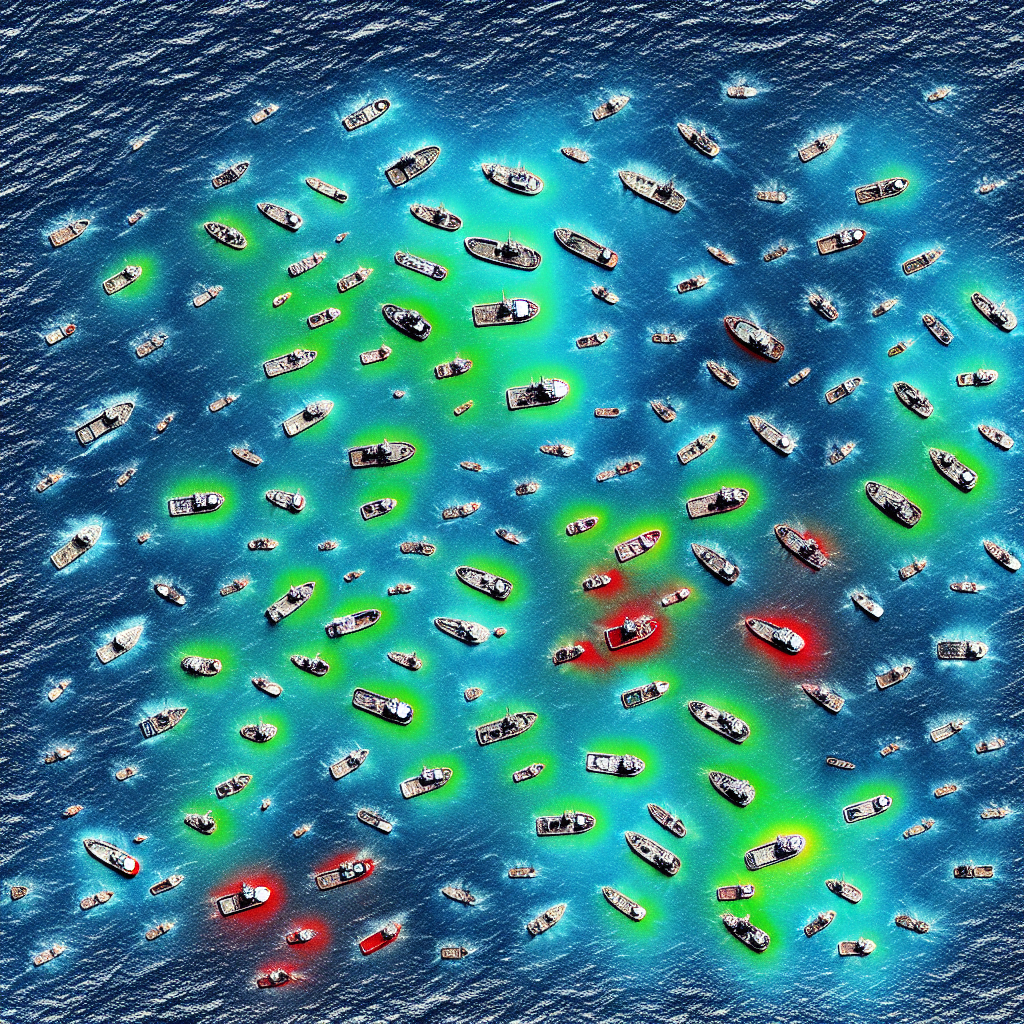
Some people catch fish they are not supposed to. This is bad because there are not enough fish for everyone if they keep doing this. Now, some smart people are using computers and space cameras to watch where boats go. The computers can tell if a boat is being sneaky and fishing where it shouldn't. This helps stop people from taking too many fish.
Also, there's a cool underwater robot being made. It can listen to sounds in the water. The robot is learning to hear the difference between normal water sounds and the noise from fishing boats that shouldn't be there. If the robot hears something wrong, it can tell the people who can stop it. This way, by using robots and computers, we can help save the fish and the ocean.
Original news source: How AI is being used to prevent illegal fishing (BBC)
🎧 Listen:
📖 Vocabulary:
Group or Classroom Activities
Warm-up Activities:
– Charades
Instructions: Divide the class into two teams. Give each team a set of vocabulary cards related to the article (e.g. fish, boat, robot, ocean). One student from each team takes turns acting out the word on the card without speaking, while their team guesses what word they are acting out. The team with the most correct guesses wins.
– Word Association
Instructions: Write the words "fish" and "ocean" on the board. Ask students to take turns saying a word that is related to either "fish" or "ocean". Encourage them to think of as many words as possible in a given time limit (e.g. 1 minute). The student who can come up with the most words wins.
– Vocabulary Pictionary
Instructions: Divide the class into pairs. Give each pair a set of vocabulary cards related to the article. One student from each pair chooses a card and has to draw a picture of the word on the card, while their partner tries to guess what word it is. The pair with the most correct guesses wins.
– Keyword Taboo
Instructions: Write the keywords from the article (e.g. fish, boat, robot, ocean) on separate index cards. Divide the class into two teams. One student from each team takes turns picking a card and describing the keyword without using the word itself. Their team members have to guess the keyword. The team with the most correct guesses wins.
– Think-Pair-Share
Instructions: Ask students to think about their own opinions on the topic of overfishing and the use of technology to address it. Then, pair them up and ask them to discuss their opinions with their partner. After a few minutes, ask some pairs to share their opinions with the whole class. Encourage students to listen and respond respectfully to each other's opinions.
🤔 Comprehension Questions:
It is bad because there won't be enough fish for everyone if people keep doing this.
They use computers and space cameras to watch where boats go. The computers can tell if a boat is being sneaky and fishing where it shouldn't.
The underwater robot is learning to hear the difference between normal water sounds and the noise from fishing boats that shouldn't be there.
If the robot hears something wrong, like the noise from a fishing boat that shouldn't be there, it can tell the people who can stop it.
It is important to save the fish and the ocean because they are part of our environment and many animals and people depend on them for food and livelihood.
Robots and computers can help save the fish and the ocean by monitoring where boats go and detecting if they are fishing where they shouldn't. They can alert the authorities to stop illegal fishing.
Some other ways we can help protect the fish and the ocean include not littering, reducing our use of plastic, recycling, and supporting organizations that work to protect marine life and their habitats.
🎧✍️ Listen and Fill in the Gaps:
Some people catch fish they are not to. This is bad because there are not enough fish for everyone if they keep doing this. Now, some people are using computers and space to watch where go. The computers can tell if a boat is being sneaky and fishing where it shouldn't. This helps stop people from taking too many fish. Also, there's a cool underwater robot being made. It can listen to in the water. The robot is learning to hear the difference between water sounds and the noise from fishing boats that shouldn't be there. If the hears something wrong, it can tell the people who can stop it. This way, by using robots and computers, we can help the fish and the ocean.
💬 Discussion Questions:
1. What is a fish?
2. How would you feel if there were not enough fish for everyone?
3. Do you like fishing? Why or why not?
4. What is a computer?
5. How do computers help stop people from taking too many fish?
6. What is a robot?
7. How does the underwater robot help save the fish and the ocean?
8. Have you ever heard sounds in the water? What did they sound like?
9. Do you think it's important to protect the ocean? Why or why not?
10. What do you think about using robots and computers to help save the fish?
11. Have you ever seen a fishing boat? What did it look like?
12. Do you think it's good to catch fish you're not supposed to? Why or why not?
Individual Activities
📖💭 Vocabulary Meanings:
Click a dot next to a word, then click the dot next to its meaning to draw a line connecting them.
Words
Meanings
🔡 Multiple Choice Questions:
🕵️ True or False Questions:
📝 Write a Summary:
Write a summary of this news article in two sentences.
Check your writing now with the best free AI for English writing!