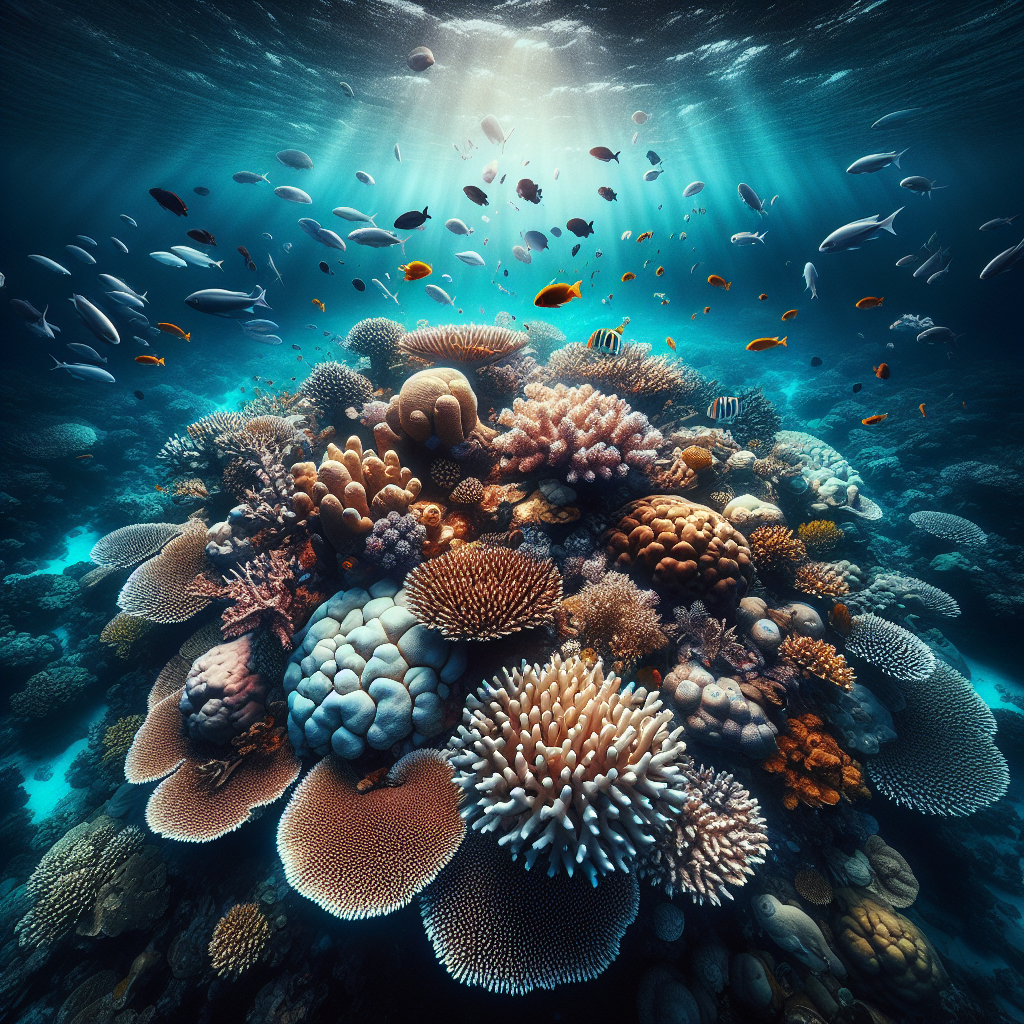
Scientists have found that the Great Barrier Reef is getting very hot. It's the hottest it's been in 400 years. This heat is causing the coral to get sick, which is called bleaching. The study shows that climate change is hurting the reef, and we need to do something about it quickly.
To learn about this, scientists looked at coral samples. These samples help them see how the ocean has changed over hundreds of years. They found that the last ten years have been the hottest. The scientists say there is still hope if we can stop global warming from getting worse.
The Great Barrier Reef is very special and important. Some people think it should be called "endangered" to show how much help it needs. Experts say we need to work together worldwide to stop climate change. This study reminds us that we must act now to save the reef for the future.
Original news source: 400-year record heat threat to Great Barrier Reef (BBC)
🎧 Listen:
📖 Vocabulary:
Group or Classroom Activities
Warm-up Activities:
– CHARADES
Instructions: Divide the class into small groups. Each group takes turns acting out words or phrases related to the Great Barrier Reef, climate change, or coral bleaching without speaking. The other groups guess what it is.
– HEADLINE CREATION
Instructions: Give the students a few minutes to read the article. Then, ask them to create an eye-catching headline that summarizes the main idea of the article. They can share their headlines with the class.
– OPINION POLL
Instructions: Write a few statements related to the Great Barrier Reef and climate change on the board. Students will walk around and ask their classmates if they agree or disagree with the statements. They can tally the responses.
– VOCABULARY PICTIONARY
Instructions: Choose key vocabulary words from the article (like "coral," "bleaching," "climate change"). One student draws a word without using letters, while their classmates try to guess the word.
– THINK-PAIR-SHARE
Instructions: Pose a question related to the article, such as "Why do you think we should protect the Great Barrier Reef?" Students think about their answers individually, then pair up to discuss before sharing their thoughts with the class.
🤔 Comprehension Questions:
The Great Barrier Reef is getting very hot and the coral is getting sick.
It has been 400 years since the Great Barrier Reef was this hot.
When the coral gets sick from the heat, it turns white, which is called bleaching.
Scientists study coral samples to learn about changes in the ocean.
Some people think it should be called "endangered" because it needs a lot of help to survive.
Experts say we need to work together worldwide to stop climate change.
It is important to act quickly to save the reef because it is getting worse and we need to protect it for the future.
🎧✍️ Listen and Fill in the Gaps:
Scientists have that the Great Barrier Reef is getting very hot. It's the hottest it's been in 400 years. This heat is causing the coral to get , which is called bleaching. The shows that climate change is hurting the , and we need to do something about it quickly. To about this, scientists looked at coral . These samples help them see how the ocean has changed over hundreds of years. They found that the last ten have been the . The scientists say there is still hope if we can stop global warming from getting worse. The Great Barrier Reef is very special and . Some people think it should be called "endangered" to show how much it . say we need to work together worldwide to stop climate change. This study reminds us that we must act now to save the reef for the future.
💬 Discussion Questions:
1. What is a coral reef?
2. How would you feel if the Great Barrier Reef disappeared?
3. Do you like going to the beach? Why or why not?
4. Do you think it is important to protect the environment? Why?
5. What is your favorite sea animal?
6. How would you feel if you saw sick coral in the ocean?
7. Do you think kids can help stop climate change? How?
8. What is a way you can help the planet at home?
9. Do you think scientists are important for our world? Why?
10. How would you feel if you could visit the Great Barrier Reef?
11. Do you think more people should learn about climate change? Why?
12. What is something you enjoy doing outdoors?
Individual Activities
📖💭 Vocabulary Meanings:
Click a dot next to a word, then click the dot next to its meaning to draw a line connecting them.
Words
Meanings
🔡 Multiple Choice Questions:
🕵️ True or False Questions:
📝 Write a Summary:
Write a summary of this news article in two sentences.
Check your writing now with the best free AI for English writing!