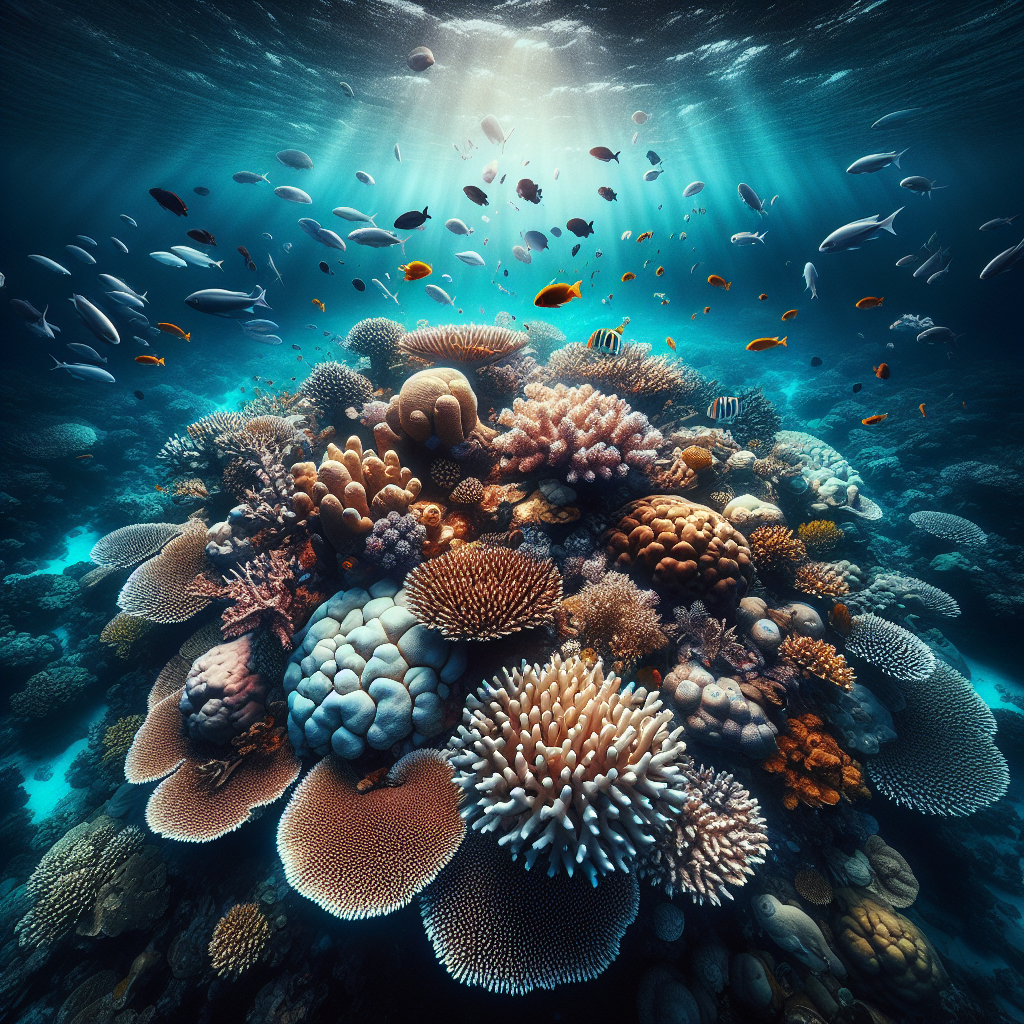
Recent research has highlighted the alarming impact of climate change on the Great Barrier Reef, revealing that temperatures in and around this iconic ecosystem have reached their highest levels in 400 years. Over the past decade, extreme heat has triggered five mass coral bleaching events, underscoring the urgent threat posed to this natural wonder. A study published in the journal Nature emphasizes that these rising temperatures represent an “existential threat” to the reef, prompting scientists to call for immediate action to address the climate crisis.
The research team, led by Professor Helen McGregor from the University of Wollongong, utilized samples taken from the skeletons of ancient corals to analyze historical environmental changes. These coral cores serve as valuable records, providing chemical indicators of the conditions in which the corals have lived for centuries. By cross-referencing these findings with historical sea temperature data from the UK's Hadley Centre, the researchers confirmed that the recent decade has experienced unprecedented warmth, raising concerns about the reef's future.
Dr. Benjamin Henley, the lead researcher, expressed his dismay at the findings, noting that the current situation is dire for the Great Barrier Reef. However, he also highlighted a potential path forward, suggesting that if global efforts to limit warming can be successfully implemented, there remains a chance for the reef and other coral ecosystems to survive in their current form. This optimism rests on the ability to unite globally to combat climate change and protect these vital marine habitats.
Corals, which are actually animals rather than plants, thrive within a specific temperature range and rely on a symbiotic relationship with algae for nourishment and color. When sea temperatures rise excessively, corals expel their algae, leading to a phenomenon known as bleaching. While bleached corals can sometimes recover, prolonged heat stress can prevent this recovery, resulting in a stark transformation of the reef's ecosystem. Dr. Henley described the visual impact of bleaching as unappealing, with bleached corals eventually becoming overgrown by other algae, turning them brown.
As the Great Barrier Reef holds the status of a UNESCO World Heritage site, there is hope that this research will prompt the organization to consider designating it as “endangered.” Professor McGregor emphasized the importance of this designation, stating it would send a strong message about the severity of the situation. She urged for political will to be set aside in favor of action, as the necessary international agreements to limit global temperature rise are already in place. The time for decisive action is now, as the future of the Great Barrier Reef hangs in the balance.
Original news source: 400-year record heat threat to Great Barrier Reef (BBC)
🎧 Listen:
📖 Vocabulary:
Group or Classroom Activities
Warm-up Activities:
– CHARADES
Instructions: Divide the class into small groups. Each group will take turns acting out terms related to the article (e.g., coral bleaching, climate change, Great Barrier Reef) without speaking, while the other groups guess the term. This will help students practice vocabulary and improve their ability to convey meaning through non-verbal communication.
– OPINION POLL
Instructions: Have students create a list of statements related to climate change and the Great Barrier Reef (e.g., "Climate change is the biggest threat to marine life"). Students will then circulate around the room, asking their classmates to agree or disagree with these statements and record their responses. Afterward, students can discuss the results as a class.
– MIND MAP
Instructions: Provide students with a large sheet of paper or a whiteboard. Ask them to create a mind map that visually represents the key concepts from the article, such as "Great Barrier Reef," "climate change," "coral bleaching," and "scientific research." Encourage them to add subtopics and connections between ideas to deepen their understanding of the content.
– FUTURE PREDICTIONS
Instructions: In pairs, have students discuss and write down their predictions for the future of the Great Barrier Reef based on the findings from the article. They should consider various scenarios, including best-case and worst-case outcomes. Afterward, each pair can share their predictions with the class, fostering discussion on environmental issues.
– HEADLINE CREATION
Instructions: Ask students to create a catchy headline for the article that captures its main message. They should consider the tone, audience, and key points of the article. Once they have crafted their headlines, students can share them in small groups and discuss the effectiveness of each headline in conveying the urgency of the climate crisis.
🤔 Comprehension Questions:
Researchers have discovered that temperatures in and around the Great Barrier Reef have reached their highest levels in 400 years.
Extreme heat has triggered five mass coral bleaching events in the past decade, posing an urgent threat to the coral population.
The research team utilized samples taken from the skeletons of ancient corals to analyze historical environmental changes, providing valuable records of past conditions.
Dr. Benjamin Henley suggested that if global efforts to limit warming can be successfully implemented, there remains a chance for the reef and other coral ecosystems to survive in their current form.
Rising sea temperatures cause corals to expel their algae, which are essential for their nourishment and color, leading to coral bleaching.
When corals experience bleaching, they become visually unappealing and eventually can be overgrown by other algae, turning them brown.
The designation as “endangered” would send a strong message about the severity of the situation and emphasize the need for political will and action to protect the reef.
The article suggests that immediate action is necessary to address the climate crisis, including the implementation of international agreements to limit global temperature rise.
🎧✍️ Listen and Fill in the Gaps:
Recent research has highlighted the alarming impact of change on the Great Barrier Reef, revealing that temperatures in and around this iconic ecosystem have reached their levels in 400 years. Over the past decade, extreme heat has triggered five mass coral bleaching events, underscoring the urgent threat posed to this natural wonder. A published in the Nature emphasizes that these rising temperatures represent an “existential threat” to the reef, prompting scientists to call for immediate action to address the climate crisis. The research team, led by Professor Helen McGregor from the University of Wollongong, utilized samples taken from the skeletons of ancient corals to analyze historical environmental changes. These coral cores serve as valuable records, providing chemical indicators of the conditions in which the corals have lived for centuries. By cross-referencing these findings with historical sea temperature data from the UK's Hadley Centre, the researchers confirmed that the decade has experienced unprecedented warmth, raising concerns about the reef's future. Dr. Benjamin Henley, the lead researcher, expressed his at the findings, noting that the situation is dire for the Great Barrier Reef. However, he also highlighted a potential path forward, suggesting that if global efforts to warming can be successfully implemented, there remains a chance for the reef and other coral ecosystems to survive in their current form. This optimism on the ability to unite globally to combat climate change and protect these vital marine . Corals, which are actually animals rather than plants, thrive within a specific temperature range and rely on a symbiotic relationship with algae for and color. When sea temperatures rise excessively, corals expel their algae, leading to a phenomenon known as bleaching. While bleached corals can sometimes , prolonged heat stress can prevent this recovery, resulting in a stark transformation of the reef's ecosystem. Dr. Henley described the visual impact of bleaching as unappealing, with bleached corals eventually overgrown by other , turning them brown. As the Great Barrier Reef holds the status of a UNESCO World Heritage site, there is hope that this research will prompt the organization to consider designating it as “endangered.” Professor McGregor emphasized the importance of this , stating it would send a strong message about the severity of the situation. She urged for political will to be set aside in favor of action, as the international agreements to limit global temperature rise are already in place. The time for decisive action is now, as the future of the Great Barrier Reef hangs in the balance.
💬 Discussion Questions:
1. What is your opinion on the importance of preserving natural wonders like the Great Barrier Reef?
2. How would you feel if you were to visit a coral reef and found it bleached and lifeless?
3. Do you think individuals can make a significant impact on combating climate change? Why or why not?
4. What is a personal experience you have had with environmental issues, such as pollution or climate change?
5. How do you think governments should prioritize climate change in relation to other pressing issues?
6. Do you like learning about marine ecosystems? Why or why not?
7. What is a solution you believe could effectively address the challenges faced by coral reefs?
8. How would you react if you learned that a beloved natural site, like the Great Barrier Reef, was declared endangered?
9. Do you think it is possible for global cooperation to effectively combat climate change? Why or why not?
10. What is a significant change you have made in your own life to help the environment?
11. How would you feel if future generations could not experience natural wonders due to climate change?
12. Do you think educational institutions should place more emphasis on teaching about climate change? Why or why not?
13. What is a way you believe technology can help in the fight against climate change?
14. How do you think the media influences public perception of climate change and environmental issues?
15. Do you think that designating the Great Barrier Reef as "endangered" would lead to meaningful action? Why or why not?
Individual Activities
📖💭 Vocabulary Meanings:
Click a dot next to a word, then click the dot next to its meaning to draw a line connecting them.
Words
Meanings
🔡 Multiple Choice Questions:
🕵️ True or False Questions:
📝 Write a Summary:
Write a summary of this news article in two sentences.
Check your writing now with the best free AI for English writing!