In New Zealand, people love a fruit called feijoa, even though it originally comes from South America. Unlike the kiwi fruit, which is famous worldwide, feijoas are not sold much outside New Zealand because they don't stay fresh for long. Every year, when feijoas are ripe, New Zealanders get very excited about eating them. They feel a special connection to this fruit.
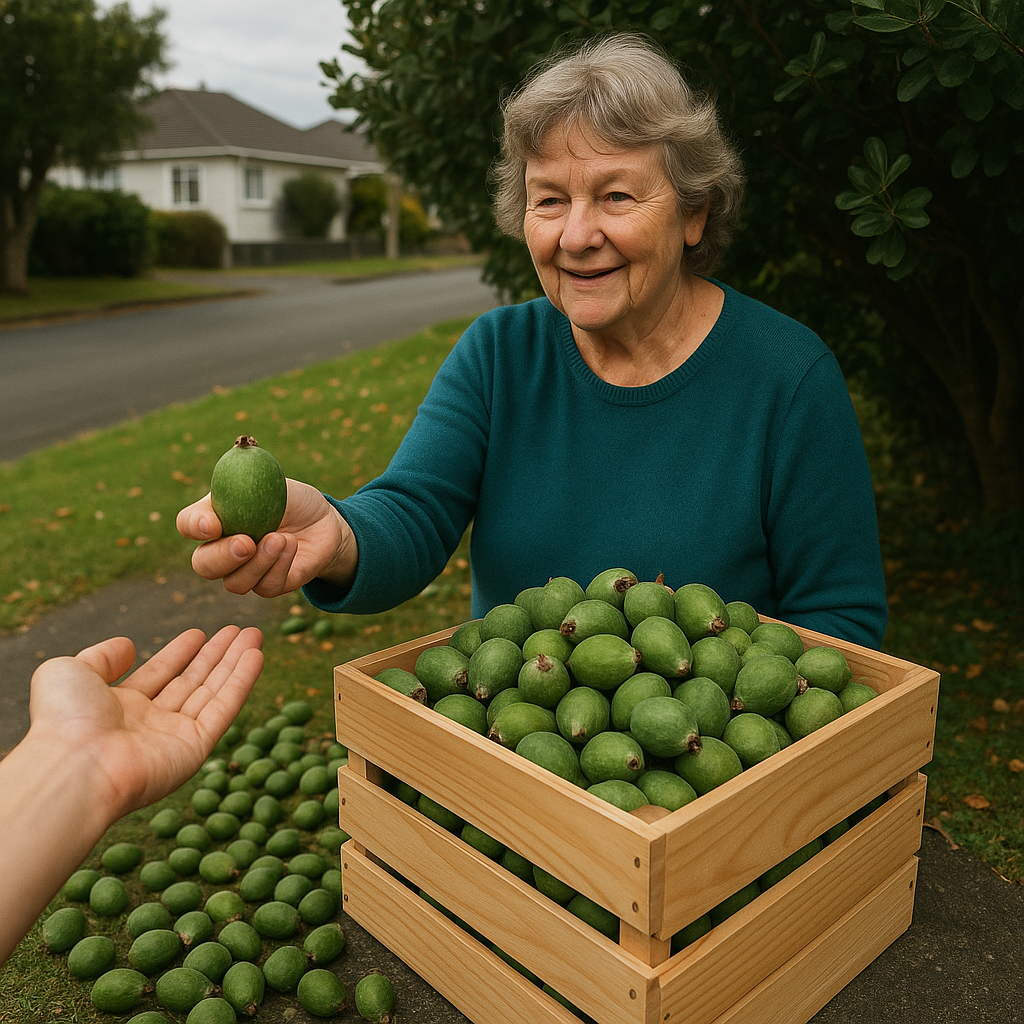
Feijoas are often shared with friends and neighbors. In autumn, feijoa trees drop their fruit, and people collect them to give away for free. Many people in New Zealand never have to buy feijoas because they are shared so freely. This sharing creates a strong sense of community and kindness among people.
Not everyone likes the taste of feijoas; some people love it, while others do not. For New Zealanders living in other countries, feijoas remind them of home and childhood. Even though there are attempts to make feijoas last longer for selling abroad, they remain a special part of New Zealand's autumn. The fruit brings people together and is an important tradition in the country.
Original news source: New Zealand’s unofficial fruit is the feijoa, not the kiwi. And part of the fun is in giving it away (AP News)
🎧 Listen:
📖 Vocabulary:
Group or Classroom Activities
Warm-up Activities:
– CHARADES
Instructions: Divide the class into small groups. Each group will take turns acting out words or phrases related to feijoas and New Zealand without speaking. The other groups will guess what they are acting out. Examples might include "eating a feijoa," "sharing with friends," or "picking fruit."
– VOCABULARY PICTIONARY
Instructions: Write key vocabulary words from the article (e.g., feijoa, community, share, autumn) on flashcards. Students take turns drawing a card and illustrating the word on the board while their classmates guess what it is. This helps reinforce vocabulary understanding.
– OPINION POLL
Instructions: Create a simple survey with questions like "Do you like feijoas?" or "Would you share fruit with your neighbors?" Students will walk around the classroom asking their classmates the questions and tallying the results. Afterward, they can share the findings with the class.
– THINK-PAIR-SHARE
Instructions: Pose a question related to the article, such as "Why do you think sharing feijoas is important in New Zealand?" Students first think about their answer individually, then pair up to discuss their thoughts, and finally share their ideas with the whole class.
– HEADLINE CREATION
Instructions: Ask students to create a catchy headline for the article about feijoas. They can work individually or in pairs. After they write their headlines, students will share them with the class, discussing why they chose that particular title.
🤔 Comprehension Questions:
The feijoa fruit originally comes from South America.
Feijoas are not sold much outside of New Zealand because they don't stay fresh for long.
When feijoas are ripe, New Zealanders get very excited about eating them.
People in New Zealand share feijoas by giving them away for free to friends and neighbors.
In autumn, feijoa trees drop their fruit.
Feijoas remind New Zealanders living in other countries of home and childhood.
Feijoas are considered an important tradition in New Zealand because they bring people together and are part of the autumn season.
🎧✍️ Listen and Fill in the Gaps:
In New Zealand, love a fruit feijoa, even though it originally comes from South . Unlike the kiwi fruit, which is famous worldwide, feijoas are not sold much outside New Zealand because they don't stay fresh for long. Every year, when feijoas are ripe, New Zealanders get very excited about eating them. They feel a special connection to this . are often shared with friends and neighbors. In autumn, feijoa trees their fruit, and people collect them to give away for free. Many people in New Zealand never have to buy because they are shared so freely. This sharing creates a sense of community and kindness among people. Not everyone likes the taste of feijoas; some people love it, while others do not. For New living in other countries, feijoas remind them of home and childhood. Even though there are attempts to make feijoas last longer for selling abroad, they remain a special part of New Zealand's . The fruit people together and is an tradition in the country.
💬 Discussion Questions:
1. What is your favorite fruit?
2. How would you feel if you had to share your favorite food with others?
3. Do you like to try new fruits? Why or why not?
4. What is a fruit that reminds you of home?
5. How do you feel about sharing food with friends?
6. Do you think it is important to have special foods for different seasons? Why?
7. What is a tradition in your country that you enjoy?
8. How would you feel if you moved to another country and missed your favorite food?
9. Do you think sharing food helps people make friends? Why or why not?
10. What is a fruit you think everyone should try?
11. How do you feel about fruits that are hard to find in your country?
12. Do you think it is nice to have special fruits that are only grown in some places? Why?
Individual Activities
📖💭 Vocabulary Meanings:
Click a dot next to a word, then click the dot next to its meaning to draw a line connecting them.
Words
Meanings
🔡 Multiple Choice Questions:
🕵️ True or False Questions:
📝 Write a Summary:
Write a summary of this news article in two sentences.
Check your writing now with the best free AI for English writing!