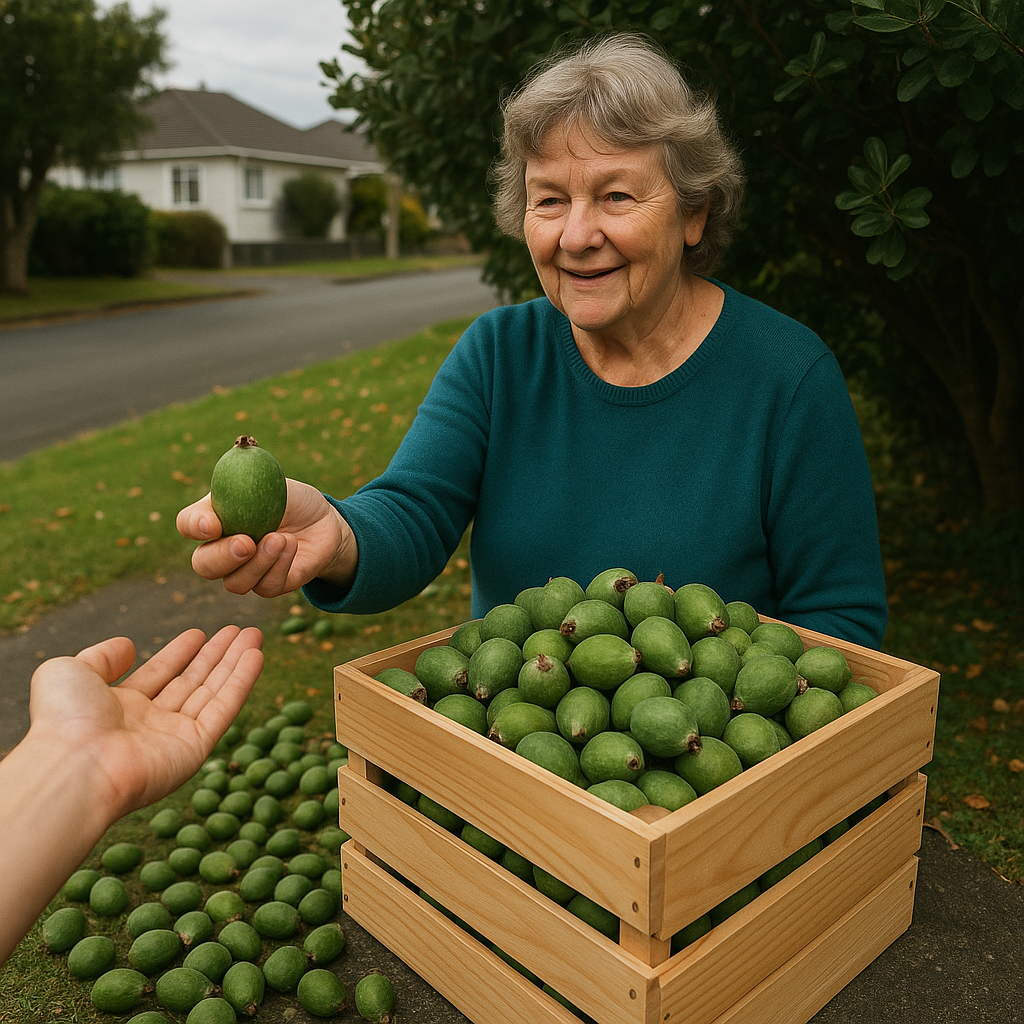
In New Zealand, the feijoa has become the unofficial national fruit, even though it originally comes from South America. Unlike the kiwi, which is well-known and exported worldwide, the feijoa is not native to New Zealand and can also be found in places like California and Canberra. Still, no other country loves this unique fruit as much as New Zealanders do. The feijoa, also called pineapple guava, is green and oval-shaped, and it has a strong smell that some people love while others don’t.
One reason the feijoa is so popular in New Zealand is that it is plentiful during the autumn months. When the fruit falls from the trees, it creates a sweet-smelling carpet in people's backyards. Many locals pick up these fallen fruits and share them with their neighbors, friends, and even strangers. This tradition of giving away feijoas has become a big part of the culture, with some people feeling proud that they have never bought the fruit from a store. Author Kate Evans has pointed out that people expect to receive feijoas for free instead of paying for them.
In suburban Wellington, Diana Ward-Pickering is a great example of this generous spirit. She has given away thousands of feijoas from her backyard trees and often leaves boxes of the fruit on her sidewalk for anyone to take. Even though she loves feijoas, she admits that she can’t eat all the fruit that grows each season. Ward-Pickering believes sharing is important, especially for those who might not be able to afford to buy the fruit.
While many New Zealanders enjoy feijoas, not everyone agrees on how they taste. Some people love the unique flavor and texture, while others think it tastes gritty or sour. This difference in opinion can even be seen in families, like with Ward-Pickering's daughter, who doesn’t like the fruit at all. For New Zealanders living abroad, feijoas often bring back fond memories of their childhood, making them want to find the fruit even when they are far from home.
Original news source: New Zealand’s unofficial fruit is the feijoa, not the kiwi. And part of the fun is in giving it away (AP News)
🎧 Listen:
📖 Vocabulary:
Group or Classroom Activities
Warm-up Activities:
– CHARADES
Instructions: Divide the class into small groups. Each group will take turns acting out different aspects or characteristics of the feijoa fruit, its culture, or related traditions without speaking, while the other groups guess what they are portraying.
– NEWS SUMMARY
Instructions: In pairs, students will summarize the article in 3-4 sentences, focusing on the main points about the feijoa's significance in New Zealand. Afterward, each pair will share their summary with the class.
– OPINION POLL
Instructions: Pose the question, "Do you think sharing food like feijoas is important in building community?" Students will walk around the classroom and ask 5 classmates for their opinions, recording their answers. Then, they will discuss the results in small groups.
– MIND MAP
Instructions: On the whiteboard, draw a central circle with "Feijoa" written in it. In small groups, students will brainstorm and add related words, ideas, and cultural aspects surrounding the feijoa, creating a mind map as they share their thoughts.
– HEADLINE CREATION
Instructions: Students will work in pairs to create a catchy headline for an article about the feijoa in New Zealand. They should consider the unique aspects of the fruit and its cultural significance. Afterward, pairs will share their headlines with the class for feedback.
🤔 Comprehension Questions:
The feijoa originally comes from South America and can also be found in places like California and Canberra.
New Zealanders have a special connection to the feijoa because it is plentiful during the autumn months, and they have a cultural tradition of sharing the fruit with neighbors and friends.
When the feijoas fall from the trees during autumn, they create a sweet-smelling carpet in people's backyards.
People in New Zealand typically share feijoas by picking them up from the ground and giving them away to neighbors, friends, and even strangers, often leaving boxes of the fruit out for anyone to take.
Diana Ward-Pickering is a resident of suburban Wellington who has given away thousands of feijoas from her backyard trees and often leaves boxes of the fruit on her sidewalk for people to take.
Some New Zealanders love the unique flavor and texture of feijoas, while others think they taste gritty or sour.
For New Zealanders living abroad, feijoas often bring back fond memories of their childhood, making them want to find the fruit even when they are far from home.
Some people might feel proud about never buying feijoas from a store because it reflects their commitment to the tradition of sharing the fruit for free within their community.
🎧✍️ Listen and Fill in the Gaps:
In New , the feijoa has become the unofficial fruit, even though it originally comes from South America. Unlike the kiwi, which is well-known and exported worldwide, the feijoa is not native to New Zealand and can also be found in places like California and Canberra. Still, no other country loves this unique fruit as much as New Zealanders do. The feijoa, also called guava, is green and oval-shaped, and it has a strong smell that some love while others don’t. One reason the feijoa is so popular in New Zealand is that it is plentiful during the months. When the fruit falls from the trees, it a sweet-smelling carpet in people's backyards. Many pick up these fallen fruits and share them with their neighbors, friends, and even strangers. This tradition of giving away has become a big part of the culture, with some people feeling proud that they have never bought the fruit from a store. Author Kate Evans has pointed out that people to feijoas for free instead of paying for them. In Wellington, Diana Ward-Pickering is a great example of this generous spirit. She has given away thousands of feijoas from her backyard trees and often leaves boxes of the fruit on her sidewalk for anyone to take. Even though she loves feijoas, she admits that she can’t eat all the fruit that grows each season. Ward-Pickering sharing is important, especially for those who might not be able to afford to buy the fruit. While many New Zealanders enjoy feijoas, not everyone agrees on how they . Some people love the unique flavor and texture, while others think it tastes or sour. This difference in opinion can even be seen in families, like with Ward-Pickering's daughter, who doesn’t like the fruit at all. For New Zealanders living abroad, feijoas often back fond memories of their , making them want to find the fruit even when they are far from home.
💬 Discussion Questions:
1. What is your favorite fruit and why do you like it?
2. How would you feel if you could only eat one type of fruit for the rest of your life?
3. Do you think sharing food with neighbors is important? Why or why not?
4. What is a tradition in your culture that you enjoy?
5. How do you feel about trying new foods that have unusual flavors?
6. Do you like the idea of picking fruit from trees in your backyard? Why?
7. Have you ever had a fruit that you didn’t like? What was it and why didn’t you like it?
8. What is a food that reminds you of your childhood?
9. How would you feel if you moved to a new country and couldn’t find your favorite foods?
10. Do you think it’s better to buy fruit from a store or to get it for free from friends? Why?
11. What is a food-sharing tradition that you think should be more common?
12. How do you feel about the taste of foods that are considered “acquired tastes”?
13. Do you think it’s important for people to have a connection to their local food culture? Why?
14. What is a fruit or vegetable that you think should be more popular in your country?
15. How would you feel if someone gave you a lot of a fruit you didn’t like? What would you do?
Individual Activities
📖💭 Vocabulary Meanings:
Click a dot next to a word, then click the dot next to its meaning to draw a line connecting them.
Words
Meanings
🔡 Multiple Choice Questions:
🕵️ True or False Questions:
📝 Write a Summary:
Write a summary of this news article in two sentences.
Check your writing now with the best free AI for English writing!