
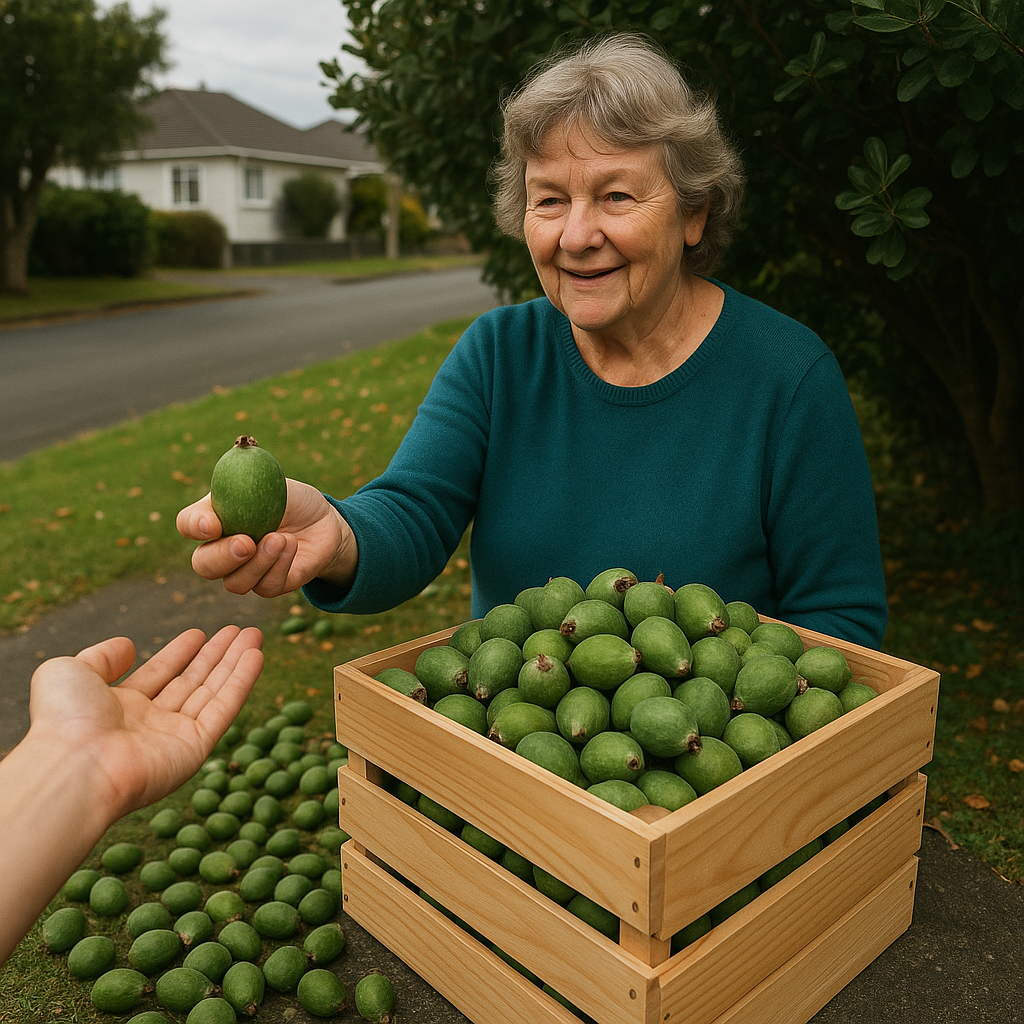
In New Zealand, the feijoa has emerged as the unofficial national fruit, despite its origins in South America. Unlike the kiwi, which is widely recognized and exported, the feijoa is not native to New Zealand and can also be found in places like California and Canberra. However, no other country has embraced this unique fruit with the same enthusiasm as New Zealanders. The feijoa, also known as pineapple guava, is characterized by its green, oval shape and distinct aroma, which can be polarizing in taste.
One of the reasons for the feijoa's popularity in New Zealand is its seasonal abundance. During the autumn months, the fruit falls from trees and creates a fragrant carpet in backyards. Many residents collect these fallen fruits and share them freely with neighbors, friends, and even strangers. This practice of giving away feijoas has become a cherished tradition, with some individuals taking pride in never having purchased the fruit. Kate Evans, an author who has written about the feijoa, notes that there is a cultural expectation to receive them for free rather than buying them from stores.
In suburban Wellington, Diana Ward-Pickering exemplifies this spirit of generosity, having given away thousands of feijoas from her backyard trees. She often leaves boxes of the fruit on her sidewalk for anyone to take. Despite her love for the feijoa, she acknowledges that even her appetite cannot keep up with the sheer volume of fruit that ripens each season. Ward-Pickering emphasizes the importance of sharing, especially for those who may not be able to afford to buy the fruit.
While many New Zealanders adore the feijoa, opinions about its taste can vary widely. Some people relish its unique flavor and texture, while others find it unappealing, describing it as gritty or sour. This divide in taste is evident even within families, as seen with Ward-Pickering's daughter, who expressed her distaste for the fruit. For expatriates, however, the feijoa often evokes nostalgic memories of childhood in New Zealand, leading them to seek out the fruit even when living abroad.
The history of the feijoa's introduction to New Zealand remains somewhat unclear, but it is believed to have arrived over a century ago, likely from California via Australia. The country's favorable climate and soil conditions have allowed feijoa trees to thrive, resulting in a flourishing backyard economy. Although there is a market for feijoas in stores, exporting the fruit poses challenges due to its short shelf life. Efforts are underway to extend its longevity, but for now, the feijoa remains a beloved symbol of New Zealand's autumn, fostering connections among its people.
Original news source: New Zealand’s unofficial fruit is the feijoa, not the kiwi. And part of the fun is in giving it away (AP News)
🎧 Listen:
📖 Vocabulary:
Group or Classroom Activities
Warm-up Activities:
– CHARADES
Instructions: Divide the class into small groups. Each group takes turns acting out words or phrases related to the feijoa, New Zealand, or autumn without speaking, while the other groups guess. Include terms like "feijoa," "sharing," "backyard," and "autumn."
– OPINION POLL
Instructions: Create a list of statements related to the feijoa, such as "I love the taste of feijoas" or "I think sharing food is important." Have students walk around the room and ask their classmates to agree or disagree with each statement. Then, discuss the results as a class.
– ARTICLE TIMELINE
Instructions: Provide students with key events and facts from the article about the feijoa. In pairs, they will arrange these events in chronological order, discussing the significance of each one. Afterward, they can present their timelines to the class.
– THINK-PAIR-SHARE
Instructions: Pose a thought-provoking question related to the feijoa, such as "What role does food play in cultural identity?" Students will first think about their answers individually, then pair up with a partner to discuss, and finally share their insights with the class.
– HEADLINE CREATION
Instructions: Ask students to create catchy headlines for the article about the feijoa. They should focus on capturing the essence of the article while using persuasive language. Afterward, students can share their headlines and vote on the most creative one.
🤔 Comprehension Questions:
The feijoa originates from South America, while the kiwi is native to New Zealand. The kiwi is widely recognized and exported, whereas the feijoa is not as well-known internationally and is primarily embraced by New Zealanders.
The seasonal abundance of feijoas is significant because it creates a time when the fruit falls from trees, leading to a communal practice of collecting and sharing the fruit among neighbors, friends, and strangers, fostering a sense of community.
The practice of sharing feijoas has become a cultural tradition as many residents take pride in giving away the fruit for free rather than purchasing it, with a cultural expectation to receive them without cost.
Diana Ward-Pickering is a resident of suburban Wellington who has given away thousands of feijoas from her backyard trees. She often leaves boxes of the fruit on her sidewalk for anyone to take, emphasizing the importance of sharing.
Opinions about the taste of feijoas vary widely; some people enjoy its unique flavor and texture, while others find it gritty or sour. An example of this divide is seen in Ward-Pickering's daughter, who dislikes the fruit.
Expatriates often relate to feijoas through nostalgic memories of their childhood in New Zealand, leading them to seek out the fruit even when living abroad, as it evokes a sense of home and connection to their past.
The challenges associated with exporting feijoas include its short shelf life, which makes it difficult to transport. Efforts are underway to extend the fruit's longevity to facilitate export.
The feijoa serves as a symbol of New Zealand's autumn by representing the seasonal abundance and the communal practices of sharing that foster connections among people, making it a cherished part of the cultural landscape.
🎧✍️ Listen and Fill in the Gaps:
In New Zealand, the feijoa has emerged as the unofficial national fruit, despite its origins in South America. Unlike the kiwi, which is widely recognized and exported, the feijoa is not native to New Zealand and can also be in places like California and Canberra. However, no other country has embraced this unique fruit with the same enthusiasm as New . The feijoa, also as pineapple guava, is characterized by its green, oval shape and distinct aroma, which can be polarizing in taste. One of the for the feijoa's popularity in New Zealand is its seasonal abundance. During the autumn months, the fruit falls from trees and creates a fragrant carpet in backyards. Many collect these fallen fruits and share them freely with neighbors, , and even strangers. This practice of giving away feijoas has become a cherished tradition, with some individuals taking in never having purchased the fruit. Kate Evans, an author who has written about the feijoa, notes that there is a cultural to receive them for free rather than buying them from stores. In suburban Wellington, Diana Ward-Pickering exemplifies this spirit of generosity, having given away thousands of feijoas from her backyard trees. She often leaves boxes of the fruit on her sidewalk for anyone to take. Despite her love for the feijoa, she acknowledges that even her cannot keep up with the sheer volume of that ripens each season. Ward-Pickering emphasizes the importance of sharing, especially for those who may not be able to afford to buy the fruit. While many New Zealanders adore the feijoa, opinions about its taste can vary widely. Some people relish its unique flavor and texture, while others find it unappealing, it as gritty or sour. This divide in taste is evident even within families, as seen with Ward-Pickering's , who expressed her distaste for the fruit. For expatriates, however, the feijoa often evokes nostalgic memories of childhood in New Zealand, leading them to seek out the fruit even when living abroad. The history of the 's introduction to New Zealand remains somewhat unclear, but it is believed to have arrived over a century ago, likely from California via Australia. The country's favorable climate and soil have feijoa trees to thrive, in a flourishing backyard economy. Although there is a market for feijoas in stores, exporting the fruit poses challenges due to its short shelf life. Efforts are underway to extend its longevity, but for now, the feijoa remains a beloved symbol of New Zealand's autumn, fostering connections among its people.
💬 Discussion Questions:
1. What is your favorite seasonal fruit, and why do you like it?
2. How would you feel if a fruit you loved was not widely accepted in your country?
3. Do you think it’s important for a country to have a national fruit or symbol? Why or why not?
4. What is a tradition in your culture that involves sharing food with others?
5. How do you think sharing food can strengthen community bonds?
6. Do you like trying new fruits, even if they have unusual flavors or textures? Why or why not?
7. How would you feel if someone offered you a fruit you had never tried before?
8. Do you think people's tastes in food are influenced more by culture or personal preference? Why?
9. What is a food that you have a strong opinion about, either positively or negatively?
10. How do you think nostalgia affects our food preferences and choices?
11. Do you think it’s better to grow your own food or buy it from a store? Why?
12. How would you feel if you had to rely on sharing food from your neighbors to get by?
13. What is a fruit or vegetable that you think should be more popular in your country? Why?
14. How do you think climate and geography influence the types of fruits that are popular in a region?
15. Do you think people should be encouraged to share food more often? Why or why not?
Individual Activities
📖💭 Vocabulary Meanings:
Click a dot next to a word, then click the dot next to its meaning to draw a line connecting them.
Words
Meanings
🔡 Multiple Choice Questions:
🕵️ True or False Questions:
📝 Write a Summary:
Write a summary of this news article in two sentences.
Check your writing now with the best free AI for English writing!