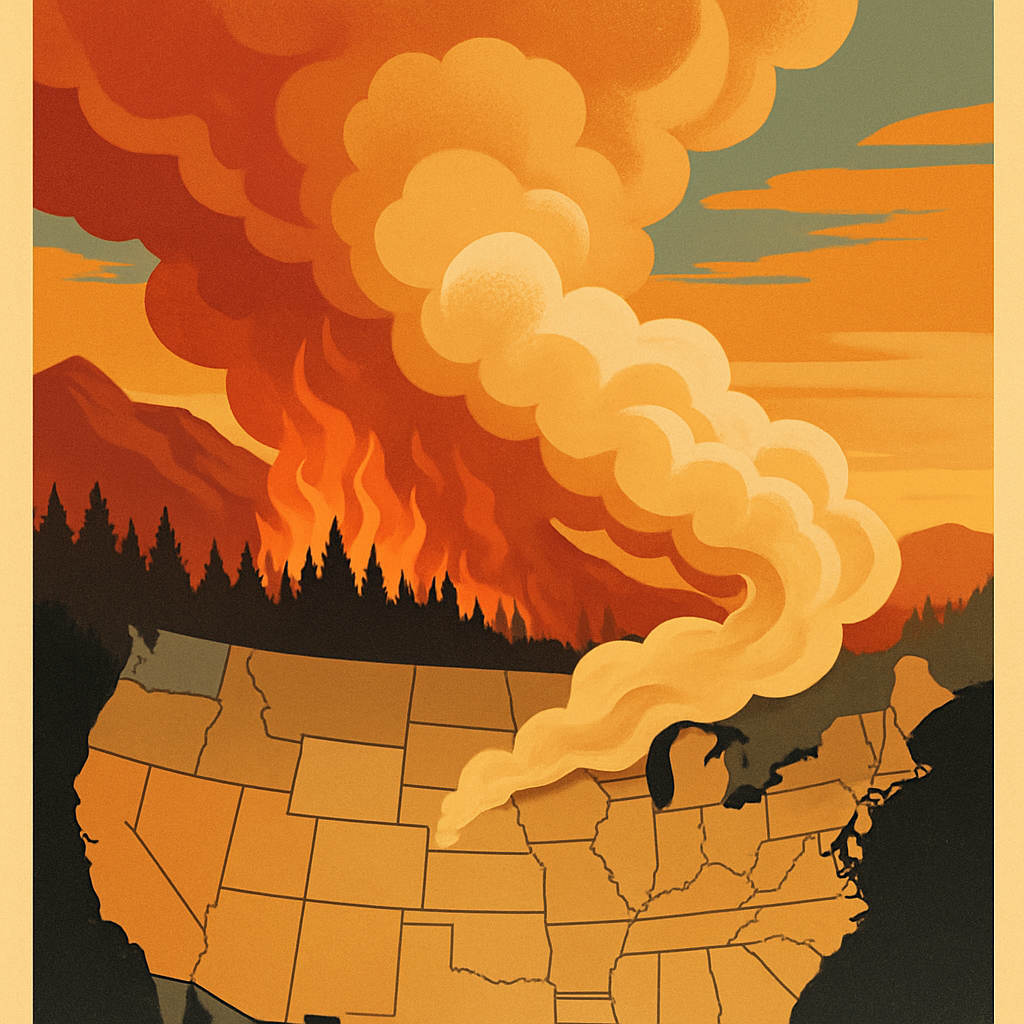


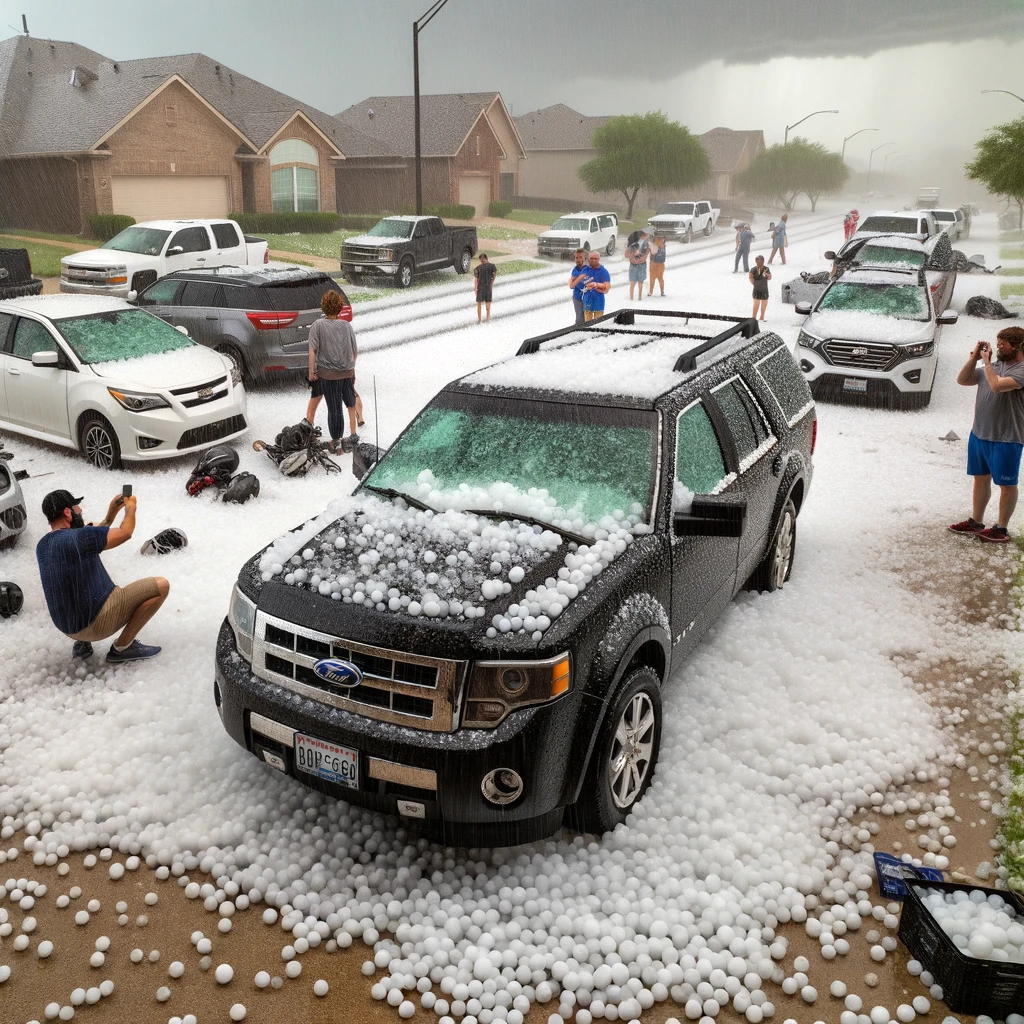
A big storm hit the middle of the United States, bringing tornadoes, a lot of rain, and very big hailstones, as big as golf balls, to places like Texas. More than 8 million people were told there might be tornadoes. This storm caused a lot of flooding and broke many homes and roads. The big hailstones also broke cars and buildings.
This storm went through several states, including Texas, Oklahoma, Kansas, and Missouri. Tornadoes touched down in some places, breaking more things and making it dangerous for people living there. Because it rained so much, many places got flooded, covering roads and getting into houses. People who help in emergencies are trying to save those who are stuck and help everyone who was hurt by the storm.
The hailstones were really big, as big as golf balls, and they broke a lot of things like cars, windows, and roofs. People are being told to stay safe and find a safe place when the weather gets very bad. The storm is going to keep moving across the middle of the country, bringing more bad weather and possibly causing more damage.
Original news source: Large hail seen in Texas after storms hit central US (BBC)
🎧 Listen:
📖 Vocabulary:
Group or Classroom Activities
Warm-up Activities:
– News Summary
Instructions: Divide the class into pairs or small groups. Give each group a few minutes to read and discuss the article. Then, ask each group to summarize the main points of the article in a few sentences. Afterward, have each group share their summaries with the rest of the class.
– Opinion Poll
Instructions: Write the following question on the board: "What do you think is the most dangerous aspect of the storm described in the article: tornadoes, flooding, or hailstones?" Have the students discuss their opinions in pairs or small groups, and then conduct a class-wide poll by asking each student to vote for the most dangerous aspect. Finally, have a class discussion to compare and discuss the results.
– Vocabulary Pictionary
Instructions: Create a list of vocabulary words from the article, such as "tornadoes," "flooding," "hailstones," "emergency," etc. Divide the class into pairs or small groups. Give each group a vocabulary word and a few minutes to draw a picture representing the word. Have the groups take turns presenting their drawings to the class, while the rest of the students guess the corresponding vocabulary word.
– Keyword Hangman
Instructions: Choose a few important keywords from the article, such as "storm," "tornadoes," "flooding," etc. Write dashes on the board to represent each letter of the keyword. Have the students take turns guessing letters to complete the word, similar to the game of Hangman. Provide hints or definitions if necessary.
– Pros and Cons
Instructions: Divide the class into pairs or small groups. Give each group a few minutes to discuss the pros and cons of severe weather events like the storm described in the article. Afterward, have each group present their ideas to the rest of the class, focusing on both the positive and negative aspects of such events. Encourage the students to consider the impact on people, infrastructure, and the environment.
🤔 Comprehension Questions:
A big storm hit the middle of the United States.
The hailstones were as big as golf balls.
The storm broke many homes and roads.
The storm went through Texas, Oklahoma, Kansas, and Missouri.
Tornadoes touched down and broke more things, making it dangerous for people.
The storm rained a lot, which caused flooding by covering roads and getting into houses.
People are being told to stay safe and find a safe place when the weather gets very bad.
🎧✍️ Listen and Fill in the Gaps:
A big hit the middle of the United States, bringing tornadoes, a lot of rain, and very big , as big as golf balls, to places like Texas. More than 8 million people were told there might be tornadoes. This storm caused a lot of flooding and broke homes and . The big hailstones also broke cars and buildings. This storm went through states, including Texas, , Kansas, and Missouri. Tornadoes touched down in some places, breaking more things and making it dangerous for people living there. Because it rained so much, many places got flooded, covering roads and into . People who help in are trying to save those who are stuck and help everyone who was hurt by the storm. The hailstones were really big, as big as golf balls, and they broke a lot of like , windows, and roofs. People are being told to stay safe and find a safe place when the weather gets very bad. The storm is going to keep across the middle of the country, bringing more bad weather and possibly causing more damage.
💬 Discussion Questions:
1. What is a tornado? Why do you think tornadoes are dangerous?
2. Have you ever experienced a big storm? How did it make you feel?
3. How would you feel if your home was damaged by a storm? Why?
4. Do you like rainy weather? Why or why not?
5. What are some ways people can stay safe during a storm?
6. Have you ever seen hailstones? What do you think they look like?
7. How would you feel if a hailstone broke your car or window? Why?
8. Do you think it's important to have emergency plans in case of a storm? Why or why not?
9. What are some things you can do to help others during a storm or emergency?
10. How do you think people who help in emergencies feel when they are saving others?
11. Do you think storms like this are becoming more common? Why or why not?
12. What do you think the government can do to help people affected by a storm like this?
Individual Activities
📖💭 Vocabulary Meanings:
Click a dot next to a word, then click the dot next to its meaning to draw a line connecting them.
Words
Meanings
🔡 Multiple Choice Questions:
🕵️ True or False Questions:
📝 Write a Summary:
Write a summary of this news article in two sentences.
Check your writing now with the best free AI for English writing!