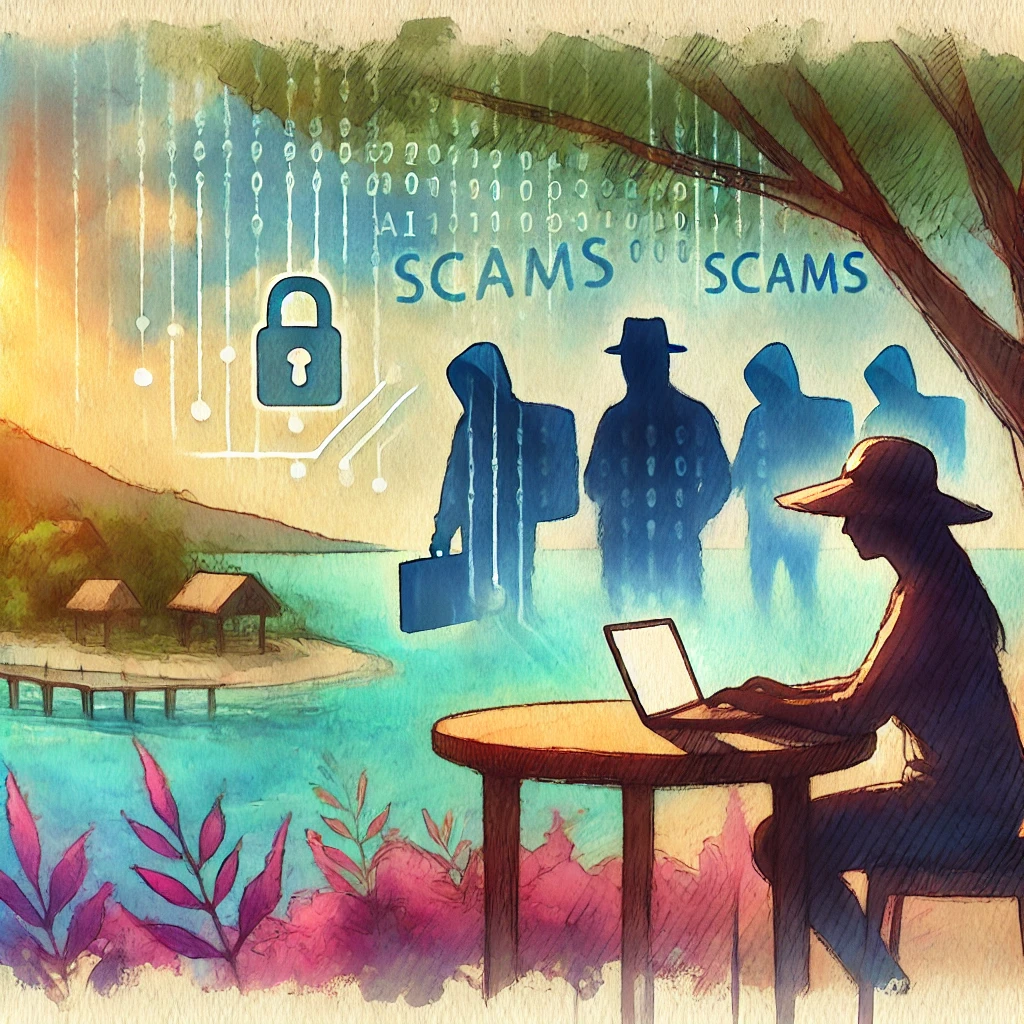
Booking.com says travel scams are getting worse because of new technology called artificial intelligence (AI). Marnie Wilking, who works on internet safety at Booking.com, says there are more phishing attacks now. Scammers use AI to make fake emails and booking links that look real. She tells hotels and travelers to use two-factor authentication and be careful when clicking on links.
AI makes it harder to spot scams, but Booking.com also uses AI to find and remove fake hotels from its website. They use AI to block or take down fake listings before anyone books them. Experts want travel companies to do more to tell people about these scams and how to stay safe. They suggest doing good research, checking contact details, booking package holidays, and using credit cards for extra safety.
In short, AI is making travel scams more common and harder to detect. Booking.com asks everyone to be careful and use extra security steps like two-factor authentication. They also use AI to fight back by removing fake listings. Experts say more awareness and advice are needed to help people avoid these scams.
Original news source: Booking.com warns of up to 900% increase in travel scams (BBC)
🎧 Listen:
📖 Vocabulary:
Group or Classroom Activities
Warm-up Activities:
– News Summary
Instructions: In pairs, students will read the article and then summarize the main points in their own words. They can take turns sharing their summaries with the class.
– Opinion Poll
Instructions: Divide the class into small groups. Each group will come up with three questions related to travel scams and AI. They will then take turns asking the questions to the other groups and recording their responses. Afterward, each group will share the results with the class.
– Vocabulary Pictionary
Instructions: Write down key vocabulary words from the article on separate pieces of paper. Divide the class into teams. One student from each team will take turns choosing a word and then drawing it on the board without using any letters or numbers. The team members will try to guess the word. The team with the most correct guesses wins.
– Keyword Taboo
Instructions: Write down key vocabulary words from the article on separate pieces of paper. Divide the class into two teams. One student from each team will take turns drawing a word and describing it to their team without using the keyword or any derivative of it. The team members will try to guess the word. The team with the most correct guesses wins.
– Think-Pair-Share
Instructions: Have the students think about the following question: "How can travelers protect themselves from travel scams?" Then, have them pair up with a partner and discuss their ideas. Afterward, each pair will share their ideas with the class.
🤔 Comprehension Questions:
Travel scams are getting worse because scammers are using new technology called artificial intelligence (AI) to make fake emails and booking links that look real.
Scammers use AI to create fake emails and booking links that look real. They use this technology to make their scams harder to spot.
Booking.com uses AI to find and remove fake hotels from its website. They use this technology to block or take down fake listings before anyone books them.
Travel companies can help people stay safe from scams by providing more awareness and advice about these scams. They can also encourage people to do good research, check contact details, book package holidays, and use credit cards for extra safety.
AI is making it harder to spot scams because scammers are using this technology to create fake emails and booking links that look very real. It's becoming more difficult to tell the difference between a scam and a real booking.
Two-factor authentication is an extra security step that requires you to provide two pieces of information to prove your identity. It's important because it makes it harder for scammers to access your personal information or accounts.
Some extra security steps that people can take to protect themselves include using two-factor authentication, being careful when clicking on links, doing good research before booking, checking contact details, booking package holidays, and using credit cards for extra safety.
🎧✍️ Listen and Fill in the Gaps:
Booking.com says scams are getting worse because of new called artificial intelligence (AI). Marnie Wilking, who works on safety at Booking.com, says there are more phishing attacks now. Scammers use AI to make fake emails and booking links that look real. She tells hotels and travelers to use two-factor authentication and be careful when clicking on . AI makes it harder to spot scams, but also AI to find and remove fake hotels from its website. They use AI to block or take down fake listings before anyone books them. Experts travel companies to do more to tell about these scams and how to stay safe. They suggest doing good research, checking contact details, booking package holidays, and using credit cards for extra . In short, AI is making travel scams more common and harder to detect. Booking.com asks everyone to be careful and use security steps like two-factor authentication. They also use AI to fight back by removing listings. Experts say more awareness and advice are needed to people avoid these scams.
💬 Discussion Questions:
1. What is artificial intelligence (AI) and how does it relate to travel scams?
2. How would you feel if you received a fake email or booking link while planning a trip?
3. Do you like the idea of using two-factor authentication for extra security? Why or why not?
4. What do you think are some ways to spot and avoid travel scams?
5. Why do you think scammers use AI to create fake emails and booking links?
6. How do you feel about travel companies using AI to remove fake listings from their websites?
7. Do you think travel companies should do more to inform people about travel scams? Why or why not?
8. What steps do you usually take to stay safe when booking travel accommodations?
9. How would you feel if you found out that you had booked a fake hotel?
10. Do you think it's important to do research and check contact details before booking a trip? Why or why not?
11. Why do you think using credit cards can provide extra safety when booking travel?
12. What do you think can be done to raise awareness and provide more advice about travel scams?
Individual Activities
📖💭 Vocabulary Meanings:
Click a dot next to a word, then click the dot next to its meaning to draw a line connecting them.
Words
Meanings
🔡 Multiple Choice Questions:
🕵️ True or False Questions:
📝 Write a Summary:
Write a summary of this news article in two sentences.
Check your writing now with the best free AI for English writing!