
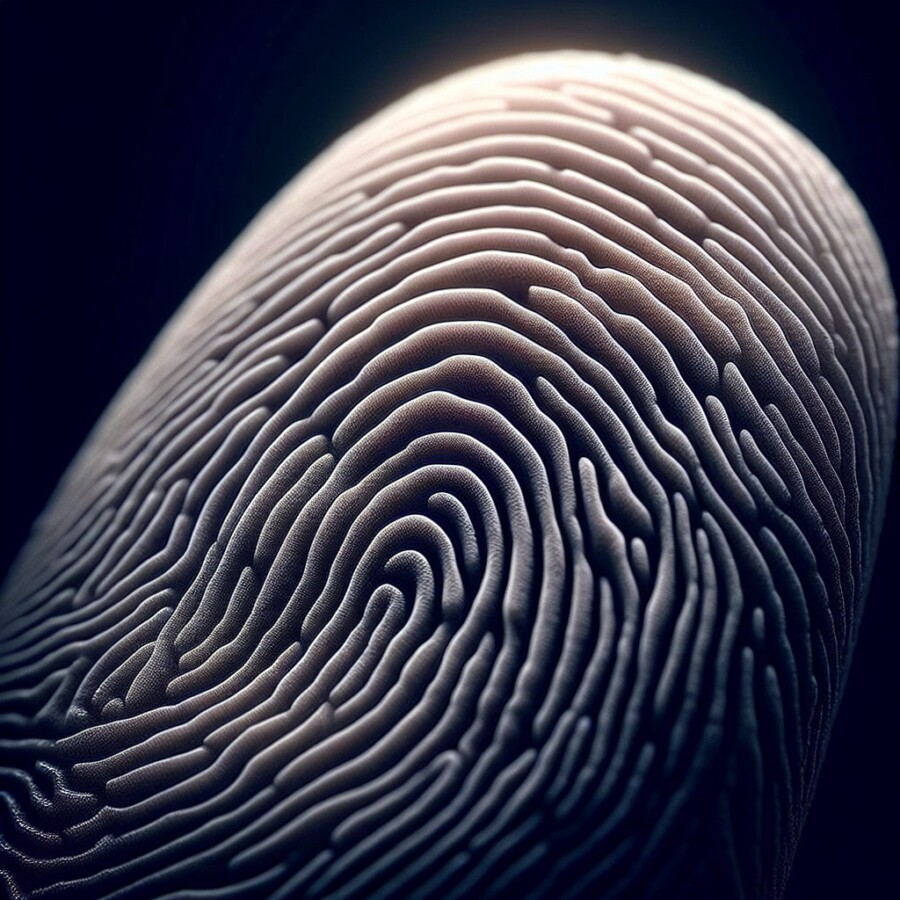
Scientists did a study and found out that fingerprints might not be totally different for each finger. They used a computer program to look at lots of fingerprints. The program could guess if different fingerprints were from the same person. But the scientists don't know exactly how the program does this.
This study is important because it could help solve crimes. Right now, if police find different fingerprints at different places, they can't tell if they are from the same person. The new computer program might be able to tell if they are. But the scientists say they need to study more before the program can be used in court.
Some people who know a lot about fingerprints are not sure about the study. They wonder if the things the program looks at change when you touch something or as you get older. The scientists agree that they don't know everything about how the program works. This is a common problem with computer programs like this. The study was checked by other scientists and will be in a science magazine.
Original news source: Our fingerprints may not be unique, claims AI (BBC)
🎧 Listen:
📖 Vocabulary:
Group or Classroom Activities
Warm-up Activities:
– Vocabulary Pictionary
Instructions: Divide the class into small groups. Give each group a list of vocabulary words related to the article (e.g. fingerprints, computer program, study, crimes). One student from each group takes turns choosing a word and drawing it on the board while the rest of the group tries to guess the word. The group that guesses correctly gets a point. The group with the most points at the end wins.
– Headline Creation
Instructions: Divide the class into pairs. Give each pair a headline template (e.g. "Scientists Discover _______ about Fingerprints"). Students take turns filling in the blank with a word or phrase related to the article. They can use words from the article or their own ideas. After both students have filled in the blank, they share their headlines with each other and discuss why they chose those words.
– Opinion Spectrum
Instructions: Write two statements on the board related to the article (e.g. "Fingerprints are unique to each person" and "Computer programs can accurately identify fingerprints"). Divide the class into two groups and have them stand on opposite sides of the room. Explain that one side represents "Agree" and the other side represents "Disagree". Read out the statements and have students move to their respective sides based on their opinion. Give students a chance to explain their opinions to each other.
– Keyword Hangman
Instructions: Write the key vocabulary words from the article on the board, leaving out a few letters from each word. Divide the class into small groups. One student from each group takes turns guessing the missing letters to complete the word. If they guess correctly, their group earns a point. The group with the most points at the end wins.
– Future Predictions
Instructions: In pairs, students take turns making predictions about the future of fingerprint technology based on the article. They can discuss questions like: "Will fingerprint technology become more accurate in the future?" "Will computer programs replace human fingerprint experts?" Afterwards, students share their predictions with the class and explain their reasoning.
🤔 Comprehension Questions:
Scientists found out that fingerprints might not be totally different for each finger.
The computer program helped the scientists by guessing if different fingerprints were from the same person.
This study is important for solving crimes because it could help police determine if different fingerprints are from the same person.
No, the computer program cannot be used in court right now. The scientists need to study more before it can be used.
Some concerns people have about the study are whether the things the program looks at change when you touch something or as you get older.
The scientists don't know everything about how the program works because it is a common problem with computer programs like this.
Other scientists checked the study before it was published in a science magazine.
🎧✍️ Listen and Fill in the Gaps:
Scientists did a study and found out that prints might not be totally different for each finger. They used a computer program to at of fingerprints. The program could guess if different fingerprints were from the same person. But the scientists don't know exactly how the program this. This study is important because it could help solve crimes. Right now, if police find at different places, they can't tell if they are from the same person. The new computer program might be able to if they are. But the scientists say they need to study more before the program can be used in court. Some people who know a lot about fingerprints are not sure about the study. They wonder if the things the program at when you touch something or as you get . The that they don't know everything about how the program works. This is a common problem with computer programs like this. The study was checked by other scientists and will be in a science magazine.
💬 Discussion Questions:
1. What is a fingerprint?
2. How do you think fingerprints can help solve crimes?
3. Do you think it's important for scientists to study fingerprints? Why or why not?
4. How would you feel if you found out that your fingerprints might not be totally different for each finger?
5. Do you like the idea of using a computer program to guess if different fingerprints are from the same person? Why or why not?
6. What do you think are some things the program might look at to determine if fingerprints are from the same person?
7. Do you think the program would work the same way for everyone, or do you think it might change depending on things like touching something or getting older? Why or why not?
8. How do you think the police feel about this new computer program? Why?
9. Do you think the program should be used in court to help solve crimes? Why or why not?
10. What do you think are some other ways that scientists could study fingerprints?
11. How do you think the scientists feel about not knowing everything about how the program works?
12. Why do you think it's important for the study to be checked by other scientists and published in a science magazine?
Individual Activities
📖💭 Vocabulary Meanings:
Click a dot next to a word, then click the dot next to its meaning to draw a line connecting them.
Words
Meanings
🔡 Multiple Choice Questions:
🕵️ True or False Questions:
📝 Write a Summary:
Write a summary of this news article in two sentences.
Check your writing now with the best free AI for English writing!