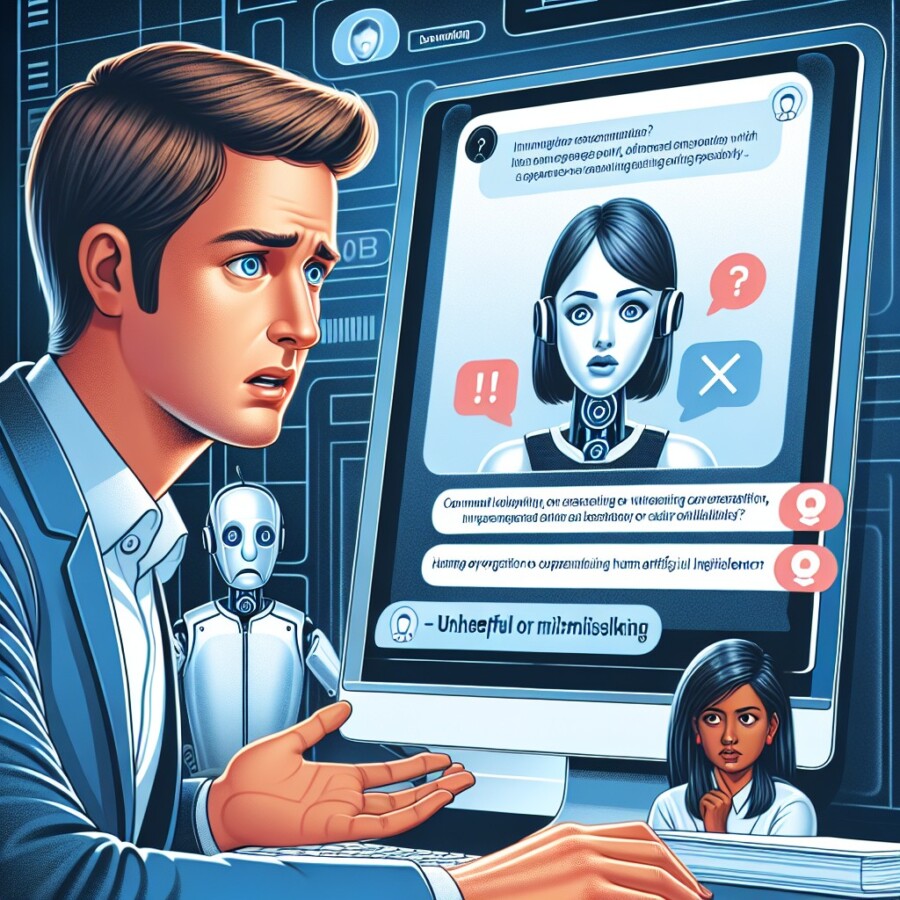

This court case is one of the biggest against tech companies in Silicon Valley. Families from all over America, including schools, are part of it. They say that the social media platforms are made to get kids hooked on purpose. A judge said the tech companies can't just say they have the right to free speech or use a law called the Communications Decency Act to avoid blame. The companies don't agree with the families and are ready to fight back in court.
Taylor Little talks about how social media was like a trap for them when they were a teenager. They saw scary things online when they were just 11 and didn't know it would happen. Little also felt bad about their body because of things they saw on social media. The lawyers for the families say the social media sites are made in a way that gets kids addicted and hurts them. Little hopes the court case will make the companies change social media to be safer because they think the companies care more about making money than helping people.
Original news source: ‘I was addicted to social media – now I'm suing Big Tech’ (BBC)
📖 Vocabulary:
Group or Classroom Activities
Warm-up Activities:
– News Summary
Instructions: Divide the class into small groups. Assign each group to read a part of the article and summarize it in their own words. Each group should then present their summary to the class. This will not only practice their reading comprehension but also their speaking and summarizing skills.
– Opinion Spectrum
Instructions: Write a series of statements related to the article on the board (e.g., "Social media companies should be responsible for user safety," "Social media can be addictive," etc.). Students stand in a line according to how much they agree or disagree with each statement, from one side of the room to the other, creating a human spectrum. Ask students to explain their position to practice their speaking and opinion-formulating skills.
– Vocabulary Pictionary
Instructions: Identify key vocabulary words from the article (e.g., "court," "responsibility," "addicted," "platforms"). Divide the class into two teams. One student from each team comes to the board to draw the assigned word without speaking or writing letters or numbers, while their team tries to guess the word as quickly as possible. This helps with word recognition and understanding in a fun and interactive way.
– Headline Creation
Instructions: Ask students to create a catchy headline for the article that captures the main idea. They can work in pairs or small groups. After creating their headlines, have them share with the class and discuss which headlines are the most effective and why. This exercises their understanding of the main points of the article and creativity in language use.
– Future Predictions
Instructions: Have students work in pairs or small groups to discuss and write down predictions about the outcome of the court case and the future of social media regulation. Encourage them to use future tense structures and modals of speculation (e.g., "might," "could," "will"). After discussing, each pair or group can share their predictions with the class, providing practice in future tense and speculative language.
🤔 Comprehension Questions:
The families are taking the big tech companies to court because they think the companies let kids use things that can hurt them.
Taylor Little thinks social media is bad for kids because it got them really hooked, made them sad, and led to them trying to hurt themselves.
The girl named Molly died after seeing very sad things online.
Schools from all over America are also involved in the court case against the tech companies.
The families say that the social media platforms are made on purpose to get kids hooked.
Taylor Little hopes the court case will make the companies change social media to be safer.
The families think the tech companies need to change social media because they care more about making money than helping people, and this can hurt kids.
🎧✍️ Listen and Fill in the Gaps:
Many families in America are taking big tech companies to court. They say companies like Facebook, TikTok, and Snapchat let kids use products that can hurt them. One , Taylor Little, says they got really hooked on social , which made them very sad and led to them trying to hurt themselves. The families want the companies to responsibility for the bad things that can happen to kids, like what happened to a girl named Molly who saw very sad things online and died. This case is one of the biggest against tech companies in Silicon Valley. Families from all over , including schools, are part of it. They say that the social media platforms are made to get kids on purpose. A judge said the tech companies can't just say they have the to speech or use a law called the Communications Decency Act to avoid blame. The companies don't agree with the and are ready to fight back in court. Taylor Little talks about how social media was like a trap for them when they were a teenager. They saw scary things online when they were just 11 and didn't know it would happen. Little also felt bad about their body because of things they saw on media. The lawyers for the families say the social media sites are in a way that gets addicted and hurts them. Little hopes the court case will make the companies change social media to be safer because they think the companies care more about making money than helping people.
💬 Discussion Questions:
1. What is a court?
2. How would you feel if you saw scary things on the internet?
3. Do you like using social media? Why or why not?
4. Do you think it's okay for kids to use social media? Why?
5. Have you ever felt sad because of something you saw online? Can you tell us about it?
6. What does it mean to be "hooked" on something?
7. Why do you think companies make social media sites that can get kids hooked?
8. If you were a judge, what would you say to the big tech companies?
9. Do you think social media can be dangerous for kids? Why or why not?
10. Have you or your friends ever felt bad about your bodies because of social media?
11. What can families do to help kids be safe on social media?
12. Do you think social media companies should change their websites to be safer for kids? Why?
Individual Activities
📖💭 Vocabulary Meanings:
Click a dot next to a word, then click the dot next to its meaning to draw a line connecting them.
Words
Meanings
🔡 Multiple Choice Questions:
🕵️ True or False Questions:
📝 Write a Summary:
Write a summary of this news article in two sentences.
Check your writing now with the best free AI for English writing!