

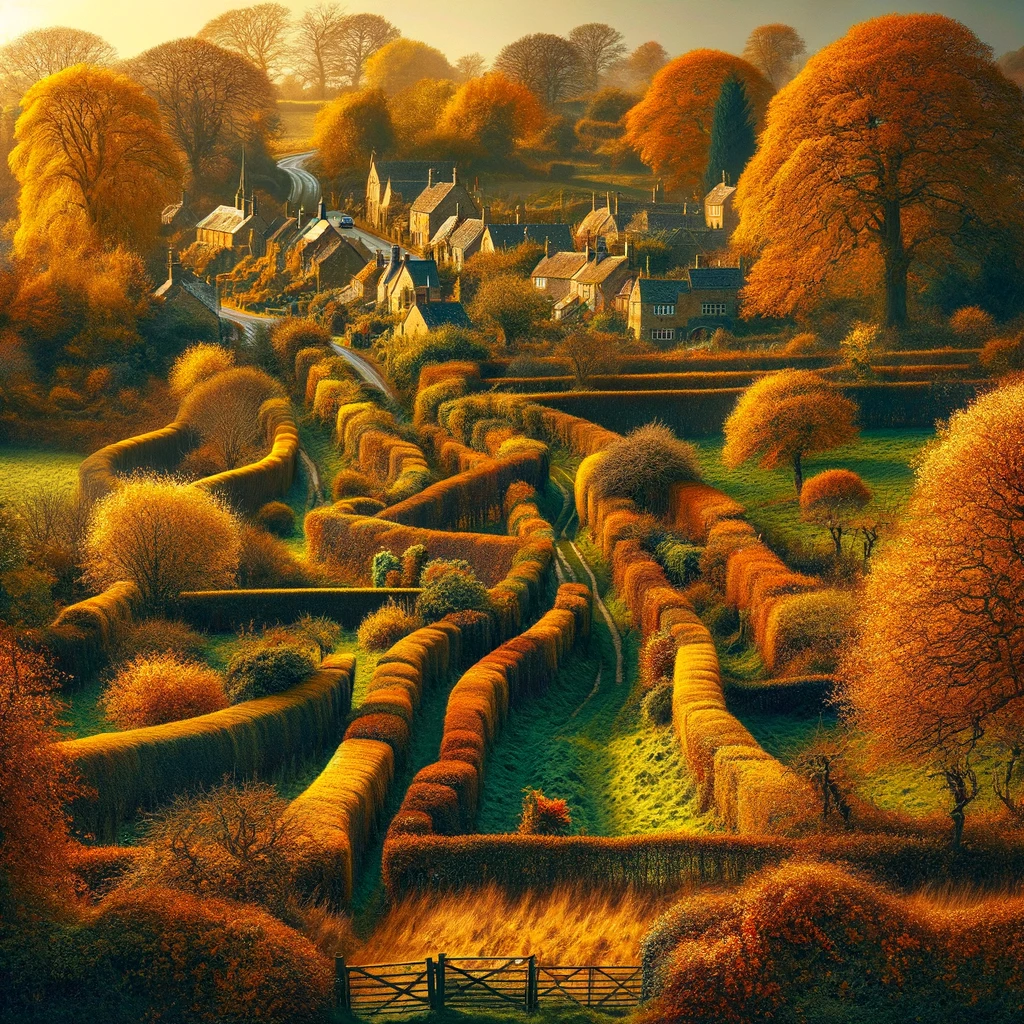
Scientists made a new map of England's hedges and found out they are very long. If you put all the hedges in a line, they would go around the Earth almost ten times. The map was made using special flying cameras that can see the ground. Some places have more hedges than others. People who study nature want to use this map to help protect the hedges because they are good for animals and the air.
Long ago, people in Britain started making hedges to mark where their land ended. But, in the last century, many hedges were destroyed because of farming and building. Now, there are not as many hedges as there used to be. The government wants to fix and make more hedges in the coming years. This is part of a big plan to make the environment better.
This new map is very detailed and shows where we need more hedges. England has more hedges than any other place in the world. The map will help people who care about nature to make sure hedges are safe. Hedges are important because they give animals a place to live and they help clean the air.
Original news source: England's hedges would go around Earth ten times (BBC)
🎧 Listen:
📖 Vocabulary:
Group or Classroom Activities
Warm-up Activities:
– News Summary
Instructions: Divide the class into pairs. Give each pair a copy of the article. One student in each pair will be the "reporter" and the other will be the "listener." The reporter will have one minute to read the article and then summarize the main points to the listener. After one minute, the roles will switch and the listener will summarize the main points to the reporter. Encourage the use of key vocabulary from the article.
– Vocabulary Pictionary
Instructions: Write a list of vocabulary words from the article on the board. Divide the class into small teams. One student from each team will come to the front of the class and you will give them a word from the list. They must draw a picture on the board to represent the word, and their team must guess what word they are drawing within a certain time limit. The team that guesses the most words correctly wins.
– Pros and Cons
Instructions: Divide the class into small groups. Give each group a few minutes to brainstorm the pros and cons of having hedges. They should consider the benefits for animals and the environment, as well as any potential drawbacks. After the brainstorming session, have each group share their ideas with the rest of the class. Encourage the use of complete sentences and explanation of their reasoning.
– Speed Summarizing
Instructions: Divide the class into pairs. Give each pair a copy of the article. Set a timer for one minute. Students will take turns summarizing as much of the article as they can within the time limit. After one minute, they will switch roles. Encourage students to use their own words and try to include as many details as possible.
– Future Predictions
Instructions: Write the following sentence on the board: "In the future, hedges will be more/less common because _______." Divide the class into small groups. Each group will discuss and come up with their own reasons to complete the sentence. After a few minutes, have each group share their predictions with the rest of the class. Encourage students to use future tense and provide reasons for their predictions based on the information in the article.
🤔 Comprehension Questions:
Scientists made a map of England's hedges.
If you put all the hedges in a line, they would go around the Earth almost ten times.
Scientists made the map using special flying cameras that can see the ground.
People who study nature want to use the map to help protect the hedges because they are good for animals and the air.
People in Britain started making hedges long ago to mark where their land ended.
Many hedges were destroyed in the last century because of farming and building.
The government wants to fix and make more hedges in the coming years as part of a big plan to make the environment better.
🎧✍️ Listen and Fill in the Gaps:
Scientists made a new map of England's and found out they are very long. If you put all the hedges in a line, they would go around the Earth almost ten times. The map was made using special flying cameras that can see the ground. Some have hedges than . who study nature want to use this map to help protect the hedges because they are good for animals and the air. Long ago, people in Britain started hedges to mark where their land ended. But, in the last century, many hedges were destroyed because of farming and building. Now, there are not as many hedges as there used to be. The government wants to fix and make more hedges in the coming . This is of a big plan to make the better. This new map is very detailed and shows where we need more hedges. England has more hedges than any place in the . The map will help people who care about nature to make sure hedges are safe. Hedges are important because they give animals a place to live and they help the air.
💬 Discussion Questions:
1. What is a hedge?
2. How would you feel if you saw a hedge being destroyed?
3. Do you like hedges? Why or why not?
4. Do you think it's important to protect hedges? Why or why not?
5. What do you think animals use hedges for?
6. Have you ever seen a hedge before? Where?
7. How do you think hedges help clean the air?
8. Do you think it's a good idea to make more hedges? Why or why not?
9. What are some other ways we can protect the environment?
10. How do you think the government can help make more hedges?
11. Have you ever planted anything before? What did you plant?
12. Why do you think England has more hedges than any other place in the world?
Individual Activities
📖💭 Vocabulary Meanings:
Click a dot next to a word, then click the dot next to its meaning to draw a line connecting them.
Words
Meanings
🔡 Multiple Choice Questions:
🕵️ True or False Questions:
📝 Write a Summary:
Write a summary of this news article in two sentences.
Check your writing now with the best free AI for English writing!