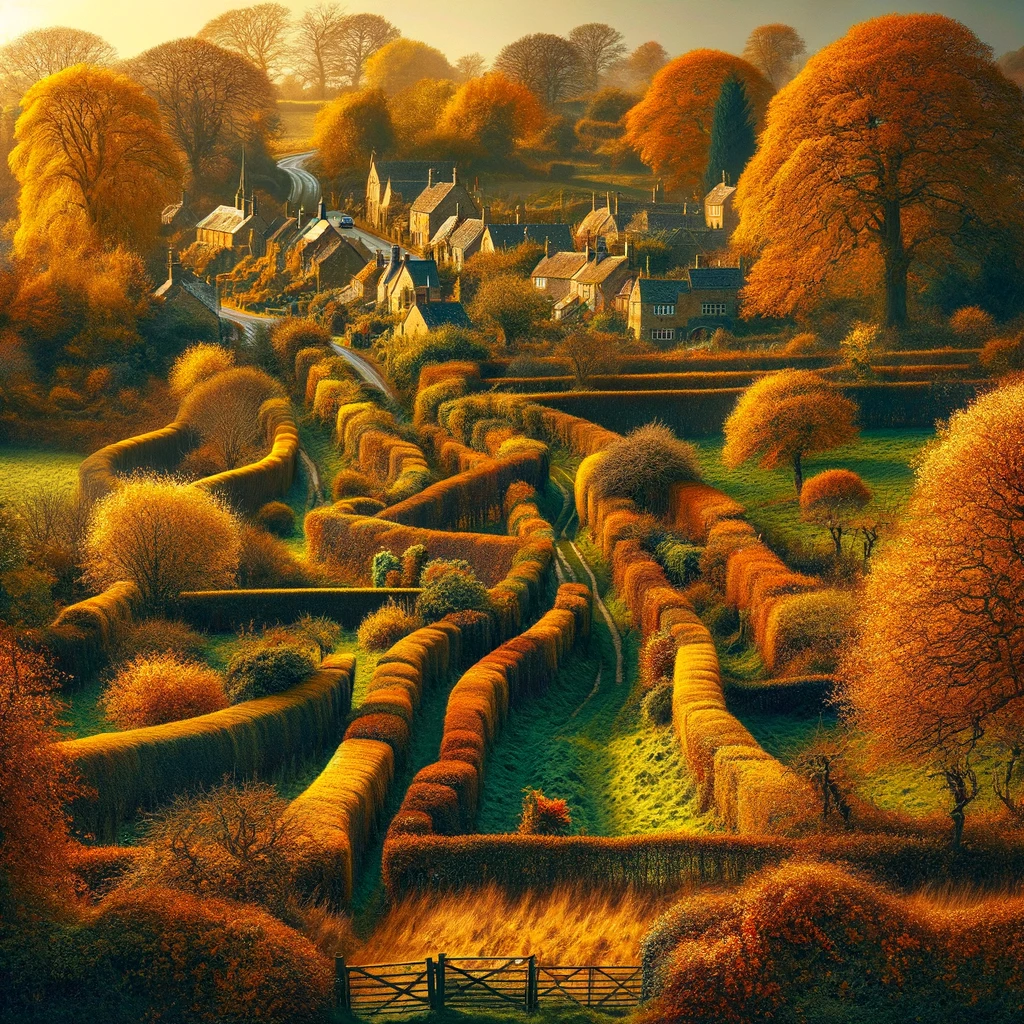
Scientists made a new map that shows all the little tree walls, called hedgerows, in England. If you put all these tree walls in a line, they would go around the big world almost ten times. The map was made using special flying cameras that can see from the sky. Some places have lots of these tree walls, but some places don't have many. People who know a lot about nature want to take care of these tree walls because they are good for animals and the air.
Long ago, people started making these tree walls to mark where their land ends. But, in the last many years, we lost a lot of them because of farming and building houses. Now, there aren't as many as there used to be, but people want to make more and fix the old ones. The government has a plan to make and fix a lot of tree walls in the next years. This big map helps people know where we need more tree walls so we can help animals and keep the air clean.
Original news source: England's hedges would go around Earth ten times (BBC)
🎧 Listen:
📖 Vocabulary:
Group or Classroom Activities
Warm-up Activities:
– Word Association
Instructions: Write the word "hedgerow" on the board. Ask the students to brainstorm words or phrases that they associate with this word. Encourage them to think about the article and what they know about hedgerows. Write down their associations on the board and discuss as a class.
– Vocabulary Pictionary
Instructions: Divide the class into pairs. Give each pair a slip of paper with a word related to the article, such as "nature" or "animals". One student from each pair will have to draw a picture to represent the word, while the other student guesses what the word is. After a few rounds, switch roles.
– Speed Summarizing
Instructions: Divide the class into small groups. Give each group a copy of the article. Set a timer for 5 minutes and ask the groups to read the article and write a summary of it. After the time is up, each group will take turns presenting their summary to the class. Encourage them to use their own words and keep it short and concise.
– Keyword Taboo
Instructions: Write down a few keywords from the article on separate index cards, such as "tree walls" or "air clean". One student from each pair will pick a card and have to describe the word to their partner without using the keyword itself. The partner has to guess what the keyword is based on the description. Switch roles after a few rounds.
– Two Truths and a Lie
Instructions: Have each student write down two true statements and one false statement related to the article. They should not reveal which statement is false. Ask the students to take turns sharing their statements with the class. The rest of the class will then guess which statement is the lie. Encourage the students to use vocabulary and information from the article to create their statements.
🤔 Comprehension Questions:
Scientists made a map of all the little tree walls, called hedgerows, in England.
If you put all the tree walls in a line, they would go around the big world almost ten times.
Scientists made the map using special flying cameras that can see from the sky.
People want to take care of the tree walls because they are good for animals and the air.
People started making tree walls long ago to mark where their land ends.
We lost a lot of tree walls in the last many years because of farming and building houses.
The government's plan for tree walls in the next years is to make and fix a lot of them.
🎧✍️ Listen and Fill in the Gaps:
Scientists made a new map that shows all the little , called hedgerows, in England. If you put all these tree walls in a line, they would go around the big world almost ten times. The map was made using special flying cameras that can see from the sky. Some have lots of these tree walls, but some places don't have many. People who know a lot about nature want to take care of these tree walls because they are for animals and the air. Long ago, people started making these tree walls to mark where their land ends. But, in the last many years, we lost a lot of them because of and houses. Now, there aren't as many as there used to be, but people want to make more and fix the old ones. The government has a plan to make and fix a lot of tree walls in the next years. This big map s people know where we more tree walls so we can help animals and keep the air clean.
💬 Discussion Questions:
1. What are tree walls?
2. How do you think animals feel about tree walls?
3. Do you like tree walls? Why or why not?
4. How would you feel if there were no tree walls in your neighborhood?
5. What do you think happens to the air when there are more tree walls?
6. Do you think it's important to take care of tree walls? Why or why not?
7. Have you ever seen a tree wall before? Where?
8. What do you think happens to the animals when there are no tree walls?
9. How do you think people can help make more tree walls?
10. Do you think it's a good idea for the government to make and fix tree walls? Why or why not?
11. What would you do if you saw someone cutting down a tree wall?
12. How can tree walls help the environment?
Individual Activities
📖💭 Vocabulary Meanings:
Click a dot next to a word, then click the dot next to its meaning to draw a line connecting them.
Words
Meanings
🔡 Multiple Choice Questions:
🕵️ True or False Questions:
📝 Write a Summary:
Write a summary of this news article in two sentences.
Check your writing now with the best free AI for English writing!