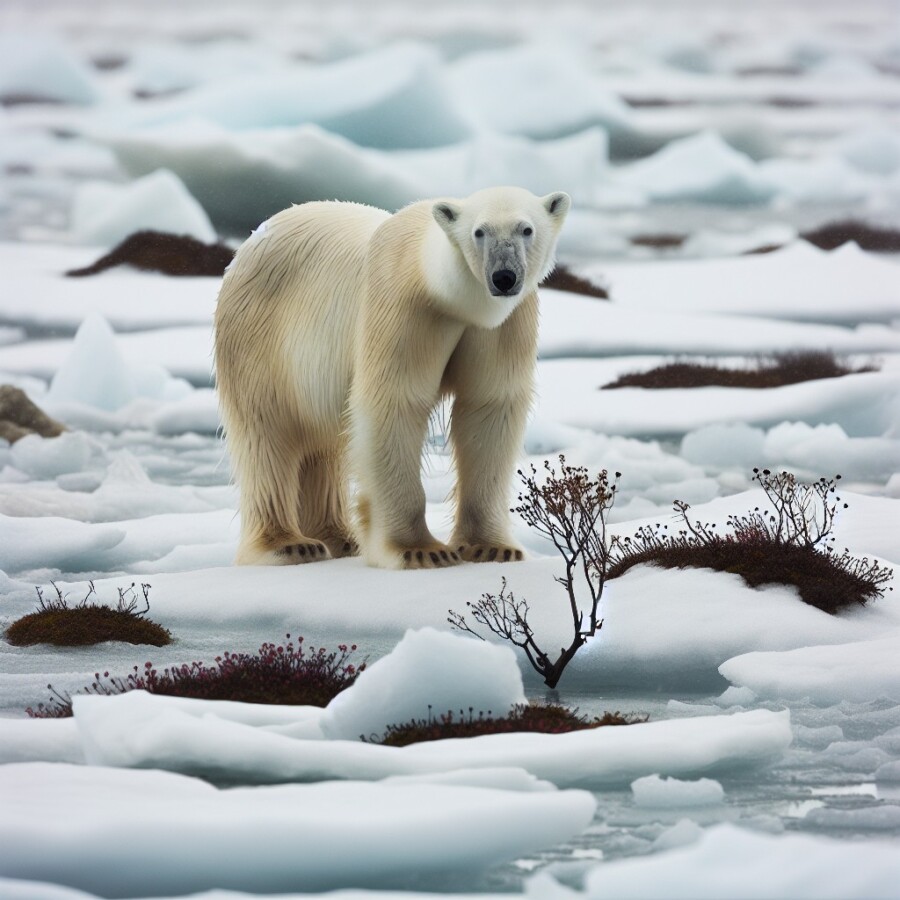
Polar bears are big white bears that live in the Arctic, where it's very cold and icy. They usually eat seals that they catch on the ice. But because the Earth is getting warmer, the ice is melting, and the bears can't find as many seals to eat. Instead, they have to eat things like bird's eggs and berries, but these foods don't keep them healthy and strong.
People all over the world know about polar bears and how they are having a hard time because of the Earth getting warmer. A long time ago, there weren't as many polar bears because people hunted them too much. But then, people made rules to protect the bears, and their numbers started to grow again. However, now the biggest problem for the bears is not enough ice to hunt on because of the warm weather.
Scientists did a study where they watched 20 polar bears to see how they lived without much ice. This study happened over three years. They found out that the bears tried different ways to survive, like eating plants or resting a lot to save energy. But these methods didn't work well. Almost all the bears lost weight, with some losing more than 10% of their body weight.
Original news source: Polar bears face starvation threat as ice melts (BBC)
🎧 Listen:
📖 Vocabulary:
Group or Classroom Activities
Warm-up Activities:
– News Summary
Instructions: Divide the class into pairs or small groups. Give each group a few minutes to read the article. Then, ask them to summarize the main points of the article in a short news summary. They can focus on the issue of polar bears struggling to find food due to melting ice. Afterward, have each group share their summaries with the class.
– Sketch It
Instructions: In pairs, have students take turns describing a scene from the article to each other. The listener must then sketch what they heard based on the description. After a few rounds, have students compare their sketches and discuss any differences or similarities. This activity helps practice listening comprehension and descriptive skills.
– Vocabulary Pictionary
Instructions: Write down some key vocabulary words from the article on separate slips of paper. Divide the class into two teams. One student from each team comes up to the front and picks a slip of paper. They must then draw a picture to represent the word while their team tries to guess it. The team with the most correct guesses wins.
– Pros and Cons
Instructions: Divide the class into small groups. Assign each group either the role of a scientist studying polar bears or a government official responsible for making decisions about protecting the environment. Have them discuss the pros and cons of different actions that can be taken to help the polar bears, such as reducing greenhouse gas emissions or creating protected areas for the bears. Afterward, have each group present their arguments to the class.
– Future Predictions
Instructions: In pairs, have students take turns making predictions about what might happen to polar bears in the future if the Earth continues to warm. Encourage them to use language such as "might," "could," or "probably." Afterward, have a class discussion and ask students to share their predictions. This activity helps practice using future tenses and expressing opinions.
🤔 Comprehension Questions:
Polar bears usually eat seals.
Polar bears can't find as many seals to eat because the ice is melting and there is less ice for them to hunt on.
When polar bears can't find seals, they have to eat things like bird's eggs and berries.
A long time ago, the number of polar bears decreased because people hunted them too much.
The biggest problem for polar bears now is not having enough ice to hunt on because of the warm weather.
Scientists watched 20 polar bears over three years to study how they lived without much ice.
During the study, almost all the bears lost weight, with some losing more than 10% of their body weight.
🎧✍️ Listen and Fill in the Gaps:
Polar are big bears that live in the Arctic, where it's very cold and icy. They usually eat seals that they catch on the ice. But because the Earth is getting warmer, the ice is melting, and the bears can't find as many seals to eat. Instead, they have to eat like bird's and berries, but these foods don't keep them healthy and strong. People all over the world know about bears and how they are having a hard time because of the getting warmer. A long time ago, there weren't as many polar bears because people hunted them too much. But then, made to the bears, and their numbers started to grow again. However, now the biggest problem for the bears is not enough ice to hunt on because of the warm weather. Scientists did a study where they watched 20 polar bears to see how they lived without much ice. This study over three years. They out that the bears tried ways to survive, like eating plants or resting a lot to save energy. But these methods didn't work well. Almost all the bears lost weight, with some losing more than 10% of their body weight.
💬 Discussion Questions:
1. What is a polar bear?
2. How do polar bears usually catch their food?
3. How is the Earth getting warmer affecting the polar bears?
4. What do polar bears have to eat when they can't find seals?
5. Why are bird's eggs and berries not good for polar bears?
6. Do you think it's important to protect polar bears? Why or why not?
7. How did people help the polar bears in the past?
8. What is the biggest problem for polar bears now?
9. How did scientists study the polar bears?
10. What did the scientists find out about how the polar bears tried to survive?
11. How did the polar bears' weight change during the study?
12. How do you think the polar bears feel when they can't find enough food?
Individual Activities
📖💭 Vocabulary Meanings:
Click a dot next to a word, then click the dot next to its meaning to draw a line connecting them.
Words
Meanings
🔡 Multiple Choice Questions:
🕵️ True or False Questions:
📝 Write a Summary:
Write a summary of this news article in two sentences.
Check your writing now with the best free AI for English writing!