


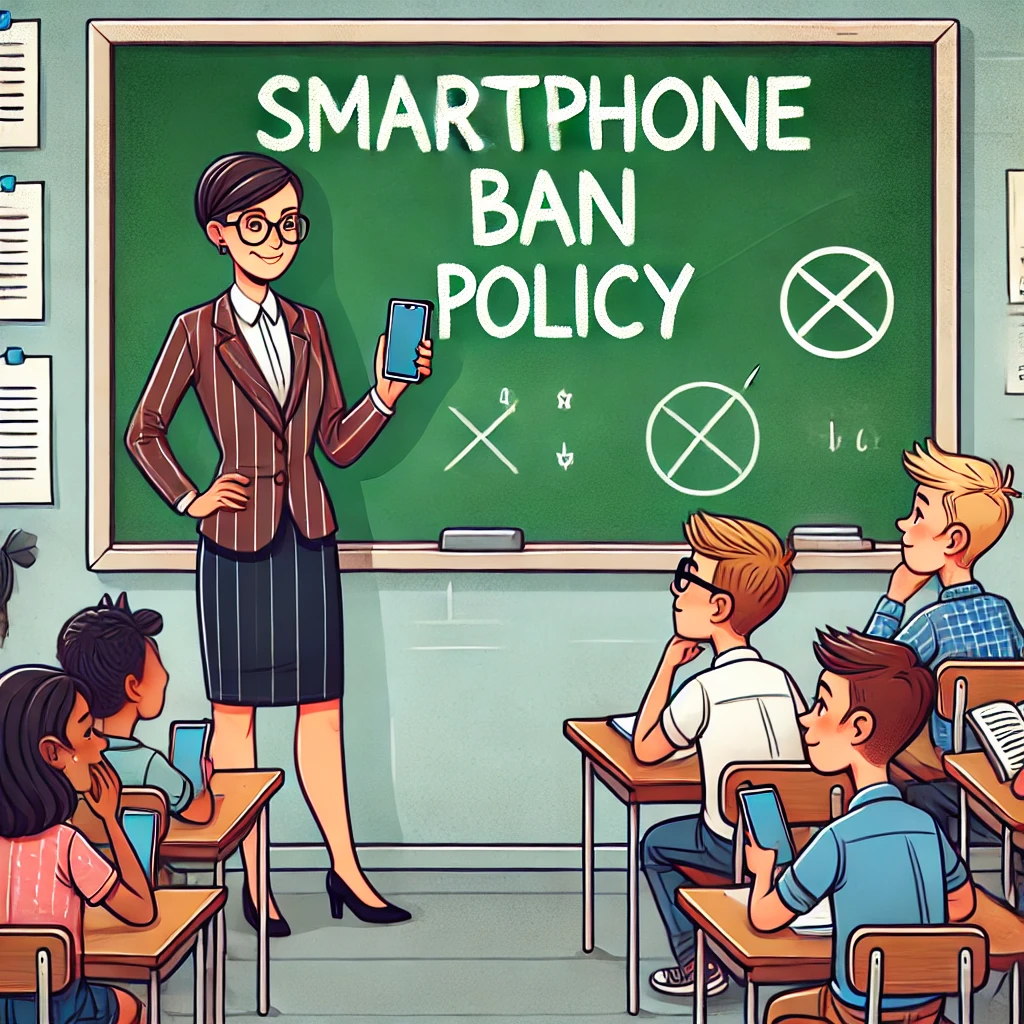
Some US states want to stop kids from using smartphones in schools. California and New York are thinking about making new rules for this. California's Governor Gavin Newsom and New York's Governor Kathy Hochul both support this idea. Many schools already have rules about phones, with most not allowing them for non-school activities.
Teachers are worried because kids are using phones too much and not talking to each other. Both Republicans and Democrats agree that something needs to be done. Some states, like Florida, already have laws banning phones in classrooms. They also block social media on school Wi-Fi.
People have argued about phones in schools for a long time. Some thought phones were distracting and linked to bad things. But after a school shooting in 1999, phones were seen as important for emergencies. Now, experts worry about kids' mental health and how social media can make them anxious and sad.
Original news source: US states want to ban phones in schools. It might be a challenge (BBC)
🎧 Listen:
📖 Vocabulary:
Group or Classroom Activities
Warm-up Activities:
– News Summary
Instructions: Have students read the article individually or in pairs. Then, ask them to write a short summary of the main points of the article. Encourage them to include information about the states considering new rules, the concerns of teachers, and the reasons why phones have been seen as both important and problematic in schools.
– Opinion Poll
Instructions: Divide the class into pairs or small groups. Ask students to discuss their opinions on the use of smartphones in schools. Provide them with a list of questions to guide their discussion, such as "Do you think smartphones are helpful or distracting in the classroom?" or "Should schools have strict rules about phone usage?" After the discussion, have each group share their opinions with the class.
– Vocabulary Pictionary
Instructions: Create a list of vocabulary words from the article, such as "rules," "distracting," "anxious," etc. Divide the class into pairs or small groups. Give each group a vocabulary word and ask them to draw a picture that represents the word. The other groups must guess the word based on the drawing. This activity helps reinforce vocabulary comprehension and encourages creative thinking.
– Pros and Cons
Instructions: Divide the class into two groups: one group representing the pros of using smartphones in schools and the other group representing the cons. Give each group time to brainstorm and discuss their arguments. Then, have a debate where each group presents their points and counters the arguments of the opposing group. This activity encourages critical thinking and persuasive speaking.
– Future Predictions
Instructions: Ask students to imagine the future of smartphones in schools. Have them write short paragraphs or have a class discussion where they make predictions about how smartphones will be used in education in the next 10 years. Encourage them to consider both positive and negative aspects, as well as potential advancements in technology. This activity promotes creative thinking and encourages students to use language to express their ideas about the future.
🤔 Comprehension Questions:
Answer: Some US states want to stop kids from using smartphones in schools.
Answer: California's Governor Gavin Newsom and New York's Governor Kathy Hochul support the idea of stopping kids from using smartphones in schools.
Answer: No, most schools do not allow kids to use their phones for non-school activities.
Answer: Teachers are worried about kids using phones too much because they are not talking to each other.
Answer: Both Republicans and Democrats agree that something needs to be done about kids using phones in schools.
Answer: Florida already has laws banning phones in classrooms.
Answer: Phones were seen as important after a school shooting in 1999 because they can be used to call for help during emergencies.
🎧✍️ Listen and Fill in the Gaps:
Some US states want to stop kids from using smartphones in schools. California and New are thinking about new rules for this. California's Governor Gavin and New York's Governor Kathy Hochul both support this idea. Many schools already have about phones, with most not allowing them for non-school activities. Teachers are because are using phones too much and not talking to each other. Both Republicans and Democrats agree that something needs to be . Some states, like Florida, already have laws banning phones in classrooms. They also block social media on school Wi-Fi. People have about phones in for a long time. Some thought phones were distracting and linked to bad things. But after a school shooting in 1999, phones were seen as important for emergencies. Now, experts worry about kids' mental and how social can them anxious and sad.
💬 Discussion Questions:
1. What is a smartphone?
2. How would you feel if you couldn't use your smartphone at school?
3. Do you like using your smartphone a lot? Why or why not?
4. Do you think it's important for kids to talk to each other instead of using their phones all the time? Why or why not?
5. Why do you think some schools have rules against using phones for non-school activities?
6. What do you think about the idea of banning phones in classrooms? Why?
7. How do you think social media can make kids feel anxious and sad?
8. Have you ever felt anxious or sad because of something you saw on social media? Can you tell us about it?
9. Do you think it's important for kids to have their phones in case of emergencies? Why or why not?
10. How do you think using phones too much can affect kids' mental health?
11. Do you think it's fair for schools to block social media on their Wi-Fi? Why or why not?
12. What do you think should be done to help kids use their phones in a healthy way?
Individual Activities
📖💭 Vocabulary Meanings:
Click a dot next to a word, then click the dot next to its meaning to draw a line connecting them.
Words
Meanings
🔡 Multiple Choice Questions:
🕵️ True or False Questions:
📝 Write a Summary:
Write a summary of this news article in two sentences.
Check your writing now with the best free AI for English writing!