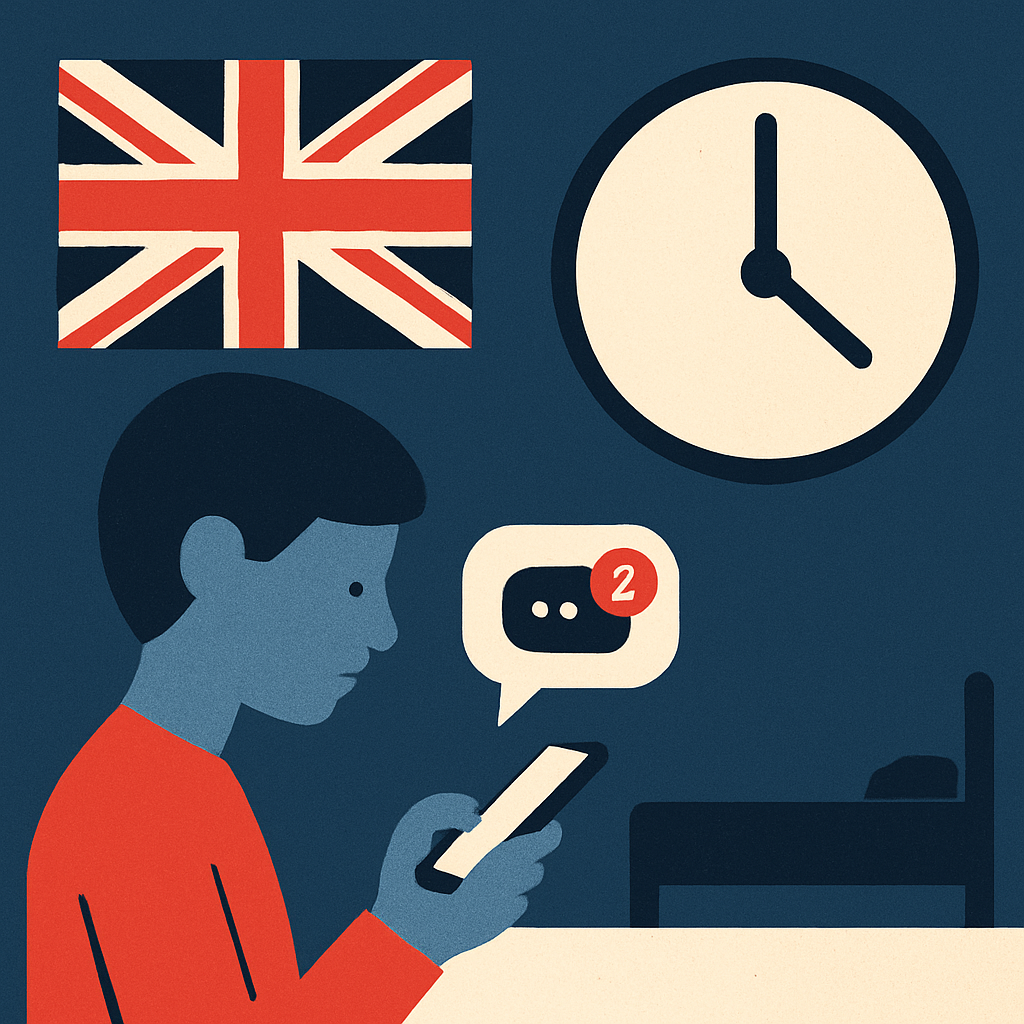
The UK government has proposed a new social media curfew targeting 16 and 17-year-olds. The planned restriction would make social media platforms like Instagram, TikTok, and YouTube unavailable to this age group between midnight and 6 am. This initiative is part of a broader effort to help teenagers attain better sleep, improve focus, and enhance their quality of life.
Supporters highlight the potential benefits, including increased family interaction and reduced nighttime distractions, while critics label the strategy as insufficient. They point out that teenagers can easily bypass the curfew by adjusting account settings, thus questioning the effectiveness of the policy. Some child safety experts emphasize the importance of crafting a more comprehensive strategy that addresses issues beyond curfews.
The government also aims to implement measures to disable addictive features such as auto-play and infinite scrolling to further reduce screen time. The plan is set to be presented to Parliament before the end of 2026 with expectations of synchronizing with the existing social media ban for under-16s. Detractors worry that restricting social media access might cut off vulnerable teenagers from necessary online support.
The proposed curfew follows a similar social media ban enacted in Australia. However, the effectiveness of that approach remains contentious, with critics noting teenage access to restricted sites still persists. The UK government continues to face challenges in enforcing age restrictions, amplifying concerns about feasibility and long-term success.
1. curfewa regulation requiring people to remain indoors during designated hours
2. restrictiona limit or control on something
3. attainto achieve or accomplish
4. enhanceto improve or augment
5. insufficientlacking enough of something; inadequate
6. bypassto go around or avoid
7. effectivenessthe degree to which something is successful
8. emphasizeto give special importance
9. comprehensivethorough and complete
10. disableto prevent something from working
11. addictivecausing dependency or habit-forming
12. synchronizeto operate at the same time or rate
13. detractorsthose who oppose something
14. vulnerablesusceptible to harm
15. contentiouscausing disagreement or debate
Group or Classroom Activities
Warm-up Activities:
1. Discuss what time you usually go to bed and why. 2. Share what you do to relax before sleeping. 3. Talk about your favorite social media platform and why you enjoy it. 4. Describe how you feel if you don't get enough sleep. 5. Explain how you manage your social media use during study time.
🤔 Comprehension Questions:
1. What age group is the UK government's social media curfew targeting?
The curfew targets 16 and 17-year-olds.
2. What time will the curfew restrict access to social media?
The curfew will restrict social media access from midnight to 6 am.
3. What are some expected benefits of the curfew mentioned in the article?
Expected benefits include better sleep, improved focus, and enhanced quality of life.
4. What are critics concerned about regarding the curfew’s effectiveness?
Critics are concerned that teenagers can bypass the curfew by adjusting account settings.
5. What additional government measure is mentioned to further reduce screen time?
Disabling features like auto-play and infinite scrolling is mentioned to reduce screen time.
6. By when is the government's plan expected to be presented to Parliament?
The plan is expected to be presented before the end of
7. What similarities does the article mention between the UK and Australia?
Both countries have proposed or enacted social media bans for certain age groups.
🎧✍️ Listen and Fill in the Gaps:
The UK government has proposed a new social curfew targeting 16 and 17-year-olds. The planned restriction would make social media platforms like Instagram, TikTok, and YouTube to this age group between midnight and 6 am. This initiative is part of a broader to help teenagers attain better sleep, improve focus, and their quality of life. Supporters highlight the potential , including family interaction and reduced nighttime distractions, while critics label the strategy as insufficient. They point out that teenagers can easily bypass the curfew by adjusting account settings, thus questioning the effectiveness of the policy. Some child experts emphasize the of crafting a more comprehensive strategy that addresses issues beyond curfews. The government also aims to implement measures to disable addictive such as auto-play and infinite scrolling to further reduce time. The plan is set to be presented to Parliament before the end of 2026 with expectations of with the existing social media ban for under-16s. Detractors that restricting media access might cut off vulnerable teenagers from necessary online support. The proposed curfew follows a similar social media ban enacted in Australia. However, the effectiveness of that approach contentious, with critics noting teenage access to restricted sites still persists. The UK government to face in enforcing age restrictions, amplifying concerns about feasibility and long-term success.
💬 Discussion Questions:
1. Do you think a social media curfew could improve teenagers' sleep? Why or why not? 2. What are some alternatives to a curfew that could help people sleep better? 3. How might this curfew affect family interactions? 4. Should the government intervene in how teenagers use social media? 5. How do you feel about social media restrictions overall? 6. What social media features do you find most addictive? 7. How important is online support for teenagers? 8. How effective do you think curfews have been in other countries? 9. What privacy concerns might arise from enforcing such a curfew? 10. How does social media usage in your country compare to the UK? 11. Would you support or oppose social media restrictions in your country? 12. How can teenagers be taught to self-regulate their screen time?
Individual Activities
📖💭 Vocabulary Meanings:
Click a dot next to a word, then click the dot next to its meaning to draw a line connecting them.
Words
1. curfew
2. restriction
3. attain
4. enhance
5. insufficient
6. bypass
7. effectiveness
8. emphasize
9. comprehensive
10. disable
11. addictive
12. synchronize
13. detractors
14. vulnerable
15. contentious
Meanings
(A) to improve or augment
(B) to go around or avoid
(C) causing dependency or habit-forming
(D) thorough and complete
(E) those who oppose something
(F) to operate at the same time or rate
(G) to achieve or accomplish
(H) causing disagreement or debate
(I) susceptible to harm
(J) lacking enough of something; inadequate
(K) to prevent something from working
(L) a limit or control on something
(M) to give special importance
(N) the degree to which something is successful
(O) a regulation requiring people to remain indoors during designated hours
🔡 Multiple Choice Questions:
1. What is the main goal of the UK government's social media curfew?
(a) To help teenagers attain better sleep
(b) To control teenagers' social lives
(c) To increase social media usage
(d) To ban social media completely
2. Which social media platforms are mentioned in the article?
(a) Facebook, Twitter, Snapchat
(b) WhatsApp, Telegram, WeChat
(c) Pinterest, LinkedIn, Reddit
(d) Instagram, TikTok, YouTube
3. What might make the curfew ineffective according to critics?
(a) The curfew is too short
(b) Teenagers can adjust account settings
(c) There's no curfew during the day
(d) Only a few apps are blocked
4. When is the plan expected to be presented to Parliament?
(a) At the end of 2023
(b) In 2025
(c) Before the end of 2026
(d) After 2026
5. What additional measure is the government considering?
(a) Banning all video content
(b) Increasing screen brightness
(c) Disabling auto-play and infinite scrolling
(d) Removing comments from posts
6. Why are some people worried about restricting social media access?
(a) It will increase screen time
(b) It will cause financial losses
(c) It will improve focus too much
(d) It might cut off vulnerable teenagers from online support
7. What similar action has Australia taken?
(a) A social media ban
(b) A free online safety course
(c) A limit on smartphone sales
(d) A curfew on television
8. What challenges does the UK government face regarding the curfew?
(a) Building new apps
(b) Enforcing age restrictions
(c) Encouraging more screen time
(d) Making distractions more frequent
🕵️ True or False Questions:
1. Australia's social media ban is noted as a similar action.
2. Critics argue teenagers cannot adjust account settings to bypass the curfew.
3. The curfew would be from noon to 6 pm.
4. Detractors embrace cutting off online support for vulnerable teenagers.
5. The government wants to enable auto-play to increase screen time.
6. The UK government's proposal targets 16 and 17-year-olds.
7. Increased family interaction is seen as a potential benefit of the curfew.
8. The plan will be presented to Parliament by the end of 2026.
Writing Questions:
1. Write about a time when you decided to reduce your screen time and what prompted that decision.
2. Explain your opinion on whether or not social media curfews should be implemented in schools.
3. Describe the potential impacts of a social media ban on teenagers' social skills.
4. Discuss how limiting social media access could affect mental health in teenagers.
5. Argue for or against the idea that social media companies should self-regulate rather than be controlled by government policies.
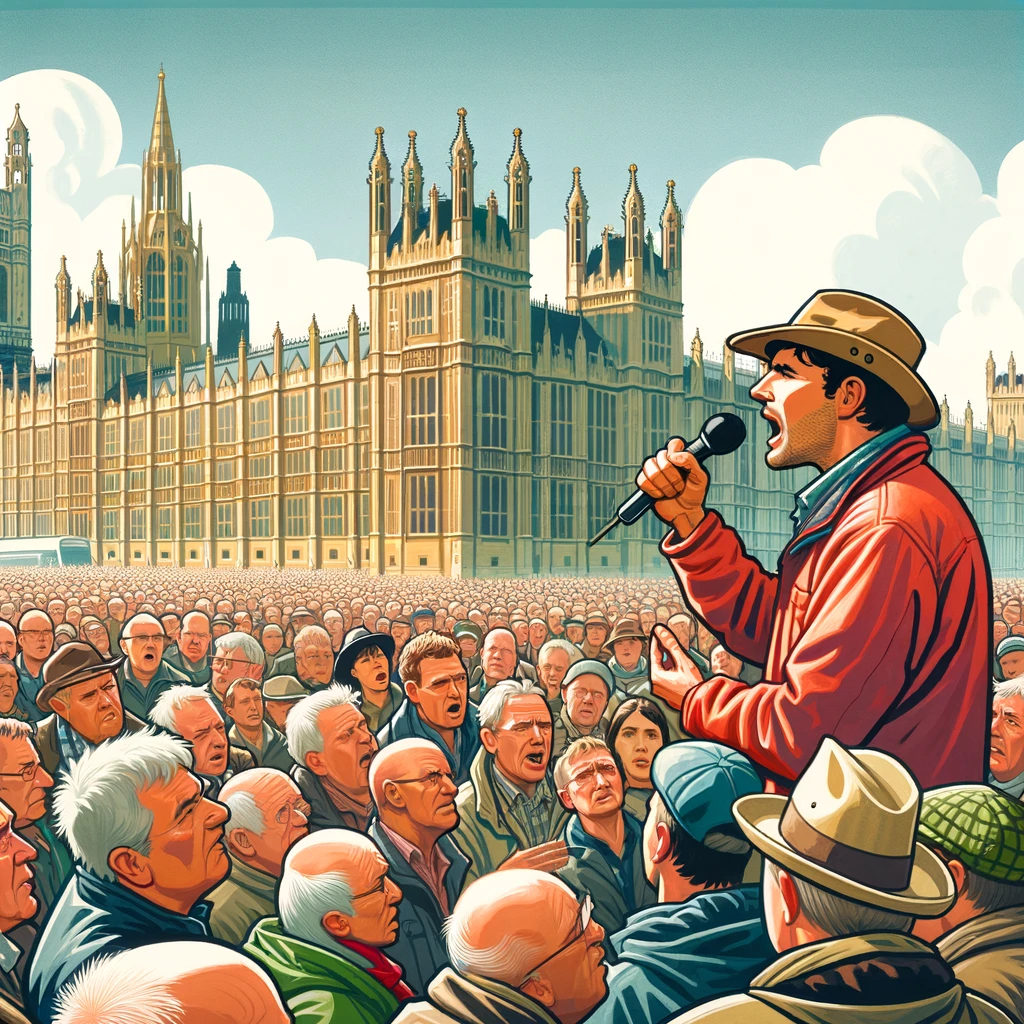
Farmers gathered at the Houses of Parliament to protest against the lack of support for UK food production, warning that this could be their last harvest.
The oceans have reached their highest recorded temperature, surpassing the previous record set in 2016, according to the EU’s climate change service Copernicus.