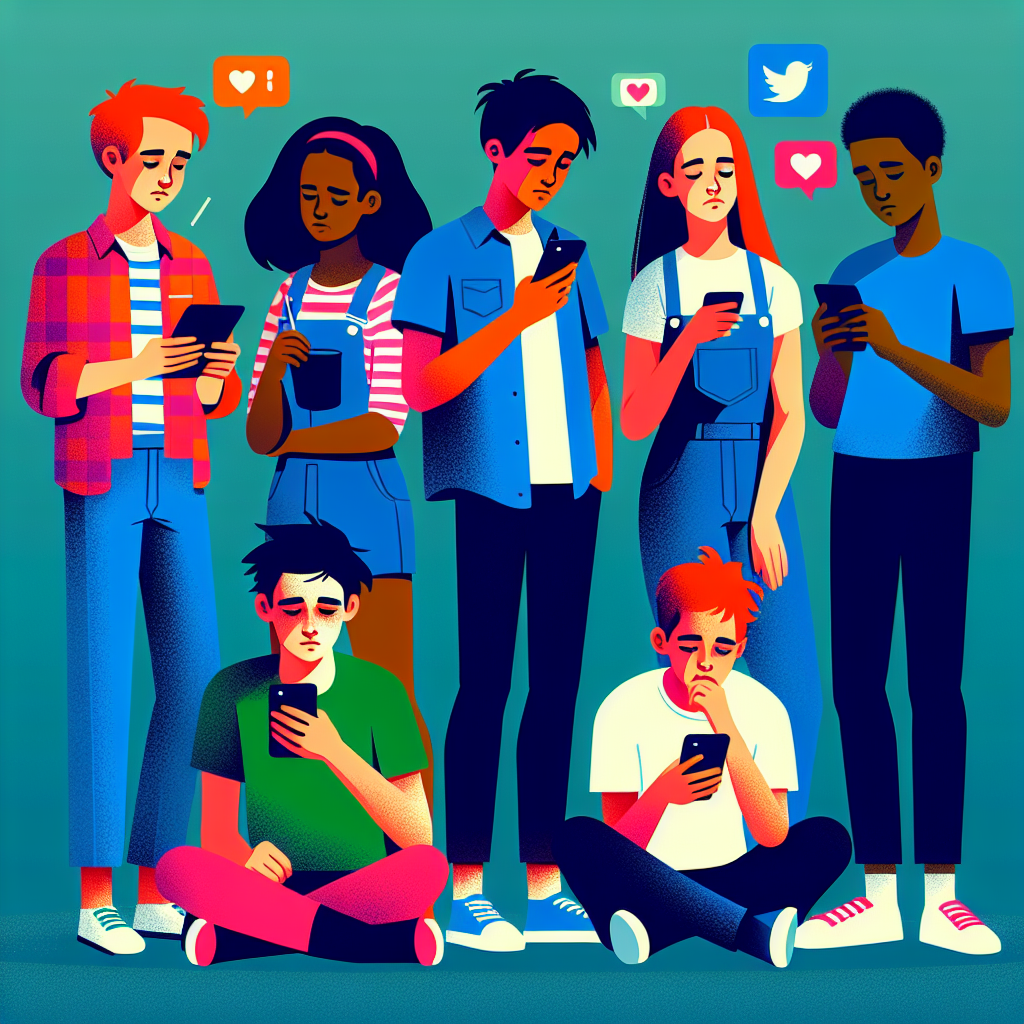
A recent study involving nearly 280,000 teenagers from 44 countries showed that more young people are struggling with excessive social media use since the pandemic began. In 2022, 11% of the surveyed teens were found to be using social media in a concerning way, up from 7% in 2018. Countries like England, Scotland, and Wales reported even higher numbers, raising worries about how digital technology is affecting the mental health of European youth.
The study revealed that 13-year-olds, especially girls, were most likely to exhibit problematic social media behaviors. Many teens are spending a lot of time online, with a significant portion staying connected with friends throughout the day. While social media can help teens build friendships and support networks, those who show signs of addiction, like neglecting other activities or lying about their usage, are at risk of negative consequences like depression and anxiety.
The study also highlighted concerns about excessive gaming among teenage boys. The World Health Organization's European branch stressed the importance of teaching young people how to use digital platforms responsibly. Dr. Hans Henri P Kluge emphasized the need for action from governments, health authorities, teachers, and parents to address the potential harm caused by too much social media use, which can lead to issues like bullying and poor school performance.
Even though it's challenging to define what counts as "problematic social media use," the study sheds light on an important issue. It calls on tech companies to improve privacy and parental control features to protect young users. The report emphasizes that social media has both positive and negative effects on teens, underscoring the importance of everyone working together to promote healthy online habits and ensure the well-being of young people in today's digital world.
Original news source: Sharp rise in problematic teenage social media use, study says (BBC)
🎧 Listen:
📖 Vocabulary:
Group or Classroom Activities
Warm-up Activities:
– News Summary
Instructions: Have students read the article individually and then summarize the main points to their partner in 2-3 minutes. Encourage them to focus on the key information and main ideas.
– Think-Pair-Share
Instructions: Ask students to think about their own opinions on social media use among teenagers. Then, have them pair up with a classmate to discuss their thoughts. Finally, open up the discussion to the whole class for sharing different perspectives and ideas.
– Opinion Poll
Instructions: Create a list of statements related to social media use and teenagers based on the article. Have students move around the room and ask their classmates for their opinions on each statement. Encourage them to engage in discussions and debates about the different viewpoints.
– Synonym Challenge
Instructions: Write down key vocabulary words from the article on the board. In pairs or small groups, challenge students to come up with as many synonyms as they can for each word within a time limit. This activity will help reinforce their vocabulary and expand their word choices.
– Sketch It
Instructions: Choose a few key points from the article and assign each point to a different group of students. Ask them to sketch out the main idea on a piece of paper or mini whiteboard. After a few minutes, have each group present their sketches to the class and explain the main concept they depicted.
🤔 Comprehension Questions:
The study showed that more young people are struggling with excessive social media use since the pandemic began, with 11% of surveyed teens using social media in a concerning way in 2022, up from 7% in 2018.
13-year-olds, especially girls, were most likely to exhibit problematic social media behaviors.
Excessive gaming among teenage boys raised concerns in the study.
Governments, health authorities, teachers, and parents need to take action to address the potential harm of excessive social media use among young people.
Teens who show signs of addiction to social media, like neglecting other activities or lying about their usage, are at risk of negative consequences like depression and anxiety.
Neglecting other activities and lying about social media usage are mentioned as signs of addiction to social media in the study.
It is important for tech companies to improve privacy and parental control features to protect young users from potential harm caused by excessive social media use.
The study underscores the importance of everyone, including tech companies, governments, health authorities, teachers, and parents, working together to promote healthy online habits and ensure the well-being of young people in today's digital world.
🎧✍️ Listen and Fill in the Gaps:
A recent study involving nearly 280,000 teenagers from 44 countries showed that more young people are with social media use since the began. In 2022, 11% of the surveyed teens were found to be social media in a concerning way, up from 7% in 2018. Countries like England, Scotland, and Wales reported even higher numbers, raising worries about how digital technology is affecting the mental health of European youth. The study revealed that 13-year-olds, especially girls, were most likely to exhibit problematic social media behaviors. Many teens are spending a lot of time online, with a significant portion staying connected with throughout the day. While social media can help teens build friendships and networks, those who show signs of , like neglecting other activities or lying about their , are at risk of negative consequences like depression and anxiety. The study also concerns about excessive gaming among teenage boys. The World Health Organization's European branch stressed the importance of young people how to use digital platforms responsibly. Dr. Hans P Kluge emphasized the need for action from governments, health authorities, teachers, and parents to address the potential harm caused by too much social media use, which can lead to issues like bullying and poor performance. Even though it's challenging to define what counts as "problematic media use," the study sheds light on an important issue. It calls on tech companies to improve and parental control features to protect users. The report emphasizes that social media has both positive and effects on teens, underscoring the importance of everyone working together to promote healthy online habits and ensure the well-being of young people in today's digital world.
💬 Discussion Questions:
1. What is social media addiction, and why do you think more teenagers are struggling with it now?
2. How would you feel if you had a friend who was constantly lying about their social media use?
3. Do you think spending too much time on social media can affect your mental health? Why or why not?
4. Why do you think 13-year-old girls are more likely to show problematic social media behaviors?
5. What are some positive ways that social media can help teenagers, besides staying connected with friends?
6. Do you like the idea of having parental controls on social media platforms? Why or why not?
7. How do you think excessive gaming can impact teenage boys' lives?
8. What do you think responsible use of digital platforms looks like for teenagers?
9. Why do you think it's important for everyone – governments, health authorities, teachers, and parents – to work together to address social media issues?
10. How do you think social media can contribute to bullying among teenagers?
11. What are some signs that someone may be addicted to social media, according to the article?
12. Why do you think it's hard to define what counts as "problematic social media use"?
13. How can tech companies improve privacy features on social media platforms to protect young users?
14. Do you think it's possible to have a healthy balance between using social media and other activities? Why or why not?
15. How can teenagers promote healthy online habits among their peers?
Individual Activities
📖💭 Vocabulary Meanings:
Click a dot next to a word, then click the dot next to its meaning to draw a line connecting them.
Words
Meanings
🔡 Multiple Choice Questions:
🕵️ True or False Questions:
📝 Write a Summary:
Write a summary of this news article in two sentences.
Check your writing now with the best free AI for English writing!