


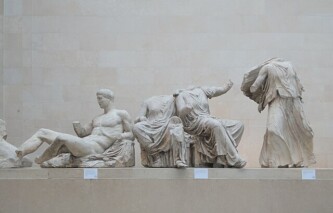
This plea from the Greek Prime Minister brings attention to the ongoing debate about who should own cultural artifacts. The Elgin Marbles are seen as important symbols of Greece's heritage, and many people think they should be returned to their home country. The comparison to cutting the Mona Lisa in half shows how we should keep historical artifacts intact and preserve their cultural meaning.
The Elgin Marbles have been causing arguments for a long time, with Greece always asking for them to be returned. The British Museum, however, says that Lord Elgin got them legally and that they are better looked after in London. This debate makes us think about who really owns cultural artifacts and how museums should respect the heritage of other countries.
The issue of returning cultural artifacts is not just about the Elgin Marbles. Many countries, especially ones that used to be colonies, want their cultural treasures back from Western museums. This debate is often about colonialism, cultural identity, and preserving heritage. It's a complicated and sensitive topic that needs careful thinking and talking between countries.
The Greek Prime Minister's request for the Elgin Marbles to be returned reminds us that there are ongoing discussions and arguments about cultural heritage. It shows that countries need to work together to find solutions that respect everyone's rights and interests. This debate reminds us how important it is to protect and keep cultural artifacts safe for future generations to enjoy and learn from.
Original news source: Elgin Marbles in UK 'like cutting Mona Lisa in half' (BBC)
📖 Vocabulary:
Group or Classroom Activities
Warm-up Activities:
– News Summary
Instructions: Have students read the article and then write a brief summary of the main points. They should focus on capturing the key information and the different perspectives presented in the article. After they have written their summaries, have them share with a partner and discuss any similarities or differences in their summaries.
– Opinion Poll
Instructions: Divide the class into small groups and give each group a set of statements related to the topic of cultural artifacts and ownership. Have the groups discuss each statement and indicate whether they agree or disagree by raising their hand or using a thumbs-up/thumbs-down gesture. After each group has discussed all the statements, have a representative from each group share their group's responses with the class.
– Word Association
Instructions: Write the words "Elgin Marbles" on the board and have students take turns saying the first word or phrase that comes to mind when they hear those words. Encourage them to think creatively and make connections to the topic of cultural artifacts and ownership. Write down all the responses on the board and discuss any interesting or surprising associations.
– Vocabulary Pictionary
Instructions: Prepare a list of key vocabulary words from the article related to the topic of cultural artifacts and ownership. Divide the class into pairs or small groups and give each group a set of vocabulary words. One student from each group will draw a picture representing one of the words without using any words or letters. The other students in the group must guess the word based on the drawing. After each round, switch roles so that each student has a chance to draw.
– Future Predictions
Instructions: Have students work in pairs or small groups to discuss and make predictions about the future of cultural artifacts and ownership. They should consider factors such as changing attitudes towards colonialism, advancements in technology for preservation and replication, and the role of international agreements and organizations. After they have made their predictions, have each group share their ideas with the class and facilitate a discussion about the different perspectives and possibilities for the future.
🤔 Comprehension Questions:
The Elgin Marbles are ancient Greek sculptures that were taken from the Parthenon and other buildings in Athens by Lord Elgin in the early 19th century. The Greek Prime Minister wants them to be returned because they are seen as important symbols of Greece's heritage and he believes they should be brought back to their home country.
The Prime Minister compares cutting the Mona Lisa in half to show how important it is to bring the Elgin Marbles back together. Just like cutting the Mona Lisa would damage its beauty and meaning, keeping the Elgin Marbles separated from each other takes away from their historical and cultural significance.
The Elgin Marbles are currently located in the British Museum in London.
Many people believe that the Elgin Marbles should be returned to Greece because they are important artifacts of Greece's cultural heritage. They were taken from their original location without permission and are seen as belonging to the Greek people. Returning them to Greece would help preserve their historical and cultural context.
The British Museum argues that Lord Elgin obtained the marbles legally and that they are better looked after in London. They believe that the marbles are part of world heritage and are best displayed in a museum that can provide proper care and access to a global audience.
The ongoing debate about the Elgin Marbles makes us think about who really owns cultural artifacts and how museums should respect the heritage of other countries. It raises questions about colonialism, cultural identity, and the preservation of heritage.
Besides the Elgin Marbles, many countries, especially ones that used to be colonies, are asking for their cultural treasures to be returned from Western museums. This includes artifacts such as the Benin Bronzes from Nigeria and the Rosetta Stone from Egypt.
The Greek Prime Minister's request for the return of the Elgin Marbles reminds us about the importance of protecting and preserving cultural artifacts for future generations. It highlights the ongoing discussions and arguments about cultural heritage and the need for countries to work together to find solutions that respect everyone's rights and interests.
🎧✍️ Listen and Fill in the Gaps:
Greek Minister Kyriakos Mitsotakis wants the Elgin , also known as the Parthenon Sculptures, to be returned from the Museum in London. He compared it to cutting the Mona Lisa in half to show how important it is to bring these ancient Greek treasures back together. Some of the marbles are already in Greece, but the rest are in London. This plea from the Greek Prime Minister attention to the ongoing debate about who should own cultural artifacts. The Elgin Marbles are seen as symbols of Greece's heritage, and many people think they should be returned to their home . The comparison to cutting the Mona Lisa in half shows how we should keep historical artifacts and their cultural meaning. The Elgin Marbles have been causing arguments for a long time, with Greece always asking for them to be returned. The British Museum, however, says that Lord Elgin got them legally and that they are better looked after in . This makes us think about who really owns cultural artifacts and how museums should respect the heritage of other countries. The issue of returning cultural artifacts is not just about the Elgin Marbles. Many countries, especially ones that used to be , want their cultural treasures back from Western museums. This debate is often about , cultural identity, and preserving heritage. It's a complicated and sensitive topic that needs thinking and talking between countries. The Greek Prime Minister's request for the Marbles to be reminds us that there are ongoing discussions and arguments about cultural heritage. It shows that countries need to work together to find solutions that respect everyone's rights and interests. This debate reminds us how important it is to protect and keep cultural artifacts safe for future to enjoy and learn from.
💬 Discussion Questions:
1. What are the Elgin Marbles?
2. How would you feel if a valuable artifact from your country was displayed in a museum in another country?
3. Do you think cultural artifacts should be returned to their home countries? Why or why not?
4. Why do you think the Greek Prime Minister compared the situation to cutting the Mona Lisa in half?
5. What is colonialism and how does it relate to the debate about returning cultural artifacts?
6. How important is it to preserve and protect cultural heritage for future generations?
7. Do you think museums should prioritize the preservation of cultural artifacts or the return of those artifacts to their home countries? Why?
8. How do you think the ownership of cultural artifacts should be determined?
9. What are some potential solutions to the ongoing debate about returning cultural artifacts?
10. How would you feel if your country's cultural artifacts were taken during a time of colonization?
11. Do you think the British Museum should return the Elgin Marbles to Greece? Why or why not?
12. What are some potential benefits of returning cultural artifacts to their home countries?
13. How do you think the debate about cultural artifacts impacts international relations?
14. How can countries work together to find solutions that respect everyone's rights and interests in regards to cultural artifacts?
15. Do you think the debate about cultural artifacts will ever be resolved? Why or why not?
Individual Activities
📖💭 Vocabulary Meanings:
Click a dot next to a word, then click the dot next to its meaning to draw a line connecting them.
Words
Meanings
🔡 Multiple Choice Questions:
🕵️ True or False Questions:
📝 Write a Summary:
Write a summary of this news article in two sentences.
Check your writing now with the best free AI for English writing!