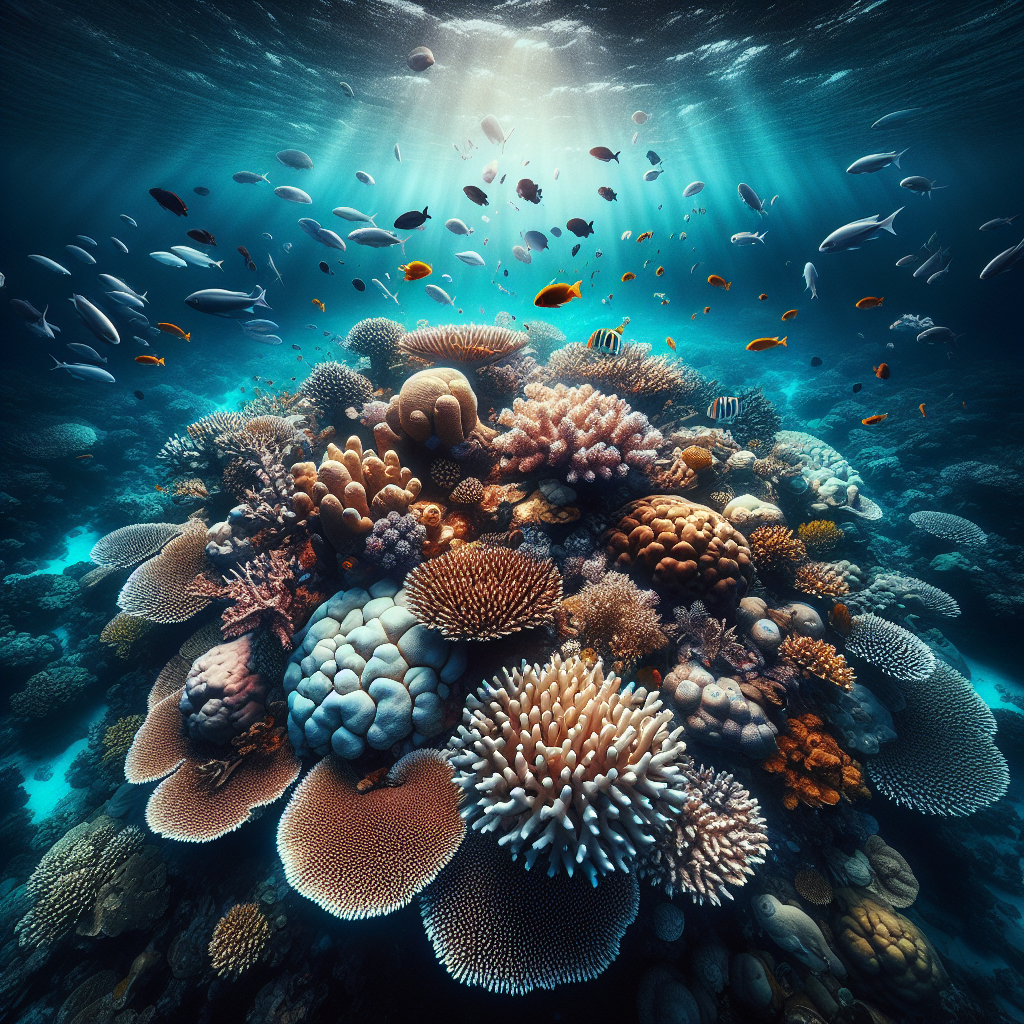
Recent studies have shown that climate change is having a serious effect on the Great Barrier Reef. Temperatures in and around this famous ecosystem have reached their highest levels in 400 years. In the last ten years, extreme heat has caused five major coral bleaching events, which highlights the urgent danger facing this natural wonder. A study in the journal Nature calls these rising temperatures a serious threat to the reef and urges scientists to take immediate action against climate change.
The research team, led by Professor Helen McGregor from the University of Wollongong, looked at samples from ancient corals to understand how the environment has changed over time. These coral samples act like history books, showing the conditions in which the corals have lived for centuries. By comparing their findings with historical sea temperature data from the UK, the researchers confirmed that the last decade has been the warmest on record, raising serious concerns about the future of the reef.
Dr. Benjamin Henley, the main researcher, expressed his concern about the situation for the Great Barrier Reef. However, he also pointed out that there is still hope. If countries around the world can work together to limit global warming, there is a chance for the reef and other coral ecosystems to survive. This hope relies on everyone coming together to fight climate change and protect these important marine habitats.
Corals are actually animals, not plants, and they need to live within a certain temperature range. They depend on a relationship with algae for food and color. When sea temperatures get too high, corals expel their algae, which leads to bleaching. While some bleached corals can recover, long periods of heat stress can stop this recovery, changing the reef's ecosystem dramatically. Dr. Henley described bleached corals as looking unattractive, as they eventually get covered by other algae, turning them brown. Since the Great Barrier Reef is a UNESCO World Heritage site, there is hope that this research will lead to it being labeled as “endangered,” which would highlight the seriousness of the situation.
Original news source: 400-year record heat threat to Great Barrier Reef (BBC)
🎧 Listen:
📖 Vocabulary:
Group or Classroom Activities
Warm-up Activities:
– CHARADES
Instructions: Divide the class into small groups. Each group will take turns picking a word or phrase related to the article (e.g., "coral bleaching," "climate change," "Great Barrier Reef"). One member from the group will act out the word or phrase without speaking while the others guess what it is. Set a timer for each round to keep the game moving.
– OPINION POLL
Instructions: Prepare a list of statements related to climate change and the Great Barrier Reef (e.g., "Climate change is the biggest threat to the environment"). Have students move to different corners of the room based on their opinion (strongly agree, agree, disagree, strongly disagree). Afterward, invite a few students to share their thoughts and reasons for their positions.
– HEADLINE CREATION
Instructions: Have students work in pairs to create catchy headlines for the article. They should aim to summarize the main points while making it engaging. Once they have crafted their headlines, each pair will share their best one with the class, and the group can vote on the most effective headline.
– MIND MAP
Instructions: On a large piece of paper or whiteboard, write "Great Barrier Reef and Climate Change" in the center. Students will work in small groups to brainstorm and add related concepts, facts, and terminology from the article, creating a mind map. Each group will present their additions to the class.
– SYNONYM CHALLENGE
Instructions: Provide students with a list of key vocabulary words from the article (e.g., "urgent," "threat," "ecosystem"). In pairs, they will take turns giving synonyms for each word without repeating any previously mentioned synonyms. The goal is to see how many synonyms they can come up with in a set time (e.g., 3 minutes).
🤔 Comprehension Questions:
Recent studies have shown that climate change is seriously affecting the Great Barrier Reef, with temperatures reaching their highest levels in 400 years and causing major coral bleaching events.
Temperatures in and around the Great Barrier Reef have reached their highest levels in 400 years, indicating a significant increase in warmth.
In the last ten years, extreme heat has caused five major coral bleaching events, highlighting the urgent danger to the reef.
The research team was led by Professor Helen McGregor from the University of Wollongong, and their main goal was to understand how the environment around the Great Barrier Reef has changed over time.
Ancient coral samples act like history books, showing scientists the conditions in which the corals lived for centuries, allowing them to compare past environmental conditions with current data.
Dr. Benjamin Henley expressed concern about the situation but also mentioned that there is hope if countries work together to limit global warming.
Corals are described as animals because they rely on a relationship with algae for food and color, which means they need to live within a specific temperature range to survive.
If the Great Barrier Reef were labeled as “endangered” by UNESCO, it would highlight the seriousness of the situation and potentially lead to increased efforts to protect it.
🎧✍️ Listen and Fill in the Gaps:
Recent studies have shown that climate change is having a serious effect on the Great Barrier Reef. Temperatures in and around this famous have reached their highest levels in 400 years. In the last ten years, extreme heat has caused five major coral bleaching , which highlights the urgent danger facing this natural . A study in the journal Nature calls these temperatures a serious threat to the reef and urges scientists to take immediate action against climate change. The research team, led by Professor Helen McGregor from the University of Wollongong, looked at samples from ancient to understand how the environment has changed over time. These coral samples act like books, showing the conditions in which the corals have lived for centuries. By their findings with historical sea temperature data from the UK, the researchers that the last decade has been the warmest on record, raising serious concerns about the future of the reef. Dr. Benjamin Henley, the main researcher, expressed his concern about the situation for the Barrier Reef. However, he also pointed out that there is still hope. If countries around the world can work together to limit global warming, there is a chance for the reef and other ecosystems to survive. This hope relies on everyone coming together to fight climate change and protect these important marine habitats. Corals are actually animals, not plants, and they need to live within a certain range. They on a relationship with algae for food and color. When sea temperatures get too high, corals expel their algae, which leads to bleaching. While some bleached corals can , long periods of heat stress can stop this recovery, changing the reef's ecosystem dramatically. Dr. Henley described bleached corals as looking unattractive, as they eventually get covered by other algae, turning them brown. Since the Great Reef is a World Heritage site, there is hope that this research will lead to it being labeled as “endangered,” which would highlight the of the situation.
💬 Discussion Questions:
1. What is your opinion on climate change? Do you think it is a serious issue? Why or why not?
2. Have you ever visited a coral reef or any similar natural wonder? What was your experience like?
3. How would you feel if you saw a coral reef in danger because of climate change?
4. Do you think it’s important for scientists to study ancient corals? Why or why not?
5. What are some ways that individuals can help protect the environment and combat climate change?
6. How do you think global cooperation could help save ecosystems like the Great Barrier Reef?
7. What is your favorite marine animal, and how do you think climate change affects it?
8. Do you believe that people are aware enough of the dangers facing the Great Barrier Reef? Why or why not?
9. How would you feel if the Great Barrier Reef were to be labeled as “endangered”?
10. Do you think that education about climate change should be a bigger part of school curriculums? Why?
11. What do you think is the most surprising fact about corals that you learned from the article?
12. How would you react if a friend said they didn’t believe in climate change?
13. Do you like spending time in nature? How do you think climate change impacts your favorite outdoor activities?
14. What is a small change you could make in your life to help the environment?
15. How do you think future generations will view our actions regarding climate change today?
Individual Activities
📖💭 Vocabulary Meanings:
Click a dot next to a word, then click the dot next to its meaning to draw a line connecting them.
Words
Meanings
🔡 Multiple Choice Questions:
🕵️ True or False Questions:
📝 Write a Summary:
Write a summary of this news article in two sentences.
Check your writing now with the best free AI for English writing!