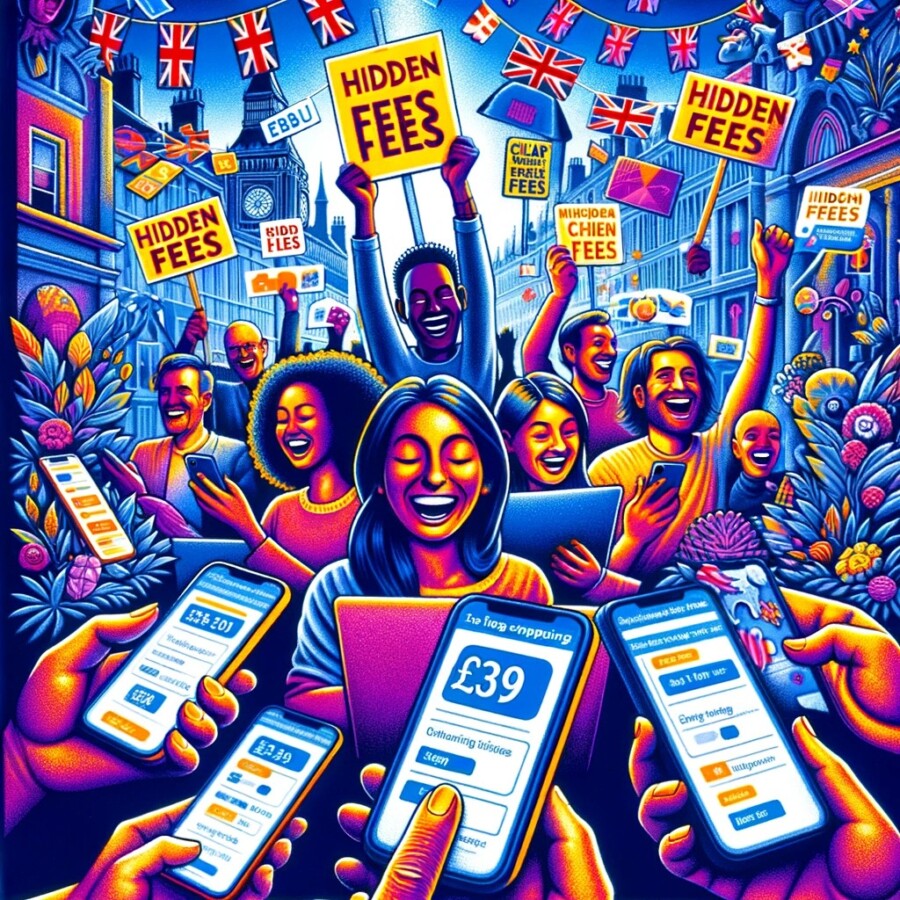
Hidden fees for online customers, also called "drip pricing," will soon be prohibited by new laws. The government conducted a survey on consumer transparency and discovered that some businesses are not clear enough about their prices. The Digital Markets, Competition and Consumers Bill will include these new rules. Drip pricing happens when shoppers see an initial price for a product or service online, but then find out about additional fees during the checkout process. This is common in the entertainment and hospitality industries and costs consumers billions of pounds each year.
The new rules will require mandatory fees to be included in the prices shown online. For example, when buying cinema or train tickets, any required booking fees must be made clear right from the start. Optional extras like airline seat reservations or luggage upgrades will not be included in these measures. The rules are expected to take effect this spring.
Kevin Hollinrake, the Minister for enterprise, markets, and small business, said that while modern-day shopping offers more choices, it also increases the risk of confusion, scams, and unexpected costs. The new Bill aims to help customers compare purchases and protect them from fake reviews. Reviews are widely used by consumers when making purchasing decisions and contributed to the £224 billion spent in online retail markets in 2022. The Competition and Markets Authority (CMA) has provided guidance to address fake reviews and hold website hosts accountable for the reviews on their platforms.
The Price Marking Order (PMO), which requires traders to display the final selling price, will also be reformed. The proposed changes will ensure that unit pricing is consistently applied, even for promotions and special offers, so that shoppers can compare similar products and find the best value. The CMA supports the government's efforts to combat misleading behavior and protect shoppers from being deceived or losing money.
In conclusion, new laws will ban hidden fees, or drip pricing, for online customers. The government aims to increase transparency in pricing and safeguard consumers from unexpected costs. The new rules will require mandatory fees to be included in the prices shown online, while optional extras will not be included. The government is also taking steps to address fake reviews and ensure that unit pricing is consistently applied. These measures aim to help customers make informed purchasing decisions and effectively compare prices.
Original news source: Drip pricing: Hidden fees for online customers set to be banned (BBC)
🎧 Listen:
📖 Vocabulary:
Group or Classroom Activities
Warm-up Activities:
– News Summary
Instructions: Have students read the article and then summarize the main points in their own words. They can do this individually or in pairs. Afterward, have a class discussion and compare the different summaries to see if any important information was missed.
– Opinion Poll
Instructions: Divide the class into groups and assign each group a specific question related to the article. For example, "Do you think the new laws banning hidden fees will effectively protect consumers?" Have each group discuss and share their opinions on the topic. Then, have a spokesperson from each group present their group's opinions to the class.
– Headline Creation
Instructions: In pairs or small groups, have students create headlines for the article that capture the main idea in a concise and attention-grabbing way. Encourage them to be creative and use catchy language. Afterward, have students share their headlines and discuss why they chose them.
– Vocabulary Pictionary
Instructions: Select 10-15 key vocabulary words from the article and write them on separate slips of paper. Divide the class into two teams and have one student from each team come to the front of the class. Show them a word and they must draw it on the board within a time limit (e.g., 30 seconds). The first team to correctly guess the word earns a point. Continue until all the words have been drawn and guessed. The team with the most points wins.
– Future Predictions
Instructions: Have students discuss in pairs or small groups what they think the future of online shopping will look like. Will hidden fees continue to be a problem? How might technology and regulations change the way we shop online? Afterward, have a class discussion and share some of the predictions. Encourage students to support their ideas with evidence from the article.
🤔 Comprehension Questions:
Drip pricing is when businesses show an initial price for a product or service online, but then add on additional fees during the checkout process. This can be a problem for online shoppers because it can be misleading and result in unexpected costs.
The new laws will require businesses to include mandatory fees in the prices shown online. This means that any additional charges, like booking fees for cinema or train tickets, must be made clear right from the start.
An example of a fee that will be included in the prices shown online is a booking fee for cinema or train tickets. This fee will need to be displayed upfront, so customers know the full cost before making a purchase.
The purpose of the Digital Markets, Competition and Consumers Bill is to increase transparency in pricing and protect consumers from hidden fees and misleading behavior. It aims to help customers compare purchases and make informed decisions while shopping online.
Fake reviews can mislead consumers and affect their purchasing decisions. If someone reads a positive review that turns out to be fake, they may buy a product or service that doesn't live up to their expectations. This can result in wasted money and disappointment.
The proposed changes to the Price Marking Order (PMO) will ensure that unit pricing is consistently applied, even for promotions and special offers. This means that shoppers can compare similar products and find the best value, without being deceived by misleading pricing tactics.
The government wants to combat misleading behavior in pricing to protect consumers from being deceived or losing money. They believe that businesses should be transparent about their prices and not use hidden fees or misleading tactics to trick customers into paying more than they originally thought.
The new laws aim to help customers when making purchasing decisions by increasing transparency in pricing. By requiring businesses to include mandatory fees in the prices shown online, customers will have a clearer understanding of the total cost before making a purchase. This will enable them to compare prices more effectively and make informed decisions.
🎧✍️ Listen and Fill in the Gaps:
Hidden fees for online customers, also called "drip pricing," will soon be prohibited by new laws. The conducted a survey on consumer transparency and discovered that some businesses are not clear enough about their . The Digital Markets, Competition and Consumers Bill will include these new rules. Drip pricing happens when shoppers see an initial for a product or service online, but then find out about additional fees during the checkout process. This is common in the entertainment and hospitality industries and costs consumers of pounds each year. The new rules will require mandatory fees to be included in the prices shown . For example, when buying cinema or train tickets, any required booking fees must be made clear right from the start. Optional extras like airline seat reservations or luggage upgrades will not be included in these measures. The rules are expected to take effect this spring. Kevin , the Minister for enterprise, markets, and small business, said that while modern-day shopping offers more , it also increases the risk of confusion, scams, and unexpected costs. The new Bill aims to help customers compare purchases and protect them from fake reviews. are widely used by consumers when making purchasing decisions and contributed to the £224 billion spent in online retail markets in 2022. The Competition and Markets Authority (CMA) has provided guidance to address fake reviews and hold website hosts for the reviews on their platforms. The Marking Order (PMO), which requires traders to display the final selling price, will also be reformed. The proposed changes will that unit pricing is consistently , even for promotions and special offers, so that shoppers can compare similar products and find the best value. The CMA supports the government's efforts to combat misleading behavior and protect shoppers from being deceived or losing money. In conclusion, new laws will ban hidden fees, or drip , for online . The government aims to increase transparency in pricing and safeguard consumers from unexpected costs. The new rules will require mandatory fees to be in the prices shown online, while optional extras will not be included. The government is also taking steps to fake reviews and ensure that unit pricing is consistently applied. These measures aim to help customers make informed purchasing decisions and effectively compare prices.
💬 Discussion Questions:
1. What are hidden fees and why are they a problem for online shoppers?
2. How do you feel when you discover additional fees during the checkout process?
3. Do you think it's fair for businesses to hide fees from customers? Why or why not?
4. Have you ever experienced drip pricing when shopping online? How did it make you feel?
5. What do you think about the new laws that will prohibit hidden fees for online customers?
6. How do you think mandatory fees being included in online prices will benefit consumers?
7. Do you like reading reviews before making a purchase online? Why or why not?
8. Have you ever been influenced by fake reviews when making a purchasing decision?
9. How important is it for you to be able to compare prices when shopping online? Why?
10. What do you think about the government's efforts to combat misleading behavior in online retail markets?
11. How do you usually compare prices when shopping online? Do you have any strategies?
12. What are some optional extras that you have encountered when shopping online?
13. Do you think it's fair for optional extras to be excluded from the new rules? Why or why not?
14. How do you think the reforms to the Price Marking Order will benefit shoppers?
15. What are some ways that you can protect yourself from unexpected costs when shopping online?
Individual Activities
📖💭 Vocabulary Meanings:
Click a dot next to a word, then click the dot next to its meaning to draw a line connecting them.
Words
Meanings
🔡 Multiple Choice Questions:
🕵️ True or False Questions:
📝 Write a Summary:
Write a summary of this news article in two sentences.
Check your writing now with the best free AI for English writing!