
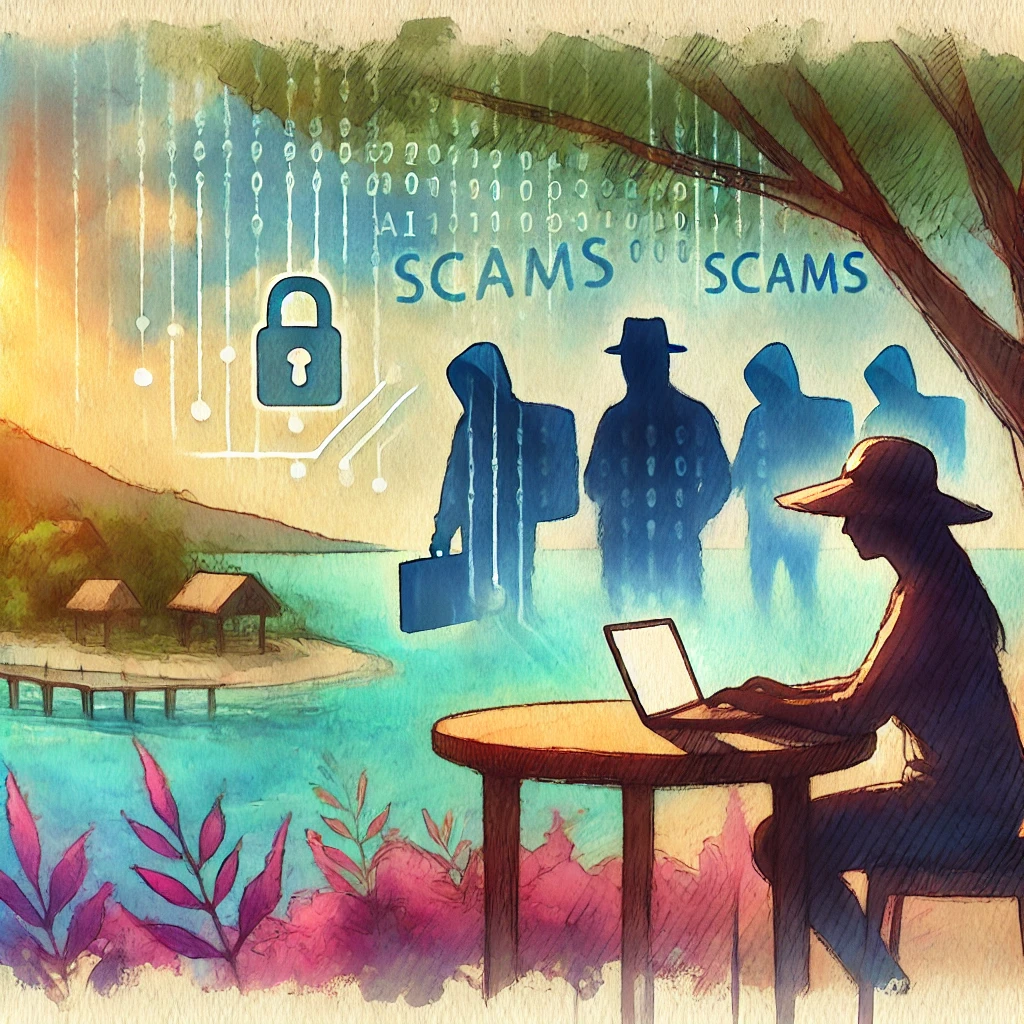
Booking.com, a popular website for booking travel, is warning people about a rise in travel scams that are using artificial intelligence (AI). These scams trick people into giving away their financial information. The scammers send fake links that look real, and they target websites like Booking.com and Airbnb because they let people list their own places to stay. The scammers either take the money and disappear or try to get more money from the person later. AI makes these scams harder to spot because it can create realistic images and text in different languages.
To protect yourself from these scams, Marnie Wilking from Booking.com suggests using two-factor authentication. This means you have to do an extra security check, like putting in a code that gets sent to your phone. She also says to be careful when clicking on links. Even though AI is causing more scams, Booking.com is using it to find and remove fake hotels quickly. They use AI to stop the scams before anyone books anything.
Jane Hawkes, an expert on consumers, says that travel companies should do more to tell people about these scams and give advice on how to avoid them. She also suggests doing lots of research, checking for contact details on websites, and booking package holidays instead of separate flights and places to stay. Using a credit card for bookings can also give you more protection.
In summary, Booking.com is warning people about more travel scams because of AI. These scams trick people into giving away their money by sending fake links. Using two-factor authentication and being careful with links can help protect you. Booking.com is using AI to find and remove fake hotels. Travel companies should do more to educate people about these scams, and individuals should do research and consider booking package holidays and using credit cards for extra protection.
Original news source: Booking.com warns of up to 900% increase in travel scams (BBC)
🎧 Listen:
📖 Vocabulary:
Group or Classroom Activities
Warm-up Activities:
– News Summary
Instructions: In pairs, students will read the article and write a summary of the main points. They should focus on the rise of travel scams using AI, the methods scammers use, and the precautions suggested by Booking.com and Jane Hawkes. After writing their summaries, students can share them with the class and compare their answers.
– Opinion Poll
Instructions: Divide the class into small groups. Each group will discuss their opinions on the topic of travel scams and AI. They should consider questions such as: Do you think AI makes scams harder to spot? Should travel companies do more to educate people about these scams? What precautions do you personally take when booking travel online? After discussing, each group will present their opinions to the class and engage in a class-wide discussion.
– Vocabulary Pictionary
Instructions: Write down key vocabulary words from the article on separate pieces of paper. Divide the class into small groups and give each group a set of vocabulary words. Each group will take turns selecting a word and drawing a picture to represent it. The other groups will try to guess the word based on the drawing. After each round, the groups can switch words and continue playing.
– Keyword Hangman
Instructions: Choose important keywords from the article and write the number of letters in each word on the board, replacing the actual letters with underscores. Divide the class into two teams. One team will choose a word and the other team will guess letters to try and fill in the blanks. If a guessed letter is correct, it will be placed in the correct position. If a guessed letter is incorrect, a body part will be added to the hangman drawing. The teams will take turns until either the word is guessed or the hangman is completed.
– Future Predictions
Instructions: In pairs, students will discuss and make predictions about the future of travel scams and AI. They should consider questions such as: How do you think scammers will adapt to new technologies? Will AI become more effective in detecting scams? How will travel companies and individuals protect themselves in the future? After discussing their predictions, students can share their ideas with the class and engage in a class-wide discussion.
🤔 Comprehension Questions:
Booking.com is warning people about a rise in travel scams that are using artificial intelligence (AI).
These scams trick people by sending fake links that look real, and then the scammers either take the money and disappear or try to get more money from the person later.
Scammers target websites like Booking.com and Airbnb because they let people list their own places to stay, making it easier for scammers to create fake listings and trick people.
Artificial intelligence makes these scams harder to spot because it can create realistic images and text in different languages, making the fake links and listings look more convincing.
Marnie Wilking suggests using two-factor authentication and being careful when clicking on links to protect yourself from these scams.
Booking.com is using AI to find and remove fake hotels quickly, stopping the scams before anyone books anything.
Jane Hawkes suggests doing lots of research, checking for contact details on websites, and booking package holidays instead of separate flights and places to stay. Using a credit card for bookings can also give you more protection.
Individuals should consider booking package holidays and using credit cards for extra protection because it can provide more security and protection against scams. Package holidays often come with more guarantees and using a credit card can offer additional safeguards and easier ways to dispute charges if something goes wrong.
🎧✍️ Listen and Fill in the Gaps:
Booking.com, a popular for booking travel, is warning people about a rise in travel that are using artificial intelligence (AI). These scams trick people into away their financial information. The scammers send fake links that look real, and they target like Booking.com and Airbnb because they let people list their own places to stay. The scammers either take the money and disappear or try to get more money from the person later. AI makes these scams harder to spot because it can create realistic images and text in different languages. To protect yourself from these scams, Marnie Wilking from Booking.com suggests two-factor . This means you have to do an extra security check, like putting in a code that gets sent to your phone. She also says to be careful when on links. Even though AI is more scams, Booking.com is using it to find and remove fake hotels quickly. They use AI to stop the scams before anyone books anything. Jane Hawkes, an on consumers, says that travel companies should do more to tell people about these scams and give advice on how to avoid them. She also suggests doing lots of research, for details on websites, and package holidays instead of separate flights and places to stay. Using a credit card for bookings can also give you more protection. In summary, Booking.com is warning people about more travel scams because of AI. These scams trick people into giving away their money by sending fake . Using two-factor authentication and being careful with links can help protect you. Booking.com is using AI to find and fake hotels. Travel companies should do more to educate people about these scams, and individuals should do and booking package holidays and using credit cards for extra protection.
💬 Discussion Questions:
1. Have you ever booked a trip or accommodation online? How was your experience?
2. What is artificial intelligence (AI)? Can you think of any other examples of how AI is used in everyday life?
3. How would you feel if you were tricked by a travel scam and lost your money? What would you do in that situation?
4. Do you think two-factor authentication is an effective way to protect yourself from scams? Why or why not?
5. Have you ever received a suspicious email or message with a fake link? How did you handle it?
6. What do you think travel companies can do to better inform people about travel scams? Why is it important for them to do so?
7. How do you usually research and plan your trips? Do you think doing more research can help prevent scams? Why or why not?
8. What are some advantages of booking package holidays instead of separate flights and accommodations? Have you ever booked a package holiday before?
9. Do you feel more confident using a credit card for bookings? Why or why not?
10. Have you ever encountered any fake hotels or accommodations while booking online? How did you realize they were fake?
11. How do you think AI can be used to stop travel scams? Can you think of any other ways AI can be used to improve travel experiences?
12. Do you think travel scams are a big problem? Why or why not? Have you or anyone you know ever been a victim of a travel scam?
13. How important is it for individuals to be aware of travel scams and take precautions? What precautions do you usually take when booking online?
14. Can you think of any other tips or advice to avoid travel scams? Share your ideas and explain why you think they would be effective.
15. What are your thoughts on the role of technology in the travel industry? Do you think it has more advantages or disadvantages? Why?
Individual Activities
📖💭 Vocabulary Meanings:
Click a dot next to a word, then click the dot next to its meaning to draw a line connecting them.
Words
Meanings
🔡 Multiple Choice Questions:
🕵️ True or False Questions:
📝 Write a Summary:
Write a summary of this news article in two sentences.
Check your writing now with the best free AI for English writing!